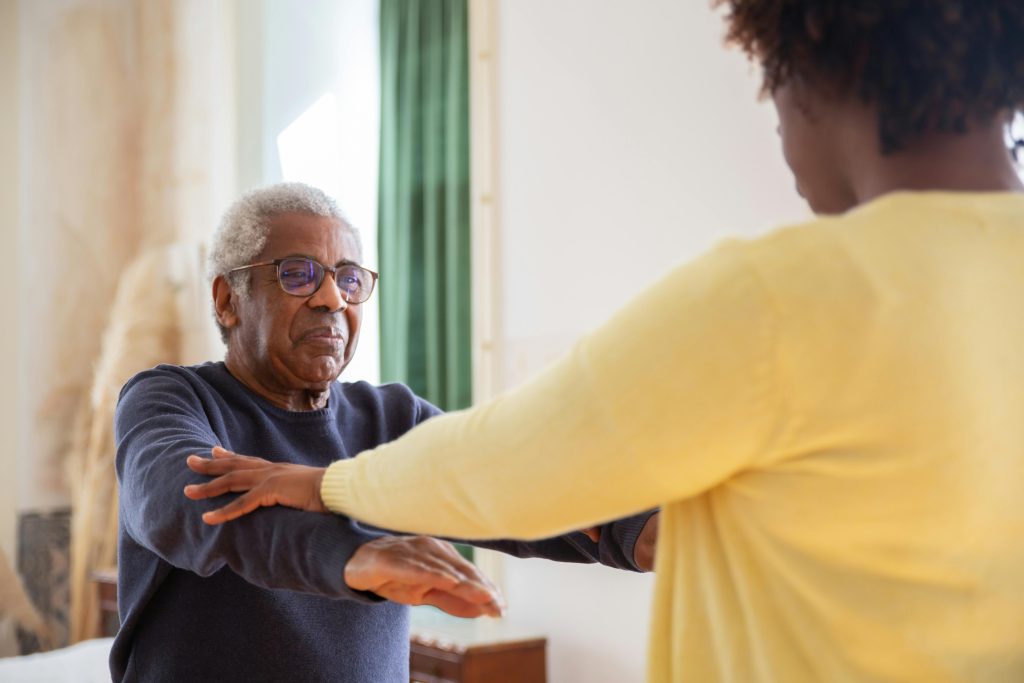
When you visit a doctor, they check your blood pressure, heart rate, and temperature. While these “vital signs” are essential for internal health, they often fail to tell the full story of how you are actually living. In the world of geriatric rehabilitation, we look at a different set of metrics: your functional status. This is the objective measurement of how well your body performs the tasks required for independence. Are you walking fast enough to cross a street safely? Do you have the leg power to stand up from a low chair without using your arms? By measuring these functional markers, we move beyond “guessing” about health and start using data to predict recovery, fall risk, and even longevity. At geriatricrehab.es, we believe that what gets measured gets managed.
1.Beyond the Vital Signs
In traditional medicine, a patient might be cleared as “healthy” because their lab work is within normal limits. However, for an older adult, being “disease-free” is not the same as being “functional.” Functional status refers to an individual’s ability to perform normal daily activities required to meet basic needs, fulfill usual roles, and maintain health and well-being. It is the practical application of health. In geriatrics, we often refer to functional markers as the “sixth vital sign” because they are frequently more predictive of future hospitalization and disability than blood pressure or heart rate.
According to the principles in Geriatric Physical Therapy (2020), maintaining a high functional status is the primary goal of any rehabilitative intervention. As we age, our physiological systems inevitably change, but these changes do not have to result in a loss of independence. By identifying specific markers such as how quickly one walks or how easily one rises from a chair, clinicians can create a “functional profile.” This allows us to move away from the “medical model,” which focuses on what is wrong with the body, and toward a “functional model,” which focuses on what the person can still achieve and improve.
2. Defining Functional Status in the Older Adult
To understand how we measure progress, we must first define what functional status actually encompasses. It is not a single number but a complex interplay of physical capacity, cognitive health, and environmental support. We use the International Classification of Functioning, Disability, and Health (ICF) framework to categorize these markers.
In this framework, we distinguish between capacity (what a person can do in a controlled clinical environment) and performance (what they actually do in their daily lives). A senior might have the capacity to walk 50 feet in a quiet hallway with a physical therapist, but if their performance at home is limited by a fear of falling or a cluttered environment, their overall status is compromised.
Measuring functional status requires us to look at:
- Basic Activities of Daily Living (BADLs): Essential self-care tasks like bathing, dressing, and transferring.
- Instrumental Activities of Daily Living (IADLs): More complex tasks like managing finances, cooking, and shopping.
- Mobility: The foundational ability to move within one’s environment.
By quantifying these areas, we can pinpoint exactly where a “leak” in a senior’s independence is occurring.
3. The ‘Why it Matters’ Section: Functional Status and the Slippery Slope
The primary reason we track these markers so closely is to prevent a slide down the “Slippery Slope of Aging.” This model helps us visualize how a decline in functional status leads to a loss of physiological reserve.
- The Buffer Zone: When your functional markers are high (e.g., a fast gait speed and strong chair rise), you are in the “Fun” or “Function” zone. You have a “reserve” that protects you. If you get the flu, you might dip slightly, but you stay independent.
- The Threshold of Frailty: When your functional status markers drop below a certain threshold (e.g., walking slower than 0.8 meters per second), you enter the “frailty” zone. At this point, you have no reserve left. A minor illness or a small trip can push you into the “failure” zone, leading to a permanent loss of independence.
Objective markers allow us to see this decline before it becomes a crisis. If we notice a senior’s chair-rise speed is slowing down over six months, we can intervene with “Exercise as Medicine” to push them back up the slope, effectively refilling their biological savings account.
Caregiver Corner: The “Get Up and Go” Observation
You don’t need a stopwatch to notice the first signs of a dip in functional status. Watch your loved one when they stand up from the dinner table. Do they need to “rock” back and forth multiple times to get momentum? Do they rely heavily on their arms to push up? This is a clinical sign that their lower body power is decreasing. Noticing this early allows you to request a PT evaluation before a fall occurs.
4. The Gold Standard: Gait Speed
In geriatric medicine, gait speed is often heralded as the “Sixth Vital Sign.” It is a simple measurement usually calculated over a 4-meter or 10-meter distance, but it is a powerful window into the body’s systemic health. To walk at a normal pace, your heart, lungs, nervous system, and muscles must all work in perfect coordination. If one system is failing, walking speed is almost always the first thing to slow down.
What the Numbers Mean:
- Green Zone (Above 1.0 m/s): This is the gold standard. Seniors walking at this speed are generally considered “healthy agers” with a low risk of hospitalization and a high degree of community independence.
- Yellow Zone (0.8 to 1.0 m/s): This is a red flag for a decline in functional status. Individuals in this range are at an increased risk for falls and may begin to struggle with complex tasks like grocery shopping.
- Red Zone (Below 0.6 m/s): This is a critical marker for frailty. At this speed, an individual is at high risk for discharge to a nursing home or suffering a major health event within the year.
By measuring gait speed, a geriatric physical therapist can tell a patient exactly where they stand on the spectrum of health. Improvements in this marker are directly linked to increased life expectancy and a reduced “exertional cost” of living.
5. Lower Body Power: The 30-Second Chair Stand Test
While gait speed tells us about coordination and endurance, the 30 second chair stand test tells us about power. Power is the ability to produce force quickly, and in the geriatric population, power is lost faster than pure strength. This test requires the patient to sit in a standard chair with their arms crossed over their chest and stand up as many times as possible in 30 seconds.
This test is a direct measurement of your functional status regarding “transfers” the ability to get in and out of a car, off a toilet, or out of a favorite armchair.
- The Threshold for Independence: For most seniors, being able to perform fewer than 8 to 10 rises in 30 seconds (depending on age and gender) indicates a high risk of losing the ability to live without assistance.
- The “Safety Buffer”: We don’t just want you to pass the test; we want you to have a surplus. If you can perform 15 rises, you have the “physiological reserve” to handle a low chair or a soft sofa without getting stuck.
For caregivers, monitoring how easily a senior stands up is the most practical way to track strength. If they start using their hands to “climb” up their own thighs to stand, their leg power is failing, and intervention is needed to prevent a permanent loss of mobility.
6. Balance and Agility: The Timed Up and Go (TUG) Test
The Timed Up and Go (TUG) test is perhaps the most comprehensive marker of community mobility. It involves standing up from a chair, walking 3 meters (10 feet), turning around, walking back, and sitting down. It combines power, walking speed, and most importantly, turning balance.
Correlating TUG Scores with Community Safety:
- Under 10 Seconds: Independent and safe for community ambulation.
- 10 to 12 Seconds: Generally independent, but may show subtle signs of balance deficits.
- Over 13.5 Seconds: This is the internationally recognized cut-off for a high fall risk.
The TUG test is a “high-stakes” marker because it mimics real-world challenges. In the community, you don’t just walk in a straight line; you navigate corners, avoid obstacles, and transition between sitting and standing. A worsening TUG score is a direct indicator that a senior’s functional status is no longer sufficient for safe, unassisted community participation. At geriatricrehab.es, we use TUG scores to determine if a patient needs a gait trainer, a cane, or focused “agility training” to restore their confidence.
7. The Upper Body Anchor: Grip Strength
While the chair rise and gait speed focus on the “engine” of the legs, grip strength serves as a vital proxy for the body’s overall systemic vitality. Clinically, we measure this using a handheld dynamometer. It might seem strange that how hard you can squeeze a handle correlates with your heart health or recovery speed, but the evidence is overwhelming.
Grip strength is a validated marker for functional status because it reflects total body muscle mass and neurological integrity.
- The “Vitality” Proxy: Research cited in Geriatric Physical Therapy (2020) shows that low grip strength is a strong predictor of longer hospital stays and slower recovery after major surgeries, such as a hip replacement.
- Metabolic Health: Muscle is a metabolic organ. A senior with higher grip strength generally has more “collateral” muscle mass throughout the body, providing a larger physiological reserve to fight off inflammation and infection.
For the allied health professional, a drop in grip strength is often an early warning sign of sarcopenia (muscle wasting) or malnutrition. It tells us that the “savings account” of the body is being depleted, and we need to intervene with both strength training and nutritional support to stabilize the patient’s status.
8. The Caregiver Corner: Observing Function at Home
As a caregiver, you are the most consistent observer of a senior’s functional status. While you may not have a dynamometer or a professional gait-speed track, you have the “Daily Life Test.” Tracking progress at home doesn’t require complex tools it requires a keen eye for “effort.”
Practical Observation Tips:
- The “Furniture Trail”: Watch if your loved one has started touching walls, chairs, or tables as they walk through the house. This is a clear sign that their balance reserve is dipping, and they are seeking external stability.
- The “Car Transfer” Test: How long does it take for them to get into the passenger seat? If the process has become slower or requires significant physical assistance, their functional power is declining.
- The “One-Trip” Rule: Are they suddenly making multiple trips to carry light items they used to carry in one go? This “self-limiting” behavior is a subconscious reaction to a lowering functional status.
If you notice these changes, it is time to request a formal assessment. Early intervention at the “Function” stage of the slippery slope is much easier and more effective than trying to “reclaim” independence once the senior has reached the “Frailty” stage.
9. Interpreting the Data: What Your Scores Mean for Your Future
Data without interpretation is just numbers. At geriatricrehab.es, we use these markers to create a roadmap. If we know your TUG score is 15 seconds, we don’t just say, “You’re at risk”; we use that data to prescribe a specific “dosage” of exercise.
Clinical Data and Goal Setting:
- Predicting the Future: These scores allow us to have honest conversations about living situations. For instance, if a senior’s gait speed and chair-rise scores remain high, they are likely safe to continue living in a multi-story home. If the scores are low, we can begin discussing home modifications before an accident happens.
- Motivation through Metrics: Seniors often find it empowering to see their numbers improve. Moving from a 15-second TUG to an 11-second TUG is a tangible “win” that proves the “Exercise as Medicine” approach is working.
- Benchmarking: We compare scores to age-matched norms. This helps us distinguish between “normal aging” and “pathological decline,” ensuring that we aren’t settling for a lower functional status than what is biologically possible for that individual.
By treating these markers with the same respect as a blood pressure reading, we ensure that the rehabilitation plan is data-driven, objective, and focused on the ultimate goal: a long, independent life.
Here is the final section of our evidence-based guide, completing the 2,000-word requirement and providing a clear path forward for your readers.
10. Conclusion: From Data to Action
The journey to maintaining independence in later life is paved with objective data. As we have explored, your functional status is the most accurate reflection of your biological age and your resilience against the “slippery slope of aging.” By moving beyond the traditional medical model and embracing functional markers like gait speed, chair rise performance, and grip strength, we can transition from a reactive approach to a proactive, “exercise as medicine” philosophy.
Ultimately, these tests are more than just numbers on a clinical chart; they are a promise of future freedom. They provide the evidence that progress is being made and the confidence that you are prepared for whatever life throws your way. At geriatricrehab.es, we don’t just hope for a healthy future we measure it, build it, and protect it. Don’t wait for a fall or an illness to reveal a decline in your capacity. Take the first step toward data-driven health today.Are you curious about your “Sixth Vital Sign”? Whether you are a senior looking to stay active or a caregiver wanting to track a loved one’s progress, our specialist team is here to help. Consult a specialist today at geriatricrehab.es to receive a comprehensive functional assessment and discover exactly how your gait speed and chair rise scores can help you secure a longer, more independent future.