
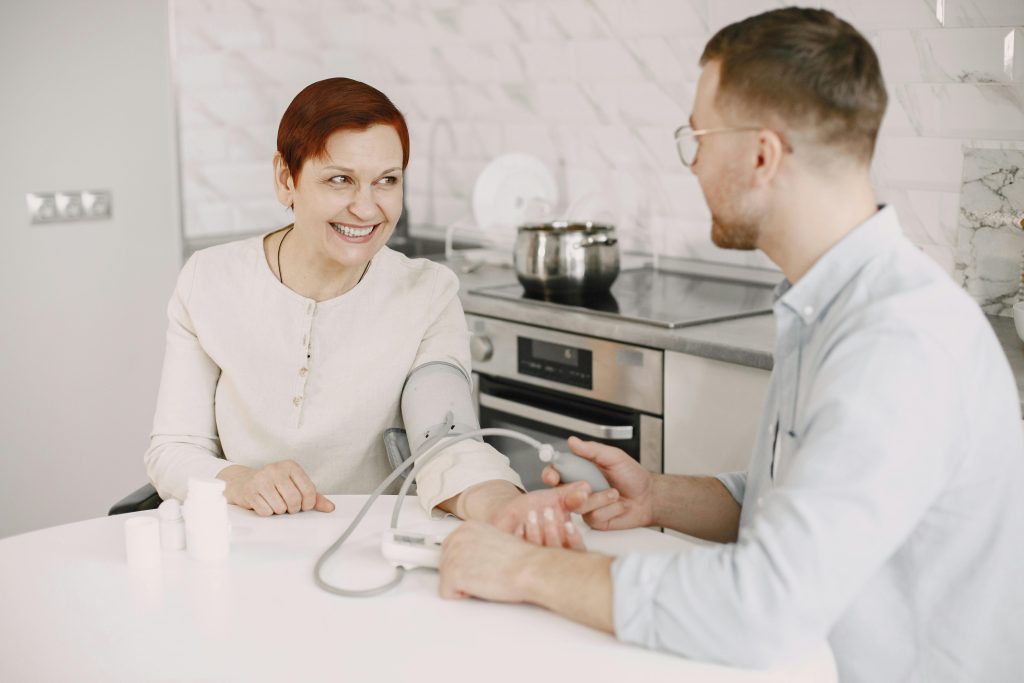
In the clinical landscape of Geriatric Physical Therapy (2020), cardiovascular health is the engine that drives functional independence. For years, the medical community adhered to a “lower is better” philosophy for hypertension. However, modern evidence suggests that Senior Blood Pressure Norms require a more nuanced, individualized approach. Maintaining the Safety Buffer for an 85-year-old involves balancing the risks of a stroke against the very real dangers of orthostatic hypotension and falls. Understanding these shifting targets is essential for anyone looking to maintain their Vigor and stay active in their community.
1. The Evolution of Hypertension Management
For decades, the goal of blood pressure management was simple: drive the numbers as low as possible. But in geriatric medicine, “simple” is rarely “safe.” As highlighted in Geriatric Physical Therapy (2020), the aging body undergoes a process of vascular stiffening. If we treat a 30-year-old and an 80-year-old with the same rigid metric, we ignore the fundamental changes in their Physiological Reserve.
Redefining Senior Blood Pressure Norms is about shifting the focus from a number on a screen to the quality of life in the person. For a senior, the goal of therapy isn’t just a clean lab report; it is the ability to stand up from a chair without the world spinning, allowing them to maintain the Vigor required for daily walks and social engagement. We are moving away from “one-size-fits-all” and toward a model of “Permissive Hypertension” where a slightly higher reading is accepted to ensure the brain remains properly perfused.
2. Physiology Deep-Dive: Why Senior Blood Pressure Norms Shift
To understand why Senior Blood Pressure Norms shift, we must look at the “Hard Science” of the arterial wall. In a young, healthy individual, arteries are highly compliant; they expand and contract with every heartbeat like a rubber band. This is due to a high concentration of elastin fibers.
As we age, a significant biological shift occurs:
- Elastin Breakdown: Chronic mechanical stress leads to the degradation of elastin fibers.
- Collagen Buildup: The body replaces this flexible elastin with collagen, a much stiffer, fibrous protein.
- The Result: The arterial walls become rigid. When the heart pumps blood into these non-compliant “pipes,” the pressure (Systolic) spikes much higher because the vessel cannot expand to absorb the volume.
This process, known as Arteriosclerosis, means the heart has to work harder to maintain flow. From a Professional Perspective, this stiffening is why we often see a “Widened Pulse Pressure”—where the top number (Systolic) is high, but the bottom number (Diastolic) remains low or even drops. Forcing these stiffened vessels to stay at a “youthful” 120 mmHg can actually starve the brain of oxygen.
3. Defining Modern Senior Blood Pressure Norms: SPRINT vs. JNC 8
So, what is the “New Normal”? Clinical evidence has sparked a divide between two major schools of thought. On one side, the SPRINT Trial suggested that intensive control (targeting 120 mmHg) reduced cardiovascular events. However, the JNC 8 Guidelines take a more pragmatic approach for the geriatric population.
- The Standard Target: For adults over age 60, the JNC 8 consensus suggests a target of less than 150/90 mmHg.
- The Rationale: Many clinicians argue that for an 80-year-old, a systolic reading of 140–145 mmHg is actually ideal. It provides enough “head of pressure” to push blood through those collagen-heavy arteries to reach the tiny capillaries in the brain and toes.
- Take-Home Tip for Caregivers: Don’t panic over a single 148/88 reading. Senior Blood Pressure Norms are a moving target. What matters most is consistency. If your loved one feels “fine”—no dizziness, no confusion—that slightly higher number might be their body’s way of protecting its Safety Buffer.
4. The “Safety Box”: When to Call the Doctor
In the clinical management of Senior Blood Pressure Norms, there is a critical distinction between a “high-normal” reading and a medical crisis. Caregivers often feel the weight of this responsibility, wondering if a sudden spike requires an ER visit or just a quiet afternoon.
The Emergency Threshold:
- Hypertensive Emergency: If the reading is 180/120 mmHg or higher AND is accompanied by symptoms like chest pain, shortness of breath, numbness/weakness, or a sudden change in vision.
- The Hypotensive Drop: If the reading falls below 90/60 mmHg and the senior is confused, cold, clammy, or fainting. This indicates a failure of the Safety Buffer and requires immediate medical attention.
Caregiver Focus: The Non-Emergency “Red Flags” Call the primary care physician within 24 hours if you notice:
- Consistent readings above 160/95 mmHg over three consecutive days.
- Frequent “dizzy spells” when standing up (Orthostatic Hypotension).
- A sudden, unexplained increase in falls or “near-misses.”
5. The Risk of “Over-Treating”: The Slippery Slope of Hypotension
From a Professional Perspective, one of the most dangerous trends in geriatric care is the aggressive pursuit of “youthful” numbers. This often leads to iatrogenic (doctor-induced) hypotension, which can accelerate the Slippery Slope of Aging.
When we over-treat hypertension, we inadvertently drain the Physiological Reserve. In an older adult with collagen-stiffened arteries, a blood pressure of 115/70 mmHg might not be enough to overcome gravity.
- The Perfusion Crisis: If the “pump” is too weak, blood doesn’t reach the prefrontal cortex efficiently. This manifests as “brain fog,” lethargy, and a slowed reaction time.
- The Metabolic Cost: Low blood pressure makes every movement—from standing to walking—taxing. Instead of building Vigor through activity, the senior becomes sedentary to avoid the discomfort of lightheadedness.
6. SOT Deep-Dive: Cardiovascular Stability and Balance
For the Allied Health Professional, Sensory Organization Testing (SOT) is the gold standard for identifying balance deficits. However, we must recognize that a “balance” problem is often a “blood pressure” problem in disguise.
- Condition 2 (Eyes Closed, Fixed Surface): A senior with unstable Senior Blood Pressure Norms may show excessive sway or “loss of balance” (LOB) during this test. In this condition, they cannot use their eyes to compensate for the momentary “gray-out” caused by low cerebral perfusion.
- Condition 5 (Eyes Closed, Sway-Referenced Surface): This is the ultimate test of the vestibular system. If a senior’s BP drops while they are trying to balance on a moving surface, the brain’s “processing speed” slows down. The result is a failure that looks like a permanent inner-ear deficit but is actually a transient hemodynamic event.
- Take-Home Tip for Professionals: Always check a patient’s orthostatic vitals before performing high-level balance testing. If their BP is fluctuating, your SOT results will be skewed by cardiovascular instability rather than true sensory integration issues.
7. Orthostatic Hypotension: When Senior Blood Pressure Norms Fail
In the clinical framework of Geriatric Physical Therapy (2020), postural stability is not just about muscle strength; it is about hemodynamic speed. Orthostatic Hypotension (OH)—a sudden drop in blood pressure upon standing—is the most common “invisible” fall risk. When a senior stands, gravity pulls approximately 500 to 1,000 mL of blood toward the lower extremities. In a healthy system, the “Baroreceptor Reflex” constricts blood vessels and increases heart rate within seconds.
As the Physiological Reserve declines, this reflex becomes sluggish. For a senior aiming for strict Senior Blood Pressure Norms, medication can further dampen this response, leading to a “gray-out” or syncope.
- The 20/10 Rule: A clinical diagnosis of OH is made if the Systolic BP drops by 20 mmHg or the Diastolic BP drops by 10 mmHg within three minutes of standing.
- The “Safety Buffer” Delay: We coach patients to use the “Pause and Pump” method. Before standing, pump the ankles 10 times to “prime” the venous return. Once standing, wait 15 seconds before taking the first step. This gives the heart time to catch up with the brain’s oxygen demands.
8. Heart Rate Reserve (HRR): Calculating the Training Zone
From a Professional Insight perspective, we cannot prescribe exercise based on age alone. To reach the 85% HRR zone safely, we must account for the individual’s resting heart rate (RHR), which is often influenced by beta-blockers or other BP medications.
The Karvonen Formula: Target HR = ((Max HR – RHR) x %Intensity) + RHR
Consider two 70-year-old patients with different cardiovascular profiles:
- Max HR (Estimate): 220 – 70 = 150 bpm
- Patient A (Resting HR of 60): Training at 60% intensity.
- ((150 – 60) x 0.60) + 60 = 114 bpm
- Patient B (Resting HR of 80 due to deconditioning): Training at 60% intensity.
- ((150 – 80) x 0.60) + 80 = 122 bpm
Why this matters: Patient B has a much smaller Physiological Reserve. Their “engine” is already idling at a higher speed, meaning they will hit their cardiovascular limit much sooner than Patient A. Without calculating the HRR, a therapist might push Patient B into a dangerous zone, causing a spike that exceeds safe Senior Blood Pressure Norms.
9. Caregiver’s Tool: The Hemodynamic Home Audit
As a caregiver, you are the first line of defense against the “Slippery Slope” of hemodynamic instability. Use this printable log and audit to identify environmental “Dizzy Traps” where a drop in BP could lead to a catastrophic fall.
The Daily Hemodynamic Log
| Time | Position | BP Reading | Symptoms? (Dizzy, Tired, Blurred Vision) |
| 8:00 AM | Sitting (Before Meds) | ||
| 8:05 AM | Standing (3 Mins After) | ||
| 2:00 PM | Sitting | ||
| 8:00 PM | Sitting |
The “Dizzy Trap” Environmental Check
- [ ] The Bedside Launchpad: Is there a sturdy chair or bed rail to hold onto for 30 seconds after waking up?
- [ ] The Hot Shower Hazard: Heat dilates blood vessels, causing BP to plumet. Is there a shower chair and a non-slip mat?
- [ ] The Post-Meal Slump: Blood shifts to the gut after eating. Ensure the senior rests for 30 minutes after a heavy meal before attempting high-effort walking.
- [ ] Lighting & Contrast: Ensure the path to the bathroom is bright. If a senior is lightheaded, they need maximum “Visual Anchors” to stay upright.
10. Conclusion: Reclaiming Vigor through Balanced Pressure
The ultimate goal of managing Senior Blood Pressure Norms is not to achieve a static number on a monitor, but to provide the hemodynamic fuel required for a high-intensity life. In the clinical framework of Geriatric Physical Therapy (2020), cardiovascular health is the foundation of the Safety Buffer. When we find the “sweet spot”—where pressure is low enough to protect the vessels but high enough to power the brain—we allow the senior to move from a state of “fragility” back to a state of Vigor.
Professional Perspective: The “Permissive” Path to Activity
For the allied health professional, the shift toward individualized BP targets is a call to action. We must move away from fear-based sedentary behavior and toward “Permissive Hypertension” in the service of function.
- The Perfusion Prerequisite: Before we can push a patient toward their 85% HRR zone, we must ensure their resting Senior Blood Pressure Norms are high enough to sustain that demand.
- The Confidence Loop: When a senior realizes they can stand, walk, and even exercise without the “gray-out” of hypotension, their fear of falling diminishes. This psychological shift is the most powerful tool we have for reversing the Slippery Slope of Aging.
Movement is the Best Medicine
By understanding that your “New Normal” is a tool for movement rather than a diagnosis of disease, you reclaim control over your environment. Whether it is gardening, visiting the supermarket, or playing with grandchildren, your blood pressure is the engine that makes it possible. Listen to your body, monitor your trends, and work with your clinical team to ensure your pressure supports your lifestyle, not the other way around.
Are your blood pressure targets helping or hurting your balance? Don’t let “perfect” numbers keep you on the couch. Visit geriatricrehab.es today to download our “Hemodynamic Home Audit” and learn how to recalibrate your cardiovascular health for a life of active independence!













