
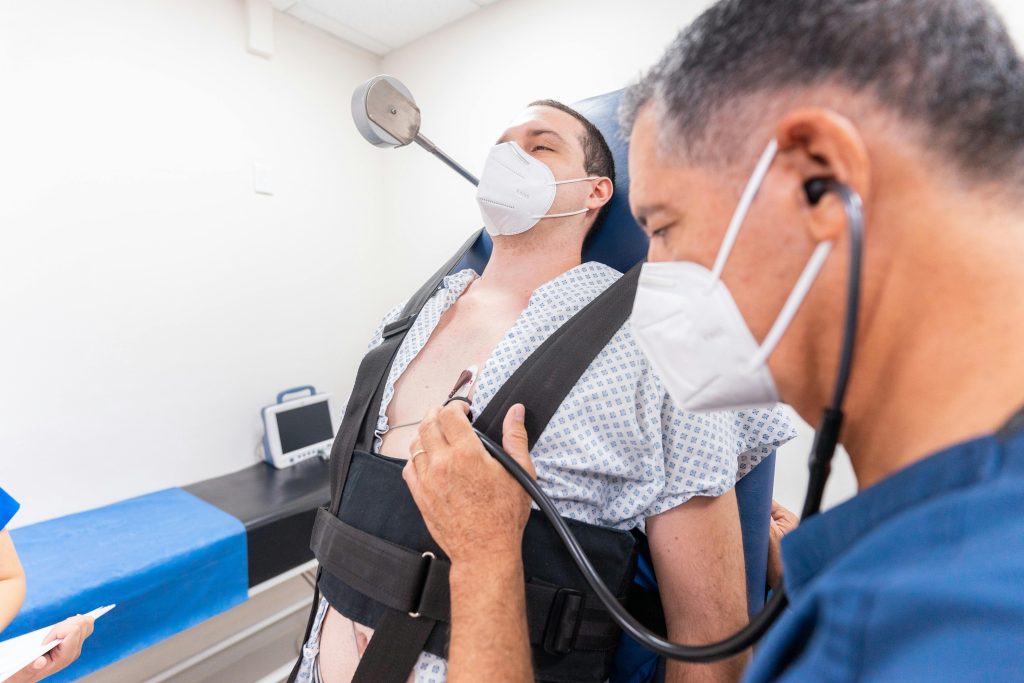
In the realm of geriatric rehabilitation, we often focus on the bones and muscles, but the true “engine” of independence is the cardiopulmonary system. As we transition into Month 7 of our program, our focus shifts to Cardiovascular Health in Seniors. This isn’t just about preventing disease; it is about maximizing your Aerobic Reserve. When your heart and lungs work in perfect synchrony, they deliver the oxygenated “fuel” required for every step you take in the garden or every bag of groceries you carry. By understanding this vital connection, we move away from a sedentary lifestyle and toward a future of sustained vigor and “Optimal Aging.”
1. The Cardiopulmonary Unit and the Aerobic Safety Buffer
The heart and lungs do not function in isolation; they are a single, integrated unit designed to transport oxygen from the atmosphere into your working muscles. For anyone focusing on Cardiovascular Health in Seniors, understanding this “Cardiopulmonary Unit” is essential. We think of this system as your Aerobic Safety Buffer.
Just as we built a “Balance Safety Buffer” in previous months to prevent falls, we now build a “Stamina Buffer.” When this system is efficient, your heart pumps more blood with fewer beats, and your lungs extract oxygen with less effort. This efficiency is what allows a senior to walk through a supermarket or work in a garden without needing to sit down every five minutes. Rehabilitation is about ensuring that your “demand” for oxygen never exceeds your “supply,” keeping you firmly in the “Fun” zone of life.
2. The “Slippery Slope” of Breathlessness: From Activity to Atrophy
In the foundational text ‘Geriatric Physical Therapy (2020)’, we discuss the “Slippery Slope of Aging.” One of the fastest ways to slide down toward frailty is through a sedentary lifestyle that deconditions the heart. When an older adult feels slightly out of breath, the natural instinct is to stop moving.
However, this avoidance leads to a rapid decline in Physiological Reserve. As the heart becomes less efficient, even smaller tasks—like climbing a single flight of stairs—become exhausting. This “breathlessness cycle” narrows your world. By intervening with targeted aerobic activity, we stop the slide. We use “Exercise as Medicine” to push back against deconditioning, ensuring that your heart remains a powerful pump rather than a bottleneck to your independence.
3. Hard Science: Vascular Stiffening and the Elastin-Collagen Shift
To truly understand Cardiovascular Health in Seniors, we must look at the “Hard Science” occurring within the vessel walls. Aging is characterized by a significant structural remodeling of the arterial system, specifically the large conducting arteries like the aorta.
The primary culprit is a shift in the extracellular matrix. In a youthful heart, the arteries are rich in elastin, a highly flexible protein that allows vessels to expand and recoil with every heartbeat. As we age, elastin undergoes mechanical fatigue and enzymatic breakdown. To compensate for this loss of structural integrity, the body deposits collagen, a much stiffer, fibrous protein.
This “Elastin-to-Collagen Shift” results in vascular stiffening. A stiff aorta cannot absorb the pressure of the blood being ejected from the heart, leading to an increase in systolic blood pressure and a greater workload on the left ventricle. This is why “Aerobic Training” is so vital; it helps maintain vessel elasticity and counteracts the buildup of collagen, effectively keeping your “pipes” flexible and your heart efficient.
Practical ‘Take-Home’ Tips for Caregivers:
- The “Talk Test”: During a walk, if a senior can speak in full sentences but cannot sing, they are at a perfect, safe intensity for building heart health.
- Observe Pulse Pressure: If you notice a large gap between the top number (systolic) and bottom number (diastolic) of a blood pressure reading, it is a sign of the vascular stiffening described above.
- Hydration is Heart Health: Dehydration reduces blood volume, making a stiff heart work significantly harder. Ensure seniors drink water consistently throughout the day.
4. Professional Insight: Heart Rate Reserve (HRR) and Cardiovascular Health in Seniors
For the rehabilitation professional, prescribing “walking” is insufficient. We must prescribe a specific dosage based on the patient’s Heart Rate Reserve (HRR). The HRR is the difference between a senior’s resting heart rate (RHR) and their age-predicted maximum heart rate (MaxHR).
Consider two 70-year-old patients. Both have an age-predicted MaxHR of 150 bpm (220 – 70).
- Patient A (Sedentary): Resting HR of 80 bpm. Their HRR is 70 (150 – 80).
- Patient B (Active): Resting HR of 60 bpm. Their HRR is 90 (150 – 60).
If we prescribe a moderate intensity of 50% HRR, Patient A’s target zone is 115 bpm, while Patient B’s is 105 bpm. Even though they are the same age, Patient A must work at a higher relative heart rate to achieve the same physiological stimulus because their “reserve” is smaller. This calculation is vital in Cardiovascular Health in Seniors to ensure we are pushing the system enough to create adaptation without causing overexertion or cardiac distress.
5. Clinical Benchmarks: Obstructive vs. Restrictive Lung Patterns
In Month 7, we examine the pulmonary “bellows” powering your movement. Breathing maintains the pressure and volume necessary for an efficient heart “pump”. By identifying “outflow” versus “inflow” challenges, we widen your Safety Buffer and provide the structural insurance your heart needs for high-intensity activity.
- Obstructive Patterns (e.g., COPD, Emphysema): This is a “plumbing” issue. The airways are narrowed, making it hard to get air out. Seniors with obstructive disease often develop a “barrel chest” as air becomes trapped in the lungs, forcing the heart to work against increased thoracic pressure.
- Restrictive Patterns (e.g., Pulmonary Fibrosis, Chest Wall Stiffening): This is a “container” issue. The lungs or the chest wall become stiff (often due to the same collagen buildup we see in arteries), making it hard to get air in.
In both cases, the heart suffers. In obstructive disease, the right side of the heart may enlarge (Cor Pulmonale), trying to push blood through oxygen-starved lung tissue. In restrictive disease, the shallow breathing pattern limits the “venous return” to the heart, reducing stroke volume. Understanding these patterns allows us to tailor the 4-Week Progressive Activity Diary found in Section 8.
6. The “Safety Box”: Vital Signs and Cardiovascular Health in Seniors
While our primary goal is to promote movement and expand your Physiological Reserve, safety remains the non-negotiable foundation of Cardiovascular Health in Seniors. Monitoring how the body reacts to exertion is critical because, in the geriatric population, the line between “therapeutic challenge” and “clinical distress” can be narrow. Every senior and caregiver should be vigilant for these “Red Flags.” If any of the following occur, stop the activity immediately, rest, and contact a healthcare provider.
The Vital Sign “Stop Lights”
Think of these clinical markers as your internal traffic signals. Staying in the “Green” means you are building health; hitting a “Red” means the system is overwhelmed.
- Heart Rate (HR):
- The Blunted Response: During activity, the heart rate should rise linearly with effort. If the HR fails to increase despite increased exertion, it may indicate underlying conduction issues or medication interference.
- Delayed Recovery: If your heart rate stays elevated or feels like it is “racing” for more than 15 minutes after you have stopped moving, your Aerobic Safety Buffer is being overtaxed.
- Blood Pressure (BP):
- Exertional Hypotension: Typically, systolic BP (the top number) should rise during exercise. A drop in systolic BP during activity is a significant red flag often linked to cardiac output failure.
- Hypertensive Spike: Avoid continuing activity if systolic BP exceeds 200 mmHg or diastolic BP exceeds 110 mmHg, as this puts undue stress on the vascular walls.
- Oxygen Saturation (SpO2): Using a pulse oximeter, monitor for any drop below 90% during movement. This indicates that the lungs are failing to keep up with the body’s demand for gas exchange.
- Physical Subjective Symptoms:
- Angina: Any chest pain, pressure, or “squeezing” sensation.
- Diaphoresis: Sudden, cold, clammy sweats that are out of proportion to the exercise intensity.
- The “Zero-Word” Rule: If breathlessness is so extreme that you cannot speak a single word, you have moved past the “Talk Test” into a zone of high clinical risk.
Clinical Note on Beta-Blockers: Many seniors take medications like Metoprolol or Atenolol to manage blood pressure. These drugs are “Beta-Antagonists,” meaning they chemically “cap” the heart rate. In these patients, a heart rate monitor is unreliable for measuring intensity. Instead, we must use the Borg RPE Scale (Rating of Perceived Exertion).
If a patient on beta-blockers reaches a 15 (“Hard”) on the Borg scale, they should cease exertion regardless of a “normal” heart rate reading, as their perceived effort is a more accurate reflection of their internal physiological strain.
7. The Caregiver Action Plan: Pursed-Lip Breathing for Cardiovascular Health in Seniors
When a senior with compromised Cardiovascular Health in Seniors experiences dyspnea (shortness of breath), a “panic response” often sets in. They begin to take rapid, shallow, upper-chest gasps. Physiologically, this is counterproductive: it causes “air trapping” in the lungs, prevents full oxygen exchange, and forces the heart to beat faster to compensate for the lack of oxygen.
As a caregiver, your role is to act as the “external regulator” for their nervous system. You can reset their breathing mechanics using Pursed-Lip Breathing (PLB). This technique creates a small amount of “Positive End-Expiratory Pressure” (PEEP) in the airways, keeping the bronchioles open longer so more CO2 can escape, and more oxygen can enter.
The Caregiver Coaching Script
Use a calm, steady voice. Physical touch on the shoulder can help ground the senior and reduce anxiety.
- Step 1: The “Smell the Rose” Inhale
- Instruction: “Look at me. Relax your shoulders. Take a slow, gentle breath in through your nose for two seconds. Imagine you are smelling a rose. Don’t gasp—just a soft, quiet inhale.”
- Step 2: The Pucker
- Instruction: “Now, pucker your lips together, just like you’re about to whistle or blow out a birthday candle.”
- Step 3: The “Flicker the Flame” Exhale
- Instruction: “Blow the air out slowly through your puckered lips for at least four seconds. We want the exhale to be twice as long as the inhale. Imagine you are blowing on a candle flame—you want to make the flame flicker, but you don’t want to blow it out. Let the air flow out naturally; don’t force it.”
- Step 4: Rhythmic Stabilization
- Instruction: “Excellent. Let’s do that again. In for two… and out for four. We will keep doing this together until your heart feels steady and your breath comes back to you.”
By mastering this script, caregivers provide a vital “bridge” during moments of exertion, allowing the senior to recover their breath without escalating into a state of respiratory distress. This simple intervention is a cornerstone of maintaining independence during community outings or household tasks.
8. Rehab in Action: The 4-Week Progressive Activity Diary
To safely expand the Aerobic Safety Buffer, we must follow the “Principle of Progression.” For seniors with COPD or stable heart failure, we use a “Start Low, Go Slow” approach. Use this diary to track Cardiovascular Health in Seniors and monitor the Borg RPE Scale (Goal: 11–13 “Fairly Light” to “Somewhat Hard”).
| Week | Activity Type | Duration | Frequency | Caregiver Note |
| Week 1 | Indoor level walking | 5–10 mins | 3x daily | Focus on Pursed-Lip Breathing during movement. |
| Week 2 | Outdoor (flat) walking | 15 mins | 1x daily | Check SpO2 before and after the walk. |
| Week 3 | Intervals (2 min fast / 1 min slow) | 20 mins total | 4x weekly | Monitor for “Stop Light” red flags (Section 6). |
| Week 4 | Sustained rhythmic activity | 30 mins | 5x weekly | Goal: Ability to maintain the “Talk Test” throughout. |
9. The Frank-Starling Mechanism: How Aging Changes Stroke Volume
For the professional, we must understand the “Hard Science” of why seniors fatigue faster. The Frank-Starling Mechanism states that the heart’s stroke volume (the amount of blood pumped per beat) increases in response to an increase in the volume of blood filling the heart.
In a youthful heart, the “squeeze” (contractility) is the primary driver. However, due to the Vascular Stiffening we discussed in Section 3, the aging heart becomes less compliant. It cannot “squeeze” as hard against stiff arteries. Instead, it relies more on the “stretch”—filling the left ventricle more deeply to maintain output. This makes preload (venous return) critical. If a senior is dehydrated or has poor leg muscle pump action, their heart cannot utilize this mechanism, leading to a sudden drop in blood pressure and a narrowing of their Physiological Reserve.
10. Conclusion: Your Roadmap to Sustainable Vigor
Month 7 is the turning point where we transform “stability” into “stamina.” By mastering the connection between your heart and lungs, you are doing more than just exercising; you are reinforcing your Aerobic Safety Buffer against the stresses of daily life. We have seen how vascular stiffening, heart rate reserve, and lung compliance all dictate your ability to move with vigor.
Remember, Cardiovascular Health in Seniors is a long game. Every session of pursed-lip breathing and every minute added to your activity diary is a deposit into your Physiological Reserve. You are not just living longer; you are living with the heart-lung capacity to stay in the “Fun” zone of life.
Empower your journey to optimal aging today. If you find your “gas tank” is running low, do not settle for a sedentary life. Consult with a specialized geriatric physical therapist to receive a professional 6-Minute Walk Test and a personalized HRR training zone. Explore our full library of evidence-based cardiopulmonary guides at geriatricrehab.es to ensure your engine is ready for the years ahead.













