
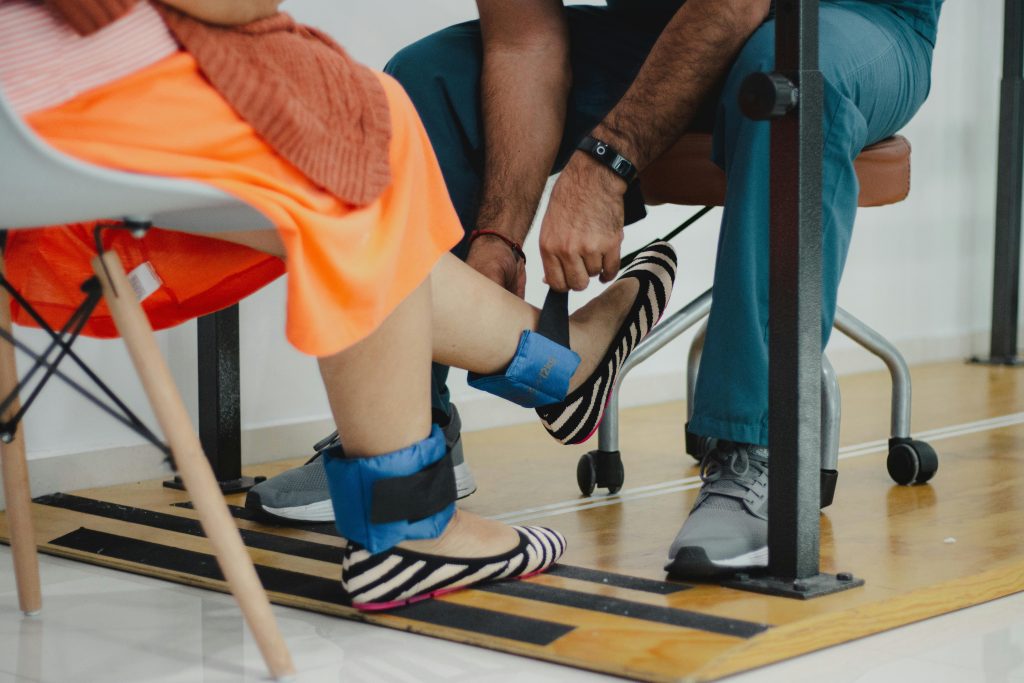
In the journey of geriatric rehabilitation, Month 6 has been dedicated to the science of stability. Achieving true Balance and Fall Prevention requires more than just “watching your step”; it demands a coordinated effort between your cellular health, your neurological processing, and your physical environment. By widening your biological Safety Buffer, we have moved beyond the fear of falling and toward the freedom of movement. Whether you are navigating your kitchen or a crowded supermarket, the strategies we’ve covered serve as your “structural insurance,” ensuring you remain in the “Fun” and “Function” zones of life as we transition into our cardiovascular focus next month.
1. Reframing Balance as a Skill, Not a Loss
As we conclude Month 6, it is vital to remember that balance is not a static trait that simply disappears with age; it is a dynamic skill that can be sharpened, maintained, and even restored. In the clinical world, we shift the focus away from “loss” and toward “adaptability.” Our comprehensive focus on Balance and Fall Prevention has centered on widening your Safety Buffer—the vital margin between your current physical capabilities and the unpredictable environmental challenges you face daily.
Rehabilitation is about much more than the absence of a fracture; it is about the “presence of function.” High-authority care emphasizes that when you possess a wide Safety Buffer, you gain the psychological and physical confidence required to lead an active, unrestricted life. This month, we have reframed the “near miss.” A stumble that doesn’t result in a fall is not a sign of failure; it is a clinical success story. It is proof of a successful deployment of your neuromuscular recovery strategies. By mastering these principles, you have secured the “structural insurance” needed to walk in the garden, navigate a busy supermarket, or keep up with grandchildren with total peace of mind.
2. The Biological Engine: Vitamin D and the “Emergency” Fibers
One of the most critical “hidden” components of Balance and Fall Prevention we discussed this month is the metabolic foundation of your skeletal muscles. To understand balance, we must look at the cellular level. Human muscles are composed of two primary types of tissue: Type I (slow-twitch) fibers, which manage endurance and posture, and Type II (fast-twitch) fibers. These Type II fibers are your “emergency responders”—the high-velocity units that allow you to move your foot rapidly or hinge your hips when you trip.
Citing ‘Geriatric Physical Therapy (2020)’, we know that Vitamin D acts as a critical “neuromuscular primer” for these Type II fibers. It is not just for bone density; it is essential for the “cross-bridge cycling” that allows muscles to contract with speed. Without optimal serum levels, these fibers begin to atrophy, a process known as sarcopenia. This leads to a “sluggish” hip strategy—where the brain sends the signal to move, but the biological engine is too slow to execute the save. By focusing on targeted nutrition alongside high-velocity resistance exercise, we ensure your internal “engine” is fueled for the split-second, high-velocity recovery movements that prevent a minor slip from becoming a major medical event.
3. The Slippery Slope: Assessing Your Physiological Reserve
Throughout this month, we have frequently referenced the “Slippery Slope of Aging.” This model illustrates the transition from “Fun” to “Function” to “Frailty.” Your Physiological Reserve—the “extra” capacity you have to handle unexpected stumbles—is what keeps you from sliding down that slope.
Every strategy we’ve implemented—from gait analysis to home audits—is designed to stop the slide. When you maintain a high reserve, you have the “structural insurance” needed to manage the large displacements of daily life. By keeping your strength and balance capacity in the “Function” zone, you ensure that you remain an active participant in your own longevity, ready for the cardiovascular challenges we will tackle in Month 7.
Practical ‘Take-Home’ Tips for Caregivers:
- Monitor “Launch” Speed: Observe how quickly your loved one can stand from a chair; this is a direct reflection of their Type II fiber power and overall reserve.
- The “Sunshine” Check: Ensure your loved one’s Vitamin D levels are being monitored by a physician, as this is the “fuel” for their balance engine.
- Confidence Tracking: Ask your loved one if they feel “steady” during daily tasks. A decrease in confidence often precedes a physical fall.
4. Professional Deep-Dive: Sensory Organization Testing (SOT) and Balance and Fall Prevention
For the allied health professional, Month 6 has been about identifying the “why” behind instability. Sensory Organization Testing (SOT) is the gold standard for this. It allows us to determine how a senior “re-weights” their sensory inputs—vision, somatosensory (touch), and vestibular (inner ear)—when one or more systems are compromised.
In the Balance and Fall Prevention framework, SOT scores tell us if a senior is “Visually Dependent.” For example, if a senior’s balance fails in a dark room or a steamy bathroom, their brain is likely over-relying on vision rather than their vestibular system. By isolating these six conditions, clinicians can move beyond general “balance exercises” and instead prescribe “Sensory Training.” This ensures that whether a senior is walking on a thick rug (diminished somatosensory) or in low light, their brain can quickly switch to the most reliable sensory “anchor.”
5. Clinical Benchmarks: Evidence-Based Balance and Fall Prevention Metrics
As we transition from theory to practice, we must rely on objective data. This month, we highlighted several clinical benchmarks from ‘Geriatric Physical Therapy (2020)’ that serve as high-authority predictors of safety.
- Functional Reach Test: A reach of less than 6 inches indicates a significantly narrowed Safety Buffer and a high risk for falls during daily tasks like reaching for a cupboard.
- Gait Variability: In Senior Gait Analysis, a coefficient of variation in step length greater than 3% suggests a rhythmic breakdown in the neuromuscular system.
- The Timed Up and Go (TUG): This measures the transition from “Function” to “Frailty.” Completing the task in over 12 seconds suggests that the senior’s Physiological Reserve is being heavily taxed by simple mobility.
6. Day 17 Review: The Hierarchy of Recovery Strategies
On Day 17, we explored the “Pillars of Recovery.” Balance is not about staying perfectly still; it is about how effectively you respond to the magnitude of displacement—how far you are pushed off-center.
- The Ankle Strategy (Small Displacement): The first line of defense. The muscles around the ankle fire to pull you back. This requires high-speed sensory feedback from the feet.
- The Hip Strategy (Moderate Displacement): A “top-down” movement where the pelvis shifts rapidly. This is where those Vitamin D-primed Type II fibers are essential. If the hips are too slow, the displacement becomes a fall.
- The Stepping Strategy (Large Displacement): When the center of gravity moves completely outside your base of support. Taking a “recovery step” is a complex neurological save that we have practiced all month to turn a trip into a simple “catch.”
7. The Caregiver Corner: The “Day 9” Environmental Audit Wrap-Up
For caregivers, the ultimate goal of the Day 9 Environmental Audit is to ensure that the home supports the senior’s physiological abilities rather than challenging them. By removing “environmental traps,” we preserve the senior’s Physiological Reserve for meaningful activities rather than wasting it on navigating hazards.
The “Safe Path” Printable Checklist:
- The Living Room & Hallways:
- [ ] The “Rug Rule”: All loose throw rugs must be removed or secured with permanent, non-slip backing.
- [ ] Clearance Zones: Ensure paths are at least 36 inches wide to accommodate a wider step-width if the senior’s Senior Gait Analysis indicated a need for a broader base of support.
- The Bedroom:
- [ ] Bed Height: When the senior is sitting on the edge of the bed, their feet should be flat on the floor with knees at a 90-degree angle. This ensures a safe “sit-to-stand” transition.
- [ ] Lighting: Install motion-activated path lights from the bedside to the bathroom to prevent “Visual Dependence” issues in the dark.
- The Kitchen:
- [ ] The “Reach Rule”: Frequently used items must be moved to waist-level shelves to avoid the extreme displacements addressed in the Functional Reach Test.
8. The Ultimate Buyer’s Guide: Using Senior Gait Analysis to Choose Assistive Devices
When internal balance mechanisms are compromised, assistive devices serve as “External Stability Anchors.” Choosing the right device is a clinical decision based on the senior’s specific SOT profile, strength levels, and the results of a Senior Gait Analysis.
| Device Type | Pros | Cons | Safety Buffer Impact |
| Standard Cane | Lightweight; highly portable; increases sensory feedback from the ground. | Provides minimal weight-bearing support; can “trip” the user if poorly handled. | Widens the buffer for “Sensory-Dependent” walkers by providing a third point of contact for spatial orientation. |
| 2-Wheeled Walker | Promotes a natural, rhythmic gait; more stable than a cane; allows for a constant “glide.” | Can be difficult to turn in tight corners; it requires lifting to navigate curbs. | Provides a permanent stability margin for those with high gait variability, ensuring the center of mass stays within the frame. |
| 4-Wheeled Rollator | Includes a seat for fatigue management; moves easily on diverse terrain. | Can “run away” on slopes; requires significant Type II fiber response for braking. | Widens the Endurance Buffer for community outings but requires high-authority cognitive focus to manage the wheels on inclines. |
| Hemi-Walker | Provides a massive base of support for one-handed use; extremely stable. | Heavy and bulky; can lead to an asymmetrical “hitch” in the gait cycle. | Acts as a Maximum Safety Anchor for stroke survivors, trading walking speed for a nearly unshakeable lateral buffer. |
Staff Tip: Overcoming the “Freeze” with Visual Cues
If a Senior Gait Analysis reveals that a patient suffers from “Freezing of Gait” (FOG) or a very staggered start, a standard walker may not be enough. In these cases, we recommend a Laser-Link Walker. These devices project a bright red line on the floor in front of the user. This visual cue bypasses the damaged basal ganglia pathways in the brain, allowing the senior to “step over” the line. This effectively restarts the gait rhythm and restores the Safety Buffer during the most vulnerable moments of transitions and turns.
The Psychology of the Cane: Reframing Stability as Power
The biggest hurdle to improving balance isn’t physical—it’s the “Psychology of the Cane.” Many seniors view a walker as a symbol of frailty. At geriatricrehab.es, we reframe these tools as “Athletic Stability Gear.” Using a device is a proactive choice to protect your Fun and Function zones. It is the gear that allows you to walk to the supermarket or through the park with the same confidence you had years ago. You aren’t “surrendering” to age; you are upgrading your equipment to maintain your independence.
9. The Psychology of Confidence: Reframing Balance and Fall Prevention as Empowerment
In geriatric rehabilitation, the most formidable barrier to Balance and Fall Prevention is often psychological: the “Fear-Avoidance Cycle.” Following a “near miss,” many seniors instinctively self-limit their activity, skipping trips to the garden or supermarket to avoid perceived risks.
This retreat into inactivity triggers a catastrophic physiological chain reaction. Disuse causes rapid muscle atrophy and neuromuscular decline, which narrows the Safety Buffer. Consequently, the fear of falling creates a downward spiral that increases the actual biological likelihood of a fall.
At geriatricrehab.es, we dismantle the “Psychology of the Cane”—the stigma that assistive devices signal surrender. Instead, we reframe these tools as “Athletic Stability Gear.” Much like an elite hiker uses trekking poles to conquer a mountain, a senior uses a walker to conquer the community. Utilizing a device is not a sign of weakness; it is a proactive, high-authority choice to protect your “Fun” and “Function” zones. By embracing these tools, you are not surrendering—you are reclaiming your right to move with dignity and confidence.
10. Conclusion: Looking Ahead to Month 7—The Cardiovascular Connection
Month 6 has been about building a “Fracture-Proof” life. We have explored how Balance and Fall Prevention is a multifaceted discipline that combines the cellular health of your Type II fibers, the sensory precision of your SOT profile, and the structural safety of your home environment. By widening your Safety Buffer, you have done more than just reduce a statistical risk; you have reclaimed the confidence to be an active participant in your community.
As we transition into Month 7, our focus shifts to the Cardiovascular System. This is a natural progression: a strong heart and efficient circulation provide the oxygen and nutrients your muscles need to maintain the “Neuromuscular Engine” we built this month. Without cardiovascular endurance, even the strongest “Safety Buffer” will eventually fatigue.
Your Roadmap to Continued Independence:
- Maintain the Audit: Keep your “Day 9” environmental modifications in place; they are the foundation of your safety.
- Keep Moving: Continue the balance strategies from “Day 17” to ensure your ankle and hip strategies remain “primed.”
- Prepare for Month 7: We will begin focusing on “Aerobic Reserve,” which will give you the stamina to stay upright longer and recover faster from daily activities.
Empower your journey to optimal aging today. If you or a loved one is experiencing a narrowing “Safety Buffer,” do not wait for a fall to take action. Consult with a specialized geriatric physical therapist to receive your personalized Senior Gait Analysis and SOT profile. Explore our full library of evidence-based guides and “Day 9” checklists at geriatricrehab.es to ensure your home and your body are ready for the adventures of Month 7 and beyond.













