
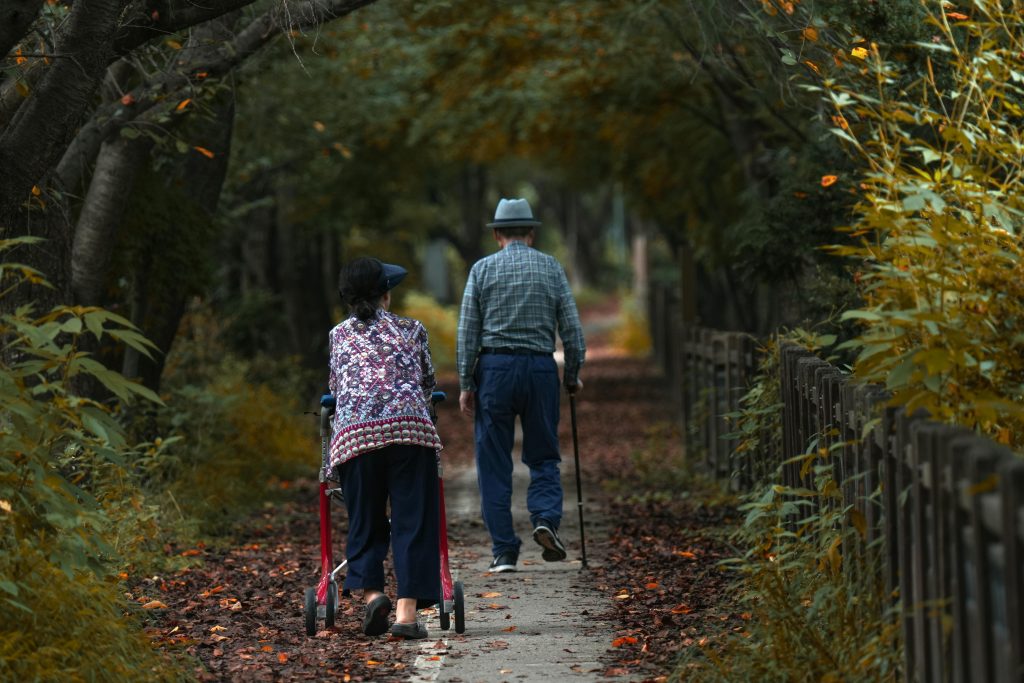
In the practice of geriatric rehabilitation, we often say that walking is a “controlled fall.” When we move, our brain coordinates hundreds of data points every second to maintain stability. However, when that rhythm becomes irregular, it signals a breakdown in neurological and muscular coordination. Performing a Senior Gait Analysis allows us to measure “Gait Variability”—the subtle, uneven changes in step length, width, and timing. By widening your biological Safety Buffer, we can identify these inconsistencies before they result in a medical crisis, ensuring you maintain the freedom to walk in your garden or navigate a crowded supermarket with total confidence.
1. Defining Gait Variability and the Safety Buffer
When we observe a healthy, youthful walk, we see a rhythmic, almost metronomic quality. Gait Variability refers to the subtle fluctuations in that rhythm—the “unevenness” of your steps from one moment to the next. In clinical terms, we look at the consistency of your step length, width, and timing. While everyone has a tiny bit of variability, a high degree of inconsistency is a primary indicator of a narrow Safety Buffer.
Rehabilitation isn’t just about avoiding a hit to the floor; it’s about having the “structural insurance” to walk with grace and confidence. When your gait is consistent, your brain isn’t working as hard to “save” you from every step. By performing a Senior Gait Analysis, we identify these rhythm breaks early. This allows us to widen your buffer, ensuring you can walk in your garden or navigate a busy supermarket with the peace of mind that your body is in sync.
2. The “Slippery Slope”: How Uneven Steps Accelerate Frailty
In ‘Geriatric Physical Therapy (2020)’, we frequently reference the “Slippery Slope of Aging.” This model illustrates the transition from “Fun” (full physical capacity) to “Function” to “Frailty.” An uneven walk is often the first “canary in the coal mine” suggesting a decline in Physiological Reserve—the extra strength and neurological “gas in the tank” we use for emergencies.
When gait variability increases, it means the body is struggling to find its center of gravity with every step. This struggle consumes massive amounts of energy, leading to rapid fatigue. A Senior Gait Analysis helps us catch this slide early. By intervening with targeted “Exercise as Medicine,” we stop the descent toward frailty, fortifying your rhythm so you can remain in the “Function” and “Fun” zones of life for as long as possible.
3. The Biomechanics of Rhythm: Type II Fibers and the Neuromuscular Engine
Maintaining a steady stride requires more than just endurance; it requires “power”—the ability of muscles to fire at high velocities. This is the specific domain of Type II (fast-twitch) muscle fibers. These fibers are your body’s “emergency responders.” During a walk, if one step is slightly off-center or lands on an uneven crack in the sidewalk, these fibers must fire instantly to correct your position before your next foot hits the ground.
Evidence shows that Vitamin D is a vital “primer” for these fibers. Without optimal levels, Type II fibers can atrophy, leading to a “sluggish” gait where the rhythm becomes unpredictable. This delay is what causes a simple, uneven walk to escalate into a dangerous fall. By widening your Safety Buffer through both nutrition and power-training, we ensure your internal “engine” is primed to maintain a consistent, safe, and powerful rhythm.
Practical ‘Take-Home’ Tips for Caregivers:
- Listen to the Walk: If you hear an “uneven” sound to your loved one’s footsteps—such as a scuff followed by a heavy thud—it is a sign that their gait variability is increasing.
- The “Stop and Talk” Test: If your loved one must stop walking in order to answer a question, it suggests their brain is using all its “processing power” just to maintain gait rhythm.
- Visual Cues: You can help a senior “practice” rhythm at home by placing brightly colored painters’ tape on the floor at consistent intervals (about 12–18 inches) to encourage even step lengths.
4. Professional Deep-Dive: Sensory Organization Testing (SOT) and Senior Gait Analysis
For the healthcare professional, a Senior Gait Analysis is a window into the patient’s “sensory re-weighting” capabilities. Gait rhythm is not just a motor output; it is a response to sensory input. Sensory Organization Testing (SOT) allows us to determine which system—visual, vestibular, or somatosensory—is driving gait inconsistency.
If a patient is “Somatosensory Dependent,” their gait variability will spike when walking on uneven grass or thick carpet, as they cannot accurately feel the ground. Conversely, a patient with vestibular deficits may show increased “sway” and irregular timing during the swing phase of their walk. By correlating SOT scores with gait metrics, we can determine if a senior’s uneven walk is a “wiring” issue (sensory) or a “hardware” issue (muscle weakness), allowing for much more precise rehabilitation.
5. Clinical Benchmarks: Quantitative Metrics in Senior Gait Analysis
Clinicians must look beyond the “eyeball test” and utilize quantitative metrics to assess risk within the ICF (International Classification of Functioning, Disability and Health) framework. During a Senior Gait Analysis, we focus on several key temporal and spatial parameters that define a “stable” stride.
- Stride Length Variability: A coefficient of variation (CoV) of greater than 3% in stride length is a high-authority predictor of falls.
- Swing Time Consistency: The time your foot spends in the air should be nearly identical for both legs. A discrepancy suggests a “weak” side that is shortening its reach to find safety.
- Step Width: A “wide-based gait” is often a compensatory strategy used by seniors with a narrow Safety Buffer to increase their stability, though it significantly increases the energy cost of walking.
6. Dynamic Recovery: Ankle, Hip, and Stepping Strategies in Mid-Stride
On Day 17 of our clinical training, we explore how the body “saves” an uneven step. When a stride is inconsistent, the magnitude of the resulting displacement determines which balance strategy is recruited to prevent a fall.
- The Ankle Strategy (Small Correction): If a step lands slightly off-target, the calf muscles fire to pull the center of mass back over the base of support.
- The Hip Strategy (Moderate Correction): If the uneven step creates a larger sway, the body rapidly hinges the hips (the “hip hinge”) to regain control.
- The Stepping Strategy (Large Correction): If the stride is so irregular that the center of gravity moves outside the feet, the senior must take a “recovery step.”
Professional Perspective: High gait variability forces the body to constantly cycle through these strategies, leading to “neuromuscular fatigue.” By widening the Safety Buffer through perturbation training, we teach the brain to execute these “saves” automatically, ensuring that a single uneven step doesn’t lead to a cascade of instability.
7. The Caregiver Corner: The “Day 9” Environmental Audit for Safer Walking
For the caregiver, managing an uneven walk means removing the “environmental noise” that forces a senior to change their stride. This Environmental Audit is designed to create a “predictable path.” When the ground is predictable, the brain can focus on maintaining a rhythmic gait rather than reacting to obstacles.
The “Predictable Path” Checklist:
- Floor Transitions:
- [ ] The “Threshold Flush”: Check for height differences between wood, tile, and carpet. Even a quarter-inch lip can catch a “shuffling” foot during an uneven step.
- [ ] Color Contrast: Use high-contrast tape at the edge of steps or transitions to provide the visual “input” needed to adjust step height.
- Lighting for Rhythm:
- [ ] Eliminate Shadows: Uneven lighting creates “optical illusions” that cause a senior to hesitate or take a shorter, staggered step.
- [ ] Motion Pathing: Ensure motion-activated lights illuminate the floor before the senior enters the hallway.
- Clearance Zones:
- [ ] The “Hip-Width” Rule: Ensure hallways and pathways between furniture are at least 36 inches wide. This allows the senior to utilize a wider “Step Width” if their Senior Gait Analysis suggests they need it for stability.
8. The Ultimate Buyer’s Guide: Using Senior Gait Analysis to Choose Assistive Devices
When gait variability becomes high, an assistive device acts as an external rhythm-maker. By providing extra points of contact with the ground, these tools effectively widen your Safety Buffer and reduce the “neuromuscular tax” of walking.
| Device Type | Pros | Cons | Best For |
| Standard Cane | Lightweight; highly portable; helps with “sensory feel.” | Provides minimal weight-bearing support. | Mild variability; “Sensory-Dependent” walkers. |
| 2-Wheeled Walker | Promotes a natural, rhythmic gait; very stable. | Can be difficult to turn in tight spaces. | Moderate variability; those needing “weight-bearing” help. |
| 4-Wheeled Rollator | Includes a seat for fatigue management; moves smoothly. | Can “run away” on slopes; requires hand-brake coordination. | High variability; seniors who enjoy walking in the park. |
| Hemi-Walker | Widest base of support for one-handed use. | Heavy and slow; can lead to an asymmetrical “hitch” in gait. | Stroke recovery or severe one-sided weakness. |
Staff Tip for Length: If the Senior Gait Analysis shows that a patient “freezes” or has a very staggered start, a Laser-Link Walker (which projects a line on the floor) can provide the visual cue needed to initiate a rhythmic, even step.
9. The Psychology of the Cane: Reframing Stability as Power
The biggest hurdle to improving gait isn’t the physical therapy—it’s the “Psychology of the Cane.” Many seniors view a walker or cane as a symbol of the “Slippery Slope” toward frailty. They fear it makes them “look old.” At geriatricrehab.es, we challenge this stigma directly.
Think of a trekking pole used by an elite hiker or a high-tech brace used by a professional athlete. These aren’t signs of weakness; they are pieces of Athletic Stability Gear. A cane is a “Third Leg” that sends high-speed sensory data back to your brain, making your walk faster and more powerful. When we reframe the device as a tool for “Power Walking,” the senior stops focusing on the “limp” and starts focusing on the rhythm. Using a device is a proactive choice to stay in the “Fun” and “Function” zones of life. It’s the gear that allows you to walk to the supermarket or through the park with the same confidence you had years ago.
This final section synthesizes the clinical, environmental, and psychological pillars we have discussed, providing a clear roadmap for long-term independence.
10. Conclusion: Reclaiming Your Rhythm and Your Independence
Achieving a fall-free future is not the result of a single exercise or a single supplement; it is a holistic endeavor. As we have explored, understanding why an uneven walk matters is the first step in protecting your Safety Buffer. By using a Senior Gait Analysis to identify inconsistencies in your step length and timing, you aren’t just looking for “problems”—you are identifying opportunities to build “structural insurance” for your future.
True success in geriatric care is found in the synergy between the internal and external worlds. Internally, we support your body’s sensory organization and recovery strategies (Ankle, Hip, and Stepping) through “Exercise as Medicine” and proper nutrition. Externally, we optimize your environment through rigorous Day 9 Environmental Audits and the selection of high-quality assistive devices that enable, rather than restrict, your movement.
When these elements work together, the “Slippery Slope of Aging” becomes a manageable path. Remember that you are an active participant in your own longevity. Whether your goal is to reclaim the confidence to walk in the garden, navigate the supermarket aisles, or simply move through your home with peace of mind, the combination of clinical knowledge and practical action is your greatest asset.
Empower your health today by scheduling a Senior Gait Analysis with a specialist. Use the results to perform a “Day 9” audit of your home and discuss your Vitamin D levels with your physician. Let’s work together to widen your Safety Buffer and keep the world open for the activities you love. Visit geriatricrehab.es for more tools to help you master your stride.













