
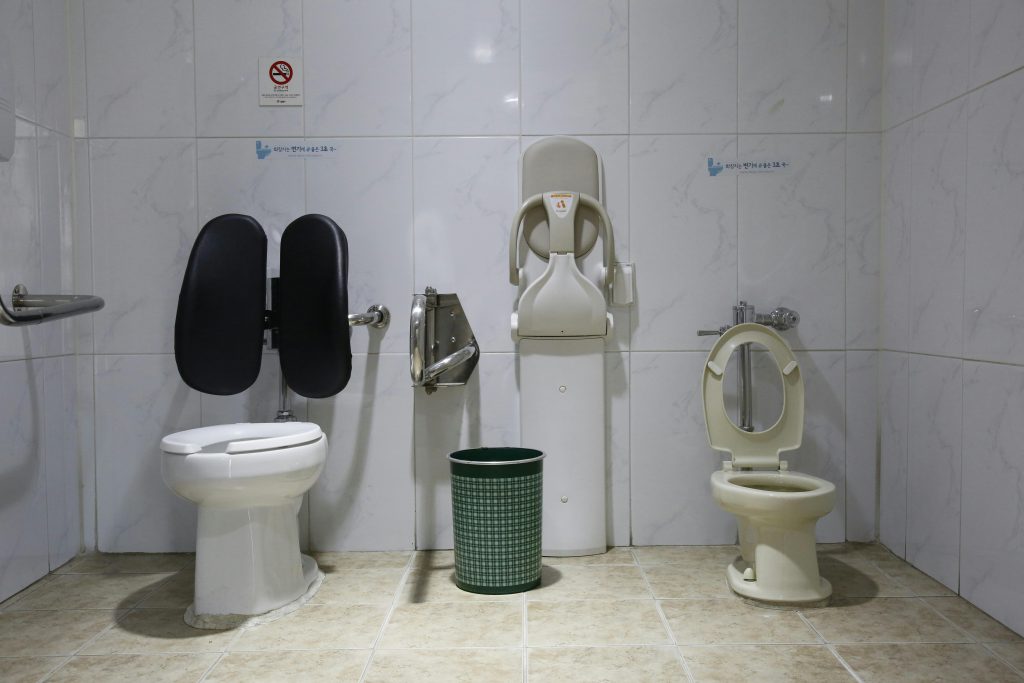
In the field of geriatric rehabilitation, we identify the bathroom as the most statistically significant “Danger Zone” in the home. Achieving true Bathroom Safety for Seniors requires more than just removing a rug; it involves a clinical understanding of how moisture, lighting, and low-seated surfaces challenge a person’s balance strategies. By widening your biological “Safety Buffer,” we can transform this high-risk area into a space of independence. Whether you are stepping into a shower or rising from a toilet, having the right “structural insurance” ensures that your daily routine remains a source of dignity rather than a source of fear.
1. Securing the High-Risk Zone
Statistically, the bathroom is the most hazardous room in the house for older adults. From a clinical perspective, it presents a “perfect storm” of risks: hard surfaces, limited space for recovery steps, and the constant presence of water. Establishing Bathroom Safety for Seniors is the primary step in widening your Safety Buffer—the margin of safety between your physical ability and the demands of your environment.
Rehab isn’t just about the absence of injury; it is about the presence of confidence. When you know your bathroom is secured with high-authority medical gear, you gain the “freedom to roam” throughout the rest of your home. We are not just preventing a hip fracture; we are fortifying your environment so that you can maintain your privacy and independence for years to come. A secure bathroom means you can start your day with the energy and peace of mind needed to walk in the garden or visit the supermarket without the “internal tax” of fear.
2. The “Slippery Slope”: Environmental Hazards and Physiological Reserve
In ‘Geriatric Physical Therapy (2020)’, we use the “Slippery Slope of Aging” to describe how environmental stressors can push a senior from “Function” toward “Frailty.” In the bathroom, this slope becomes literal. When a floor is wet, or a room is filled with steam, your Physiological Reserve—your internal “backup” of strength and balance—is put to the ultimate test.
A lack of proper safety features forces the body to work twice as hard to stay upright. This extra effort causes rapid fatigue, which in turn slows down your reaction time. By implementing Bathroom Safety for Seniors early, we “level the slope.” This proactive approach ensures that a small slip doesn’t turn into a major medical event, keeping you on the higher end of the functional spectrum. By maintaining your reserve, you ensure that a minor stumble results in a successful “save” rather than a medical emergency.
3. Why it Matters: The Neuromuscular Challenge of the Single-Limb Stance
Stepping over the side of a bathtub is one of the most complex movements a senior performs. It requires a “single-limb stance,” where all your weight is on one leg while the other is in motion. This move demands high-velocity firing of your Type II (fast-twitch) muscle fibers to stabilize the hip and ankle.
If these fibers are not “primed” through proper nutrition (like Vitamin D) and exercise, the body cannot execute a quick “save” if the foot slips. This is why we advocate for “Exercise as Medicine” alongside environmental changes. By combining a strong physical foundation with non-slip mats and grab bars, we provide a dual layer of protection. We ensure that your “structural insurance” is intact both inside your body and within your home environment.
Practical ‘Take-Home’ Tips for Caregivers:
- The “Towel Rack” Warning: Never allow a senior to use a towel rack for balance. They are not weight-rated and will pull out of the wall during a fall.
- Contrast is Key: Use brightly colored non-slip mats that contrast with the floor color. This helps seniors with declining vision accurately judge where the “safe zone” is.
- The Night-Light Rule: Bathrooms must be illuminated 24/7. Use motion-activated LED strips under the vanity to guide the path during midnight visits.
4. Professional Deep-Dive: Sensory Organization Testing (SOT) in the Bathroom
For the healthcare professional, Bathroom Safety for Seniors is a challenge of “sensory re-weighting.” When a senior enters a bathroom, they often encounter a “sensory-compromised” environment. Steam from a shower creates a visual “blur,” and the uniform color of white tile floors often eliminates the depth perception needed for the somatosensory system to function.
In Sensory Organization Testing (SOT), we evaluate how a patient handles conflicting inputs. If a senior is “Visually Dependent,” the steam in a bathroom can lead to a “mismatch” in their brain, causing a momentary loss of balance. Furthermore, the echoes in a small, tiled room can interfere with vestibular (inner ear) processing. By understanding a patient’s SOT profile, we can identify those who need high-contrast grab bars and consistent, non-flickering LED lighting to compensate for these sensory gaps.
5. The Professional View: Clinical Guidelines for Bathroom Safety for Seniors
Clinicians must view the bathroom through the ICF (International Classification of Functioning, Disability and Health) framework. A lack of support is not just an environmental flaw; it is a direct barrier to “Self-Care” (Activity) and “Living Independently” (Participation). According to ‘Geriatric Physical Therapy (2020)’, grab bars must be weight-rated to support at least 250 lbs and should never be replaced by suction-cup alternatives.
Clinical Placement Standards:
- The Entryway: A vertical grab bar should be placed at the entrance of the shower to assist with the “single-limb stance” required to step over the threshold.
- The Sidewall: A horizontal bar at waist height provides a “Safety Buffer” while standing and washing.
- The Toilet: An angled or horizontal bar aids in the “sit-to-stand” transition, reducing the demand on the quadriceps and minimizing the risk of orthostatic hypotension (dizziness upon standing).
6. Dynamic Recovery: Managing Displacements on Wet Surfaces
On Day 17 of our balance training, we focus on the hierarchy of recovery strategies. In a bathroom, the “magnitude of displacement” (how far you slip) determines which strategy the body recruits.
- The Ankle Strategy (Small Displacement): If a foot moves slightly on a damp mat, the calf muscles should pull the body back.
- The Hip Strategy (Moderate Displacement): If the slip is larger, the body rapidly hinges the hips to keep the center of gravity over the feet.
- The Stepping Strategy (Large Displacement): If the center of mass moves beyond the base of support, the senior must take a recovery step.
In a confined bathroom, the “stepping strategy” is often blocked by a toilet or a tub wall. This is why Bathroom Safety for Seniors relies so heavily on grab bars—they act as an “external ankle strategy,” allowing the hands to do the work that the feet no longer can. By practicing these transitions in a safe, dry environment, we prepare the neuromuscular system for the “real-world” challenges of a wet floor.
7. The Caregiver Corner: The “Day 9” Bathroom Environmental Audit
For the caregiver, the goal of Bathroom Safety for Seniors is to eliminate “environmental traps” before they cause a fall. This Environmental Audit is a room-by-room checklist that transforms a high-risk zone into a training ground for resilience.
The Printable Bathroom Safety Checklist:
- The Entrance & Floor:
- [ ] The “Rug Rule”: Remove all loose throw rugs. If a rug is necessary for warmth, it must have a full rubberized backing and be secured with double-sided rug tape.
- [ ] Thresholds: Check the transition from the hallway to the bathroom. Even a 0.5-inch marble sill can be a trip hazard. Consider a “mini-ramp” or brightly colored tape to mark the change.
- The Shower & Tub:
- [ ] Non-Slip Coverage: Does the non-slip mat cover at least 80% of the tub floor? Suction cups must be checked weekly for mold or loss of grip.
- [ ] The “Grab Test”: Gently pull on existing bars. If they wiggle, they are not secured to a wall stud and are unsafe.
- The Toilet Zone:
- [ ] Height Check: When the senior sits, are their knees higher than their hips? If so, the toilet is too low, making “launching” dangerous. Install a raised toilet seat with handles.
8. The Ultimate Buyer’s Guide: Essential Tools for Bathroom Safety (Day 14)
When a senior’s Physiological Reserve is low, assistive devices act as “buffer extenders.” Choosing the right tool is a clinical decision that directly impacts how much Bathroom Safety for Seniors can improve.
- Raised Toilet Seat
- Pros: Significantly reduces the effort required for “sit-to-stand” transitions; protects the hip joints.
- Cons: Can be aesthetically bulky; some models require tools for a secure installation.
- Best For: Seniors dealing with knee or hip arthritis or those recovering from joint replacement surgery.
- Shower Chair
- Pros: Allows for seated washing, which conserves energy and reduces the risk of fatigue-related falls.
- Cons: Can take up a significant footprint in smaller tubs or stalls.
- Best For: Seniors with low endurance, chronic fatigue, or frequent bouts of vertigo.
- Handheld Shower Head
- Pros: Keeps water directed away from the face and eyes, preventing “visual blur.”
- Cons: Requires a degree of manual dexterity and grip strength to operate effectively.
- Best For: Individuals who are “Visually Dependent” according to their SOT profile and need to keep their line of sight clear.
Staff Tip for Space: In tight bathrooms, a 2-wheeled walker is often superior to a 4-wheeled rollator because it has a narrower frame and won’t “run away” on a slick tile floor. However, if the senior needs to sit frequently while grooming at the sink, a rollator provides a built-in seat and a more stable “Safety Buffer” for long periods of standing.
9. Beyond the Stigma: Reframing Bathroom Safety for Seniors as Empowerment
The greatest barrier to Bathroom Safety for Seniors isn’t the cost of the equipment; it’s the “Psychology of the Cane” and the grab bar. Many seniors view these tools as a “white flag” of surrender to old age. At geriatricrehab.es, we reframe this entirely.
Think of a grab bar like a handrail on a high-end yacht or a shower chair like a piece of athletic recovery equipment used by pro athletes. These tools are Stability Enhancers. They are the gear that allows you to widen your Safety Buffer so you can continue to live in your own home with dignity. We don’t use a grab bar because we are “failing”; we use it so we can keep doing the things that keep us young—like taking a relaxing shower without the constant background noise of fear. When a senior sees that the device is what enables their independence, they are much more likely to use it correctly and consistently.
10. Conclusion: Your Roadmap to a Fracture-Proof Bathroom
Achieving a fall-free home is not just about a single grab bar or a non-slip mat; it is a holistic endeavor. As we have explored, the clinical approach to Bathroom Safety for Seniors is a cornerstone of the Safety Buffer. By optimizing your environment, you aren’t just “fixing a room”—you are protecting your Physiological Reserve and ensuring your body has the “structural insurance” it needs to handle life’s unexpected slips.
True success in geriatric care is found in the synergy between the internal and external worlds. Internally, we support your recovery strategies (Ankle, Hip, and Stepping) through “Exercise as Medicine” and proper nutrition. Externally, we optimize the bathroom through rigorous Day 9 Environmental Audits and the selection of high-quality assistive devices from our Day 14 Buyer’s Guide.
When these elements work together, the “Slippery Slope of Aging” becomes a manageable path rather than a source of anxiety. Remember that you are an active participant in your own longevity. Whether your goal is to walk in the garden, visit the supermarket, or simply enjoy the privacy of your own home with peace of mind, the combination of clinical knowledge and practical action is your greatest asset.
Empower your independence today by performing a “Day 9” audit of your bathroom. If you notice your balance strategies are slowing down during grooming or bathing, consult a specialist at geriatricrehab.es. Let’s work together to widen your Safety Buffer and keep your best years built on a foundation of safety and strength.













