For many older adults, the greatest threat to their health isn’t a virus or a chronic condition, but a pervasive, often invisible bias: ageism in healthcare. It manifests in the subtle shrug of a shoulder when a patient complains of knee pain or the dismissive phrase, “What do you expect at your age?” When we allow chronological age to serve as a diagnostic shorthand, we stop looking for modifiable causes of decline. This results in a healthcare system that often prioritizes “management” over “optimization.” For the community at geriatricrehab.es, combatting this bias is the first step toward reclaiming functional independence. In this guide, we will explore why the narrative around aging must shift from a story of inevitable decay to one of resilient potential.
1. The Invisible Barrier to Optimal Aging
In the field of geriatric rehabilitation, we define ageism in healthcare as the systemic stereotyping, prejudice, and discrimination against people based on their age. While we often think of ageism as personal rudeness, it is far more dangerous when it becomes institutionalized. In clinical settings, ageism acts as a barrier to “optimal aging” the capacity to function across physical, cognitive, and social domains to one’s satisfaction, regardless of chronic conditions.
According to the principles in Geriatric Physical Therapy (2020), aging is a heterogeneous process. Two individuals age in the exact same way. However, when practitioners view aging as a monolithic period of decline, they fail to provide the person-centered care required by the geriatric population. This invisible barrier leads to a lack of preventative screenings, the dismissal of reversible symptoms, and a general “therapeutic nihilism” where clinicians believe that treatment won’t make a significant difference. To move forward, we must recognize that age is just a number, but the bias surrounding that number is a clinical risk factor that must be addressed with the same rigor as hypertension or sarcopenia.
2. The Clinical Reality: How Stereotypes Dictate Diagnosis
The “normal for your age” trap is perhaps the most common manifestation of ageism in healthcare. When a 75-year-old reports a new onset of balance issues or urinary incontinence, and the response they receive is that these are “just part of getting old,” the healthcare system has failed them. These symptoms are often pathological, meaning they have a cause that can be treated rather than physiological (natural aging).
Stereotypes dictate diagnosis by creating an implicit bias in the clinician’s mind. For example, clinical depression in a senior might be misidentified as “early-stage dementia” because of the assumption that cognitive decline is inevitable. Similarly, a senior with a treatable cardiovascular issue might be told to “just take it easy,” preventing them from receiving the life-extending benefits of aerobic conditioning. This undertreatment stems from a “deficit.” model” of aging, which focuses only on what is lost rather than what can be maintained or regained. In modern geriatric practice, we must challenge these assumptions by asking, “If this patient were 30 years younger, would I still consider this symptom ‘normal’? “
3. The ‘Why it Matters’ Section: Ageism and the Slippery Slope
Why is combatting ageism so critical? Because negative age stereotypes actually accelerate physical decline. This is best understood through the “Slippery Slope of Aging,” a framework used to categorize functional capacity.
When a senior internalizes ageist beliefs, like the idea that they are “frail” or “useless,” they are more likely to self-limit their activities. This leads to disuse atrophy, which rapidly depletes their physiological reserve. Once a patient’s reserve is gone, they slide down the slope from “Function” to “Frailty.” Furthermore, the use of “Elderspeak” talking to seniors in high-pitched, slow, or infantilizing tones has been clinically shown to decrease a patient’s self-efficacy. When we treat seniors like children, their bodies and minds respond by becoming more dependent. Ageism in the clinic isn’t just a matter of hurt feelings; it is a physiological drain that pushes seniors toward the “failure” zone of the slippery slope much faster than biology alone would dictate.
Caregiver Corner: Identifying “Ageist Shorthand”
Watch for phrases like “at their age,” “set in their ways,” or “senile moment” during doctor visits. If a healthcare provider dismisses a new symptom based solely on age, ask, “Is there a specific clinical diagnosis for this, or are we assuming it’s age-related?” Pushing for a functional diagnosis ensures your loved one receives the intervention they deserve rather than a shrug of the shoulders.
4. The Quantifiable Cost of Ageism in Healthcare
Ageism is not merely a social inconvenience; it is a significant financial and clinical burden on the global healthcare infrastructure. Research has shown that ageism in healthcare leads to poorer health outcomes, increased hospitalization rates, and a decrease in life expectancy. A landmark study by Becca Levy at Yale University estimated that ageism—including negative age stereotypes and self-perceptions of aging was responsible for an excess cost of $63 billion annually in the United States alone for the eight most expensive health conditions.
From a physiological perspective, individuals who internalize negative stereotypes about aging have been found to have higher levels of cortisol, the body’s primary stress hormone. Chronic elevation of cortisol is linked to cardiovascular disease, cognitive decline, and a weakened immune system. Furthermore, seniors with a positive “age identity” tend to live an average of 7.5 years longer than those who view aging as a period of worthlessness. When clinicians fail to challenge their own biases, they are essentially contributing to a shorter life span for their patients. In the context of physical therapy, this cost is seen in the “avoidable decline” of patients who are denied aggressive rehabilitation simply because they are over a certain age.
5. The Biopsychosocial Model: Challenging the Deficit View
To combat ageist practices, we must transition away from the “Medical Model” (which views the senior as a collection of symptoms and inevitable failures) toward the Biopsychosocial Model and the ICF Framework. The Geriatric Physical Therapy (2020) text emphasizes that health is not merely the absence of disease but the ability to function within one’s environment.
The ICF Model allows us to look at the “whole person”:
- Body Functions: Instead of saying “they have old knees,” we measure specific muscle strength and joint range of motion.
- Activity: We look at what the patient can do, such as walking to the store or getting out of bed independently.
- Participation: We evaluate their ability to engage in society, attend church, or volunteer.
- Environmental/Personal Factors: This includes their home setup and their personal resilience.
By using this framework, we strip away the bias of chronological age and focus on functional longevity. We stop asking, “How old is this patient?” and start asking, “What are the barriers preventing this person from participating in their life?” This shift validates the senior’s experience and ensures that therapy is targeted at meaningful life outcomes rather than just managing a diagnosis.
6. Barriers to Intervention: Sarcopenia and Under-Prescription
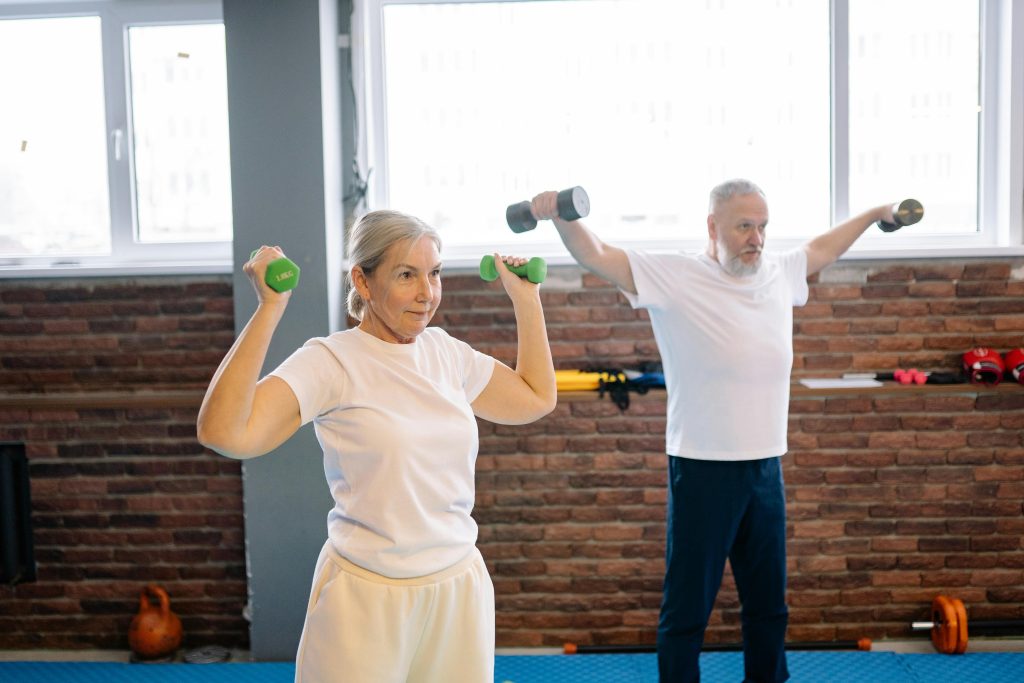
One of the most insidious ways ageism manifests in rehabilitation is through the under-prescription of exercise. This is often driven by a protective, yet misguided, bias: the fear that an older adult is “too fragile” for high-intensity training. Clinically, this is a disaster for a patient dealing with sarcopenia (age-related muscle wasting).
To combat muscle loss and maintain physiological reserve, the “Exercise as Medicine” philosophy dictates that the dosage must be high enough to trigger an adaptive response. Many seniors are given “pink dumbbell” exercises low-intensity movements that do not challenge the musculoskeletal system. This is a form of Ageism in healthcare because it assumes that older bodies cannot handle the stress of lifting heavy weights or performing aerobic intervals.
Research consistently shows that even 90-year-olds can benefit from high-intensity resistance training. When we “under-dose” our patients, we are essentially guaranteeing their decline. An evidence-informed therapist must ignore the birth certificate and instead monitor the Rate of Perceived Exertion (RPE). If the exercise isn’t challenging enough to make the last few repetitions difficult, it won’t build the reserve needed to prevent a slide down the “Slippery Slope of Aging.” We must treat the senior as an athlete in training for the “sport” of daily life.
Caregiver Corner: The “Safety vs. Challenge” Balance
It is natural to want your loved one to be safe, but “too much safety” leads to weakness. If a physical therapist is only doing gentle leg lifts while the patient is lying down, ask, “Can we safely progress to more challenging, weight-bearing exercises?” Building muscle requires a bit of struggle; if it’s too easy, it’s not working to protect their independence.
7. Communication Strategies: Replacing Elderspeak with Empowerment
Effective communication is the foundation of any clinical relationship, yet it is often where ageism in healthcare is most visible. One of the most common and damaging communication styles is “elderspeak.” This involves using a slower tempo, higher pitch, simplified vocabulary, and overly intimate terms like “honey” or “sweetie” when addressing older adults. While well-meaning, elderspeak is a form of linguistic infantilization.
Clinically, elderspeak has been linked to increased resistance to care, particularly in patients with cognitive impairments. It sends a powerful, subconscious message to the senior: “You are no longer a competent adult.” To replace this with empowerment, allied health professionals must adopt.
Person-Centered Communication:
- Direct Address: Always speak directly to the senior, even if a caregiver or family member is present. Turning to the family member to ask, “Does he have pain?” while the patient is sitting there is a direct erasure of the senior’s autonomy.
- Respectful Tone: Use the patient’s preferred name (usually Mr. or Ms. followed by their surname) unless invited otherwise.
- Clarity over Simplicity: Use clear, medical language. Most seniors are perfectly capable of understanding their diagnosis when explained without jargon, but simplifying it too much can feel patronizing.
By changing our language, we foster a sense of self-efficacy. When a senior feels respected and competent, they are more likely to adhere to their exercise programs and take an active role in their rehabilitation journey.
8. The Caregiver Corner: Advocating for Your Loved One
As a caregiver, you are often the primary advocate for a senior’s right to high-quality, unbiased care. Because ageism is so deeply ingrained, you may have to “re-educate” the healthcare team. Advocating against ageism in healthcare requires persistence and a focus on functional goals.
Actionable Steps for Caregivers:
- Challenge the “Age Excuse”: If a doctor says, “He’s 85, what do you expect?” you can politely pivot the conversation back to the symptoms. Ask, “What is the specific physiological cause of this symptom, and what are the evidence-based treatments available for it?”
- Request a Functional Assessment: Instead of accepting a decline, ask for a referral to a physical therapist who specializes in geriatrics. A PT can provide objective data (like the Timed Up and Go or Berg Balance Scale) that shows potential for improvement.
- Monitor for Diagnostic Overshadowing: This occurs when a new symptom is ignored because it is overshadowed by a pre-existing condition or the person’s age. For example, a senior with dementia might have a painful hip fracture missed because the clinician assumes their agitation is just “part of the dementia.”
Your role is to ensure that the medical team sees your loved one as a person with a history, preferences, and a future, not just a birth date on a file.
9. Policy and Education: Changing the Narrative from Within
Combatting ageism requires more than just individual effort; it requires systemic reform. One of the biggest drivers of ageism in healthcare is the lack of specific geriatric training for medical professionals. Most medical schools and physical therapy programs allocate only a small percentage of their curriculum to the specific needs of older adults, despite this demographic being the primary users of healthcare services.
Systemic solutions include:
- Mandatory Geriatric Rotations: Ensuring that every medical student, nurse, and therapist spends significant clinical time with the geriatric population under the mentorship of specialists.
- Incentivizing Geriatrics: Creating financial and professional incentives for clinicians to specialize in geriatric care, similar to how pediatric or cardiac specialties are promoted.
- Standardizing Anti-Ageism Training: Incorporating implicit bias training specifically focused on age into the annual requirements for all healthcare staff.
- Inclusive Clinical Trials: Policy changes at the research level must ensure that older adults with multiple comorbidities are not excluded from trials so that “evidence-based” medicine actually reflects the population it serves.
When we institutionalize the value of older adults through education and policy, we begin to build a healthcare system that views aging as a triumph of modern medicine rather than a burden to be managed.
10. Conclusion: A Roadmap for Inclusive Longevity
The fight against ageism in healthcare is not just a quest for politeness; it is a clinical necessity for the survival and flourishing of our aging population. As we have explored, the narrative we choose to believe both as clinicians and as patients directly dictates our physiological outcomes. When we replace the “slippery slope” of inevitable decay with a focus on physiological reserve and functional potential, we open the door to a higher quality of life.
Ultimately, combatting ageism is an act of future-proofing. We are all aging, and the healthcare system we build today is the one we will inhabit tomorrow. By dismantling ageist structures now, we ensure a future where “optimal aging” is not a luxury but a standard of care accessible to all.
At geriatricrehab.es, we believe that potential has no expiration date. Whether you are recovering from surgery or looking to boost your balance, our specialist physical therapists provide unbiased, high-intensity, evidence-informed care tailored to your unique goals. Consult a specialist today at geriatricrehab.es to receive a comprehensive functional assessment and rewrite your aging narrative.