
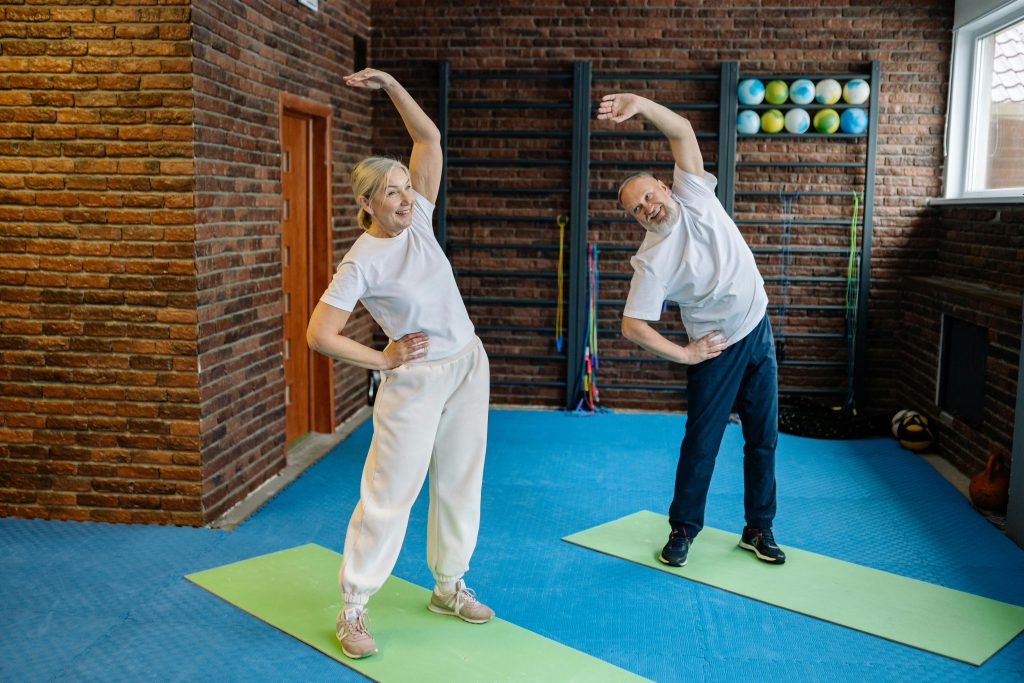
When a senior or a caregiver reads about a new exercise program or a medical intervention, they often see promising percentages: “90% improvement in balance” or “reduced fall risk by 50%.” However, there is a lingering, vital question: Will it work for me? In the world of geriatric medicine, there is a massive chasm between a treatment that works in a controlled laboratory and one that works in a living room filled with area rugs, pets, and the fatigue of multiple chronic conditions. This is the difference between efficacy and rehab effectiveness. At geriatricrehab.es, we don’t just look at what works in a study; we look at what works in your life.
1. The Gap Between the Lab and the Living Room
In clinical research, “efficacy” and “effectiveness” are not synonyms. Efficacy refers to how a treatment performs under ideal, highly controlled circumstances. Effectiveness, specifically rehab effectiveness, refers to how that same treatment performs in clinical practice the “real world.”
According to Geriatric Physical Therapy (2020), the transition from research to reality is particularly fraught for older adults. Most clinical trials are designed to be “clean.” They often exclude participants with “messy” variables people with cognitive impairment, multiple medications, or limited transportation. Yet, these “messy” variables define the average geriatric patient. If a study proves that a 20-minute daily treadmill protocol is 100% effective for improving gait, but the senior has no treadmill and suffers from severe osteoarthritis that makes 20 minutes of walking impossible, the efficacy is high, but the effectiveness for that individual is zero. Our goal is to close this gap by translating high-level evidence into actionable, personalized recovery.
2. Defining Efficacy: The “Ideal World” Scenario
To understand why a treatment might fail at home despite a “successful” study, we must look at how Efficacy trials (Explanatory Trials) are built. These trials are designed to answer one question: Can this intervention work?
In an efficacy-focused study:
- Participants are highly screened: They usually have one primary diagnosis and no “confounding” health issues.
- Adherence is forced: Participants are often supervised by researchers, paid for their time, or given specialized equipment they wouldn’t normally have.
- Environment is sterile: Exercises are performed on flat, well-lit surfaces in a temperature-controlled clinic.
While these studies are essential for proving that a specific movement can physiologically change a body (building muscle or improving bone density), they do not account for the “friction” of daily life. For a senior living on the third floor of an apartment building with no elevator, the efficacy of a program that requires heavy gym machinery is irrelevant. We must look beyond the “Can it work?” to the “How will it work for you?”
3. Defining Effectiveness: The “Real World” Reality
This is where rehab effectiveness enters the conversation. An effectiveness study (pragmatic trial) asks: Does this work in the real world? These studies are far more valuable for allied health professionals and family caregivers because they include the “noise” of actual geriatric existence.
Rehab Effectiveness accounts for:
- Multimorbidity: The reality that a senior isn’t just “a hip fracture”; they are a person with a hip fracture plus hypertension plus mild cognitive impairment.
- Resource Limitations: Can the patient afford the equipment? Do they have a caregiver to spot them?
- Fluctuating Motivation: How does the program hold up when the patient is having a “bad day” or feeling the effects of a medication change?
In the real world, the most “effective” exercise is not the one with the highest physiological efficacy in a lab; it is the one the senior actually performs safely and consistently in their own home.
Caregiver Corner: The “Suitability” Test
When a doctor or therapist suggests a new routine, perform a quick “Effectiveness Audit.” Ask yourself:
- Does my loved one have the space/equipment to do this safely?
- Does this interfere with their current medications or other health conditions?
- Is this something they will actually want to do when I am not watching? If the answer to any of these is “No,” ask the therapist to adapt the “efficacy” of the protocol into something with better “effectiveness” for your specific home environment.
4. The Impact of Multimorbidity on Results
In a laboratory, researchers often isolate a single variable for example, how a specific leg extension exercise builds quadriceps strength. However, in geriatric care, we rarely have the luxury of an isolated variable. Most seniors deal with multimorbidity, the presence of two or more chronic conditions. This is where rehab effectiveness often falters if the plan is too rigid.
Imagine a patient who has been prescribed a high-intensity walking program to improve cardiovascular health (the efficacy of which is well-documented). If that same patient also has peripheral neuropathy (numbness in the feet) and glaucoma (impaired vision), the “effective” risk of a fall during that walk may outweigh the “efficacious” benefit to the heart.
Furthermore, the interaction of medications, the “polypharmacy” effect can dampen the results of rehab. Beta-blockers for heart conditions may limit a patient’s heart rate response to exercise, meaning they cannot reach the intensity levels used in the original clinical trial. A truly effective rehab plan doesn’t just treat the primary diagnosis; it manages the “interference” caused by the patient’s entire medical profile.
5. External Validity: The “Who” Matters
When we read a study, we must look at its “external validity,” the extent to which the results can be generalized to other people. Historically, geriatric research suffered from an “age ceiling.” For decades, many trials excluded anyone over the age of 75 to avoid the “noise” of comorbidities mentioned above.
This creates a significant problem: if a study on rehab effectiveness only included “healthy” 65-year-olds, we cannot assume the results will be the same for a 90-year-old living in a residential care facility.
- The “Old-Old” Gap: The physiology of a 90-year-old (post-centenary or near-centenary) is vastly different from that of a “young-old” 65-year-old. Muscle quality, cognitive processing speed, and physiological reserve have all shifted.
- Representation: If the study participants were all able to drive themselves to a university clinic twice a week, the program’s effectiveness for a homebound senior with limited transportation remains unproven.
At geriatricrehab.es, we prioritize “pragmatic evidence” research that intentionally includes the oldest and most complex patients to ensure our recommendations are grounded in reality, not just youthful ideals.
6. Adherence and Compliance: The Human Element
The most “efficacious” exercise in the world has a 0% effectiveness rate if the patient does not do it. In a controlled study, researchers use “supervised adherence,” often standing over the participant to ensure every repetition is perfect. In the real world, Rehab Effectiveness depends entirely on the patient’s willingness and ability to follow through at home.
Several factors influence this “human element”:
- Self-Efficacy: Does the senior believe they can do the exercise without falling? If fear of falling is high, adherence will be low.
- Cognitive Load: If a home program is too complex (e.g., “12 different exercises with varying resistance levels”), a senior with mild cognitive impairment may become overwhelmed and stop altogether.
- Social Support: Patients with an active, encouraging caregiver often show 40% higher adherence rates than those working in isolation.
We measure success not by the complexity of the program we give, but by the consistency of the program the patient keeps. To maximize rehab effectiveness, we often “distill” the science down to the 2 or 3 most impactful movements that a patient can master and perform independently.
7. Environmental Barriers to Success
The physical environment is the silent arbiter of rehab effectiveness. In a clinical trial, the “environment” is a sanitized, level corridor with grab bars and bright lighting. In the real world, the environment is a high-rise apartment with a broken elevator, a dimly lit hallway, or a bathroom with a tub that is too high to step over.
If an intervention requires a senior to perform “dynamic balance training,” but their home is cluttered or has thick, unstable carpeting, the intervention transitions from a “therapy” to a “hazard.”
- The “Clinical-Home” Mismatch: A patient may show high efficacy in the clinic walking 50 meters with a walker, but if their home doorway is too narrow for that walker, the treatment’s effectiveness drops to zero.
- Adapting the Space: Part of ensuring rehab effectiveness involves an environmental assessment. We must look for “affordances,” the things in the environment that allow for movement, such as using a sturdy kitchen counter for support during heel raises instead of assuming the patient has a specialized parallel bar.
8. The Caregiver Corner: Bridging the Gap at Home
For a rehabilitation plan to move from “efficacious” to “effective,” the caregiver often acts as the “clinical bridge.” While the therapist sees the patient for 1-2 hours a week, the caregiver is there for the other 166 hours. Your role is to ensure the “active ingredients” of the therapy are delivered consistently.
Functional Tips for Real-World Monitoring:
- The “Safe Challenge” Rule: Ensure the exercise is difficult enough to cause change but safe enough to prevent a “fear response.” If your loved one is white-knuckling a chair, the exercise is likely too hard for “effective” home use.
- Environmental Cueing: Use “visual triggers” like placing the resistance bands near the TV remote. This reduces the cognitive load required to remember the routine.
- The Baseline Check: Keep a simple log of how “hard” the exercise felt (Rate of Perceived Exertion). If an exercise that was “hard” last week is now “easy,” the rehab effectiveness is working, and it’s time to progress.
9. Translating Data into Clinical Practice
The hallmark of an expert geriatric therapist is the ability to use the ICF Model (International Classification of Functioning, Disability and Health) to adapt evidence. When we read a study that says “X intervention works,” we don’t just copy it. We filter it through the patient’s unique context.
To maximize rehab effectiveness, we utilize “clinical reasoning” to make three specific pivots:
- Modification: Changing the way an exercise is done to accommodate a comorbidity (e.g., performing seated squats instead of standing squats for a patient with severe vertigo).
- Prioritization: Identifying which “active ingredient” of the research is most vital. If a study suggests a 5-day-a-week program, but the patient only has the energy for 2 days, we prioritize the high-intensity movements that provide the most “bang for the buck.”
- Pragmatic Dosing: We adjust the “dose” based on the patient’s daily fluctuations in pain, fatigue, or cognitive clarity.
By treating the research as a “flexible guide” rather than a “rigid rulebook,” we ensure the science actually serves the human being.
10. Conclusion: Personalized Evidence-Based Care
In the journey of geriatric recovery, “efficacy” tells us what is possible, but “effectiveness” tells us what is probable. As we have explored, the transition from a clinical trial to a senior’s living room is rarely a straight line. It is a path shaped by comorbidities, environmental hurdles, and the human element of adherence. For a treatment to truly work for you, it must transcend the sterile conditions of the lab and survive the “friction” of daily life.
The future of geriatric medicine is moving away from a “standardized” approach and toward a “personalized” one. This doesn’t mean we ignore the science; rather, we use rehab effectiveness as our compass to ensure that the science is applied realistically. By prioritizing interventions that respect your physiological reserve, account for your home environment, and align with your personal goals, we ensure that you aren’t just a statistic in a study—you are a success story in your own home. At geriatricrehab.es, we are committed to this bridge between research and reality, ensuring that every protocol we design is as robust in your living room as it is in the literature.Are you tired of “cookie-cutter” exercise plans that don’t seem to fit your actual life? You deserve a rehabilitation strategy that accounts for the complexity of who you are. Our specialists at geriatricrehab.es excel at adapting high-level medical evidence into effective, home-based routines that produce real-world results. Consult a specialist today at geriatricrehab.es to schedule a comprehensive “Real-World Effectiveness” assessment and start your journey toward a stronger, more independent future.













