
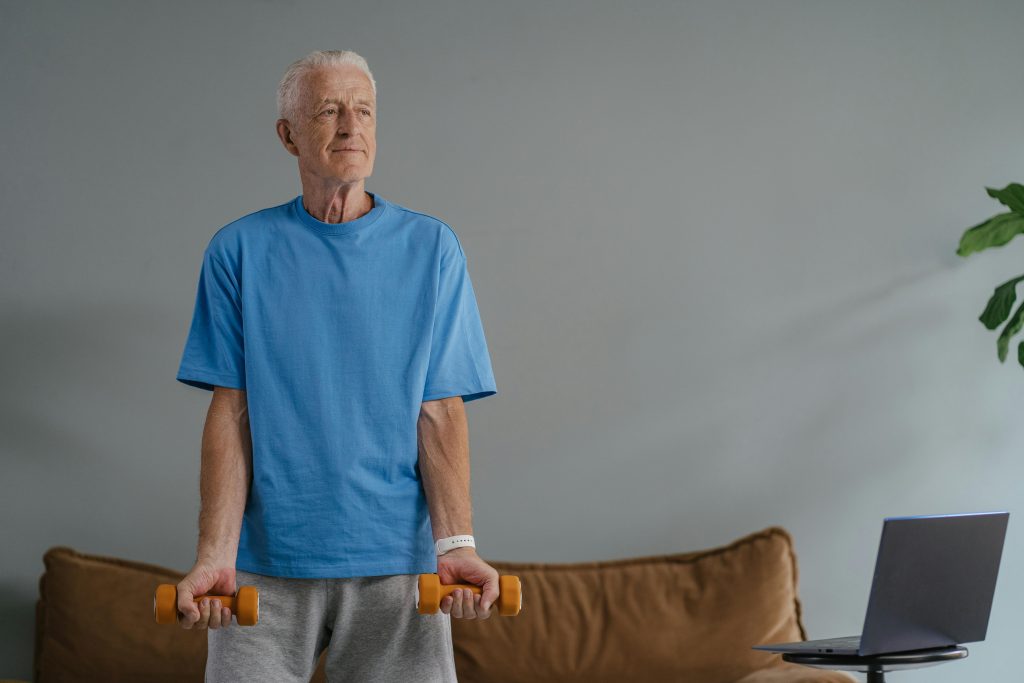
In the past, rehabilitation for the older adult was often viewed through a lens of “maintenance” or “palliative care” simply keeping the patient comfortable as they naturally declined. However, contemporary science has moved toward a more aggressive, evidence-based model. Mastering geriatric rehab basics means understanding that the aging body is still capable of remarkable adaptation and growth, provided the stimulus is correct. At geriatricrehab.es, we focus on a foundation built not on age, but on functional potential. As we look ahead to a year of progress, we must first anchor ourselves in the core principles that separate high-authority geriatric care from standard “senior exercise.”
1. The Evolution of Aging
The way we approach aging in clinical practice has undergone a radical evolution over the last decade. We have moved away from the “Medical Model,” which focuses purely on fixing what is broken, and toward a “Biopsychosocial Model,” which views the patient as a whole person interacting with their environment. To understand Geriatric Rehab Basics, one must first accept that “old age” is not a diagnosis.
According to the guiding principles in Geriatric Physical Therapy (2020), the most significant barrier to successful rehab is often not the patient’s pathology but the “tyranny of low expectations.” When we treat a 30-year-old athlete, we push them to return to the field; when we treat an 85-year-old, we too often settle for “safe enough to go home.” A strong foundation for a year of rehab requires shifting this mindset. We aren’t just looking for safety; we are looking for the restoration of joy, autonomy, and participation in life.
2. The Biological Foundation: The Slippery Slope of Aging
Central to our understanding of geriatric care is the “Slippery Slope of Aging” model. This framework categorizes a senior’s functional status into four distinct zones:
- Fun: The individual has a high physiological reserve and can participate in any activity they desire.
- Function: The individual can perform all daily tasks but may feel fatigued or “fragile” during strenuous activity.
- Frailty: The individual is one minor illness or “event” away from losing independence. Daily tasks require significant effort.
- Failure: The individual requires total assistance for basic activities of daily living (ADLs).
The goal of a foundational year of rehab is “Slope Management.” We use specific interventions to pull a patient back from the edge of Frailty and restore them to the Function or Fun zones. This biological reality dictates our rehab intensity. If we don’t know which zone a patient is in, we cannot prescribe the correct “dose” of exercise. A Year of Rehab is essentially a year-long battle against the downward pull of this slope, using Geriatric Rehab Basics to build a buffer of strength and power.
3. The Assessment Foundation: Prior Functional Level
To set a destination for recovery, we must first look at the starting point not the starting point of the injury, but the starting point of the person. The Prior Functional Level (PFL) is the most accurate predictor of a patient’s potential.
In clinical practice, we distinguish between two types of tasks:
- ADLs (Activities of Daily Living): Basic self-care tasks like dressing, bathing, and eating.
- IADLs (Instrumental Activities of Daily Living): Complex tasks like managing finances, grocery shopping, or driving.
If a patient was independently managing their IADLs two weeks before a stroke, our rehab goal is not just “walking with a walker”; it is a return to community independence. We use the PFL to combat medical ageism. By proving that a patient was highly functional recently, we justify the need for more intensive, higher-level therapy services.
Caregiver Corner: Being the Functional Historian
Your most important job in the first month of rehab is providing the “Evidence of Life.” When the therapist asks how your loved one was doing before, be specific. Don’t just say, “They were fine.” Say, “Three weeks ago, she was walking three blocks to the bakery every morning and doing her own laundry in the basement.” This specific data point changes the entire trajectory of the rehab plan from “safety-focused” to “recovery-focused.”
4. The Clinical Framework: The ICF Model
To build a year of rehab that lasts, we must move beyond the “injury” and look at the “impact.” The World Health Organization’s International Classification of Functioning, Disability and Health (ICF) Model is the gold standard for this. It allows us to categorize a patient’s health into three distinct levels:
- Body Functions & Structures: The actual impairment (e.g., a weak quadriceps muscle or a stiff hip joint).
- Activities: The limitation in a task (e.g., difficulty standing up from a chair).
- Participation: The restriction in a life role (e.g., being unable to attend a weekly book club or volunteer at the hospital).
In Geriatric Rehab Basics, we recognize that fixing the “Body Structure” (strength) does not automatically fix the “Participation” (social life). A foundation for a year of rehab must address all three. We don’t just exercise for the sake of muscle; we exercise to remove the barriers that keep a senior from participating in the things they love. By using the ICF model, we ensure that the rehab plan is personally meaningful, which significantly increases long-term compliance and success.
5. The Scientific Foundation: Efficacy vs. Effectiveness
A common frustration for families is when a “proven” treatment doesn’t seem to work at home. This is the difference between efficacy and effectiveness.
- Efficacy: How a treatment works in a perfect, controlled lab setting with a “simple” patient.
- Effectiveness: How does that same treatment work in the real world with a senior who has “multimorbidity” (multiple conditions like heart disease, arthritis, and diabetes simultaneously)?
The foundation of high-authority geriatric care is the ability to adapt. We take the high-level evidence from Geriatric Physical Therapy (2020) and “translate” it for a patient who may be fatigued from a poor night’s sleep or experiencing a flare-up of chronic pain. We understand that in the “real world,” progress is rarely a straight line. Effectiveness in geriatric rehab requires a clinician who can pivot the plan of care without losing sight of the evidence-based goal.
6. The Proactive Foundation: Primary Prevention
The most successful rehab is the one that happens before a catastrophic event. This is the concept of primary prevention and the “compression of morbidity.” The goal is to live as healthy as possible for as long as possible, then experience a very short period of decline at the very end.
In Geriatric Rehab Basics, we treat “Pre-habilitation” as a foundational requirement. If we identify that a senior is starting to “furniture surf” (touch walls while walking) or is avoiding stairs, we don’t wait for them to fall. We intervene immediately to build their Physiological Reserve. By strengthening the body while it is still relatively healthy, we provide a “safety buffer.” If that individual does get sick or injured later in the year, their “starting line” is so much higher that they are far more likely to return to independence.
7. The Holistic Foundation: Active Engagement
One of the most profound realizations in modern geriatrics is that physical health does not exist in a vacuum. A patient’s recovery is intrinsically tied to their social and spiritual health. At geriatricrehab.es, we refer to this as the “Triad of Vitality.” When a senior remains actively engaged with their community, their biological markers actually improve.
- The Biology of Connection: Social isolation triggers a pro-inflammatory state in the body. Conversely, active social engagement lowers cortisol and improves immune function, allowing for faster tissue healing after surgery or injury.
- Purpose-Driven Rehab: A foundation of Geriatric Rehab Basics is finding the “Why.” We don’t just do leg lifts to improve the quadriceps; we do them so the patient can return to their volunteer position or attend their weekly religious service. Spiritual health defined as a sense of meaning and transcendence is a powerful predictor of pain tolerance and resilience during difficult rehab sessions.
8. The Caregiver Foundation: The Clinical Partner
While the physical therapist provides the expertise during the session, the caregiver is the primary observer of the “other 23 hours” of the day. To build a solid foundation for a year of rehab, caregivers must move from being passive observers to active clinical partners.
The Effectiveness Audit:
Caregivers should perform a weekly “functional audit” to see if the exercises are translating into real-world gains. Ask these three questions:
- Safety: Is the patient moving with more confidence and less “furniture surfing”?
- Efficiency: Are they completing daily tasks (like getting dressed) faster or with less fatigue?
- Initiative: Are they attempting more activities on their own without being prompted?
By documenting these small wins or plateaus, the caregiver provides the therapist with the data needed to adjust the “Geriatric Rehab Basics” plan. This partnership ensures that the rehab doesn’t stay in the clinic but actually lives in the home.
9. The Technical Foundation: Dosing and Loading
Perhaps the most significant technical error in senior care is “under-dosing.” For too long, seniors were given light, repetitive exercises that failed to trigger a physiological change. A year of successful rehab requires Progressive Resistance Training (PRT) and osteogenic loading.
- PRT (Progressive Resistance Training): To build muscle, the load must be challenging. We aim for a “Rate of Perceived Exertion” (RPE) of 7 or 8 out of 10. If the exercise feels “easy,” it is not building the physiological reserve needed to prevent frailty.
- Osteogenic Loading: To improve bone density and combat osteoporosis, the bones must experience impact or heavy loading. This is a core part of Geriatric Rehab Basics that helps prevent the “fragility fractures” that often lead to the slippery slope of decline.
In the technical foundation of a rehab year, we monitor “volume” and “intensity” just as an elite athlete would. The aging body requires a high-quality stimulus to maintain its framework.
10. Conclusion: A Year of Strength Ahead
As we conclude this foundational review, it is important to remember that rehabilitation is not a short-term fix, but a long-term investment in your “future self.” The principles we have explored from understanding the slippery slope of aging to mastering the technical dosing of exercise provides the roadmap you need to navigate the complexities of aging with grace and power. By anchoring your recovery in the Geriatric Rehab Basics, you are choosing a path of resilience over one of resignation.
At geriatricrehab.es, we are honored to be your partners in this journey. We know that behind every gait speed measurement and every strength assessment is a person who wants to return to their family, their community, and their passions. The year ahead is an opportunity to rebuild your physiological reserve and reclaim your independence. Let these foundations be the floor upon which you build your highest potential.Are you ready to stop settling for “good enough” and start building a foundation that lasts? Whether you are a senior ready to reclaim your strength, a caregiver seeking better tools, or a professional looking for evidence-based insights, we are here to help. Consult a specialist today at geriatricrehab.es to schedule your “Foundational Movement Audit” and ensure your year of rehab is built on a legacy of strength.













