
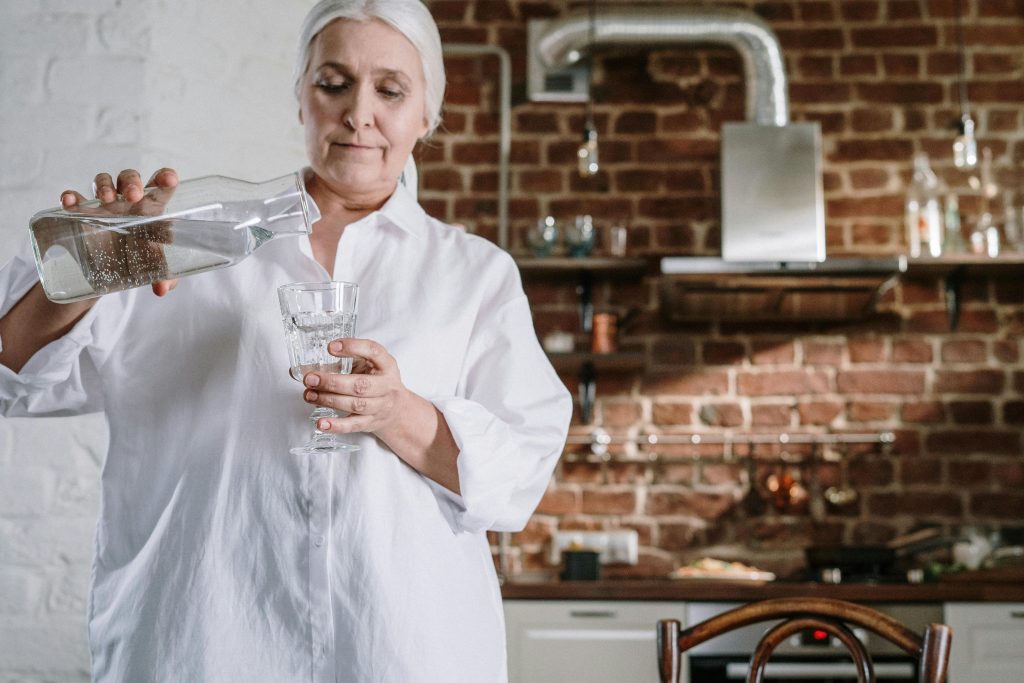
As a geriatric physical therapist, I often encounter patients who arrive for their sessions feeling fatigued, dizzy, or cognitively “foggy.” While we often look for complex neurological or cardiovascular causes, the culprit is frequently much simpler: Senior Dehydration. Maintaining fluid balance is a cornerstone of geriatric health, yet it is one of the most difficult physiological targets to hit. As we age, the sophisticated biological alarms that tell us to drink water begin to fail. This silent decline in the thirst mechanism means that by the time an older adult actually feels “thirsty,” they may already be in a state of clinical dehydration. Understanding the “Why” behind this shift is the first step toward protecting your Physiological Reserve and ensuring a safe, active lifestyle.
1. The Physiology of Senior Dehydration
In geriatric rehabilitation, we refer to the Physiological Reserve as the body’s bank account of resilience. One of the most significant withdrawals from this account is the age-related decline in Total Body Water (TBW). While a young adult’s body is roughly 60% water, an older adult’s composition may drop to 45%.
The “Why” Behind the Drop: This shift is primarily due to a change in body composition. Muscle tissue is highly “hydrophilic” (water-loving), while fat tissue is “hydrophobic.” As muscle mass declines—a process known as sarcopenia—the body loses its primary storage tank for fluids. Consequently, when Senior Dehydration occurs, the senior has a much smaller “buffer.” A minor bout of diarrhea or an afternoon in the sun, which a younger person could absorb, can push an older adult into the “Slippery Slope of Aging,” leading to acute hospitalization.
2. The Fading Alarm: Why the Thirst Mechanism Fails
The most dangerous aspect of Senior Dehydration is that it is often a silent crisis. In a younger body, specialized sensors called osmoreceptors in the brain detect when the blood becomes too “salty” or concentrated, triggering a powerful thirst response.
Analogy for Caregivers: Think of your body’s thirst mechanism like a “fuel gauge” in a car. When the tank is low, the light should come on. In seniors, the gauge gets “stiff” or stuck. The car is running on fumes, but the light never turns on. Because the senior doesn’t feel thirsty, they assume they don’t need water. By the time they actually feel a dry mouth, their “engine” is already beginning to overheat.
For Professionals: This “hypodipsia” (decreased thirst) is a result of reduced sensitivity in both central osmoreceptors and peripheral baroreceptors. Clinically, we must treat fluid intake as a prescribed dosage rather than an intuitive act. We cannot rely on the patient’s subjective feeling; we must monitor intake/output to maintain systemic compliance.
3. Renal Efficiency: Concentrating Waste in a Stiffened System
The kidneys are the body’s master fluid regulators, but as we age, their compliance decreases. The number of functional nephrons drops, and the kidneys become less efficient at concentrating urine to save water.
The “Why” Behind the Kidney Strain: When a younger person is dehydrated, their kidneys send a signal to “hold the line,” resulting in very dark, concentrated urine. In the context of Senior Dehydration, the aging kidney may continue to dump water even when the body is in a deficit. This lack of conservation puts a massive strain on the cardiovascular system, as the heart must pump blood that is becoming increasingly viscous (thick).
Take-Home Tips for Caregivers:
- Don’t Ask, Just Offer: If you ask a senior if they are thirsty, and they say “no,” it doesn’t mean they are hydrated. Their “fuel gauge” is likely stuck. Provide 4–6 ounces of fluid every hour.
- The Color Test: Monitor urine color. If it remains pale even when the senior is fatigued or confused, their kidneys might not be concentrating waste properly.
- Bioavailable Fluids: Incorporate water-rich foods like watermelon, cucumbers, or broths, which provide electrolytes alongside hydration.
4. Fluid Balance and the Physical Stress Theory (PST)
In Geriatric Physical Therapy (2020), the Physical Stress Theory (PST) is the foundational model for understanding how tissues respond to external loads. For a tissue to adapt and grow stronger, it must be subjected to a specific amount of stress. However, Senior Dehydration fundamentally alters the “safety margin” of these tissues.
The Five Tissue Responses under Fluid Stress:
- Death: In extreme dehydration, cellular desiccation leads to systemic organ failure and death.
- Injury: When fluids are low, muscle fibers lose their elasticity. A load that was once safe now causes micro-tears, pushing the senior into the “Injury” zone.
- Increased Tolerance (Training): This is the goal of rehab. It requires optimal hydration to facilitate the transport of nutrients and hormones needed for repair.
- Maintenance: The “status quo.” If a senior is slightly dehydrated, they may stay in this zone but will be unable to progress to “Training.”
- Decreased Tolerance (Atrophy): Dehydration accelerates muscle wasting. Without water, the body cannot maintain protein synthesis, causing the senior to slide into atrophy even with regular activity.
The “Why”: Water acts as a structural stabilizer for cells. Without it, the “biological shield” of the cell membrane weakens. This makes the tissue more vulnerable to stress, meaning a simple walk can transition from a “Training” stimulus to an “Injury” stimulus simply because the cells lack the fluid pressure to maintain their integrity.
5. Cardiovascular Strain: Viscosity, Afterload, and the Heart
Dehydration is not just a “dryness” issue; it is a profound cardiovascular challenge. When Senior Dehydration sets in, the total volume of blood circulating in the body drops. This makes the blood thicker and more “sludge-like.”
For Professionals: As blood volume decreases, afterload—the pressure the heart must exert to eject blood into the system—increases. The heart must pump harder against this viscous resistance. Over time, this chronic “pumping against a wall” can trigger left ventricular hypertrophy (thickening of the heart muscle), which ironically makes the heart less efficient and more prone to failure. Furthermore, the lack of volume reduces arterial compliance, making the entire vascular tree “stiff.”
Analogy for Caregivers: Imagine your blood vessels are like “flexible elastic bands” and the blood is like water. It moves easily. When a senior is dehydrated, the blood becomes thick like “sludge” or syrup, and the vessels become like “stiff garden hoses.” The heart (the pump) has to work ten times harder to push that thick syrup through those stiff hoses, eventually wearing out the motor.
6. Neurological Impacts and Senior Dehydration
One of the most common reasons seniors are brought to the emergency room for “sudden dementia” is, in fact, acute Senior Dehydration. The brain is highly sensitive to changes in electrolyte concentration and fluid volume.
The “Why”: When the body is short on water, it pulls fluid out of the cells—including brain cells—to keep the blood pressure high enough to sustain the heart. This “cellular shrinkage” causes the brain to contract slightly within the skull, pulling on sensitive membranes and causing confusion, lethargy, and agitation.
For Professionals: We must be on high alert for Hyponatremia (low sodium) or hypernatremia, which often accompany fluid shifts. These electrolyte imbalances disrupt the electrical signaling between neurons. Clinically, if a senior presents with a sudden decline in the ICF Framework—specifically in “Cognitive Functions”—our first line of inquiry should be their 24-hour fluid intake rather than a permanent cognitive diagnosis.
Take-Home Tips for Caregivers:
- The “Pinch Test” is Unreliable: In younger people, we pinch the skin to see if it snaps back. In seniors, skin loses elasticity naturally, so this test doesn’t work. Instead, look for a dry tongue or “sunken” appearance in the eyes.
- Morning Confusion: If a senior is more confused in the morning, it may be because they “dried out” overnight. Ensure they have a glass of water immediately upon waking.
- Flavor is Your Friend: If water is “boring,” use infusions of lemon, mint, or cucumber. Many seniors have a diminished sense of taste, and a little flavor can act as a “biological trigger” to drink more.
7. The Role of Medications: Polypharmacy and Fluid Depletion
In geriatric care, we must always look for ADRs (Adverse Drug Reactions). Because seniors often take multiple medications for blood pressure, heart failure, or chronic pain, the body’s fluid balance is often a “chemical victim” of polypharmacy.
The Chemical Disrupters: Many common prescriptions act as “biological drains.” Diuretics (water pills), often prescribed for hypertension, explicitly tell the kidneys to dump fluid and sodium. While this reduces the workload on a heart with left ventricular hypertrophy, it also significantly narrows the safety margin for Senior Dehydration.
For Professionals: We must monitor for the “Prescribing Cascade.” For example, an ACE inhibitor might cause a dry cough, leading to the use of an over-the-counter decongestant, which further dries out mucosal membranes and increases heart rate. Clinicians should evaluate the compliance of the renal system whenever a new medication is introduced, ensuring that we aren’t “drying out” the patient to fix a separate symptom.
8. Joint Lubrication: Water as a “Biological Softener” for Movement
As a physical therapist, I often explain that movement is medicine, but water is the lubricant that makes the medicine work. In the context of Senior Dehydration, our joints and connective tissues (fascia) physically change.
The Mechanical Reality: Healthy joints are cushioned by synovial fluid, which is primarily composed of water. When a senior is dehydrated, this fluid becomes thin and loses its “shock-absorbing” quality. This leads to increased friction, pain, and “stiffness.”
The “Why”: Think of the fascia (the wrapping around your muscles) as a sponge. When a sponge is wet, it is soft, pliable, and easy to move. When a sponge is dry, it becomes brittle and hard. Dehydration turns the senior’s soft tissues into that “brittle sponge.” Exercise in this state acts less like a “Training” stimulus and more like a “stress test” that the dry tissues are likely to fail, leading to the “Injury” zone of the PST.
9. Caregiver Strategies for Preventing Senior Dehydration
Rehydrating a senior is not as simple as handing them a gallon of water. Because of reduced renal compliance and the “stiff” thirst mechanism, we must be strategic.
Volumetric vs. Cellular Hydration: Gulping a large amount of water all at once often just triggers the kidneys to dump the fluid, leading to more trips to the bathroom without actually hydrating the cells.
Functional Tips for the Home:
- The “Double-Glass” Rule: Every time a senior takes a medication or has a snack, they should have a full glass of water. This pairs the “chore” of drinking with an existing habit.
- Temperature Matters: Many seniors find ice-cold water “shocks” their system or causes dental pain. Room-temperature or slightly warm water is often more compliant with their comfort and encourages larger sips.
- The “Wet” Snack: Incorporate “solid water.” Foods like watermelon (92% water), cucumbers (95% water), and strawberries are excellent ways to sneak in hydration without the senior feeling like they are constantly drinking.
10. Conclusion: Forging Fluid Resilience for Optimal Aging
Maintaining fluid balance is one of the most proactive steps an older adult can take to protect their Physiological Reserve. As we have explored, Senior Dehydration is not a failure of willpower, but a physiological reality of an aging “fuel gauge” and stiffened cardiovascular system.
By treating water as a “biological softener” for the joints and a critical component of blood compliance, we can prevent the “Cognitive Fog” and “Cardiovascular Strain” that lead to hospitalizations. In geriatric rehabilitation, our goal is to keep the “flexible elastic bands” of the body supple and the “engine” of the heart running smoothly.
If you notice a loved one struggling with sudden confusion, frequent falls, or persistent fatigue, their “tank” may be empty. Consult a licensed Physical Therapist or your primary care physician to develop a personalized hydration and movement plan. Reclaiming your fluid balance is the first step toward reclaiming your strength. Explore more evidence-based resources at geriatricrehab.es.













