
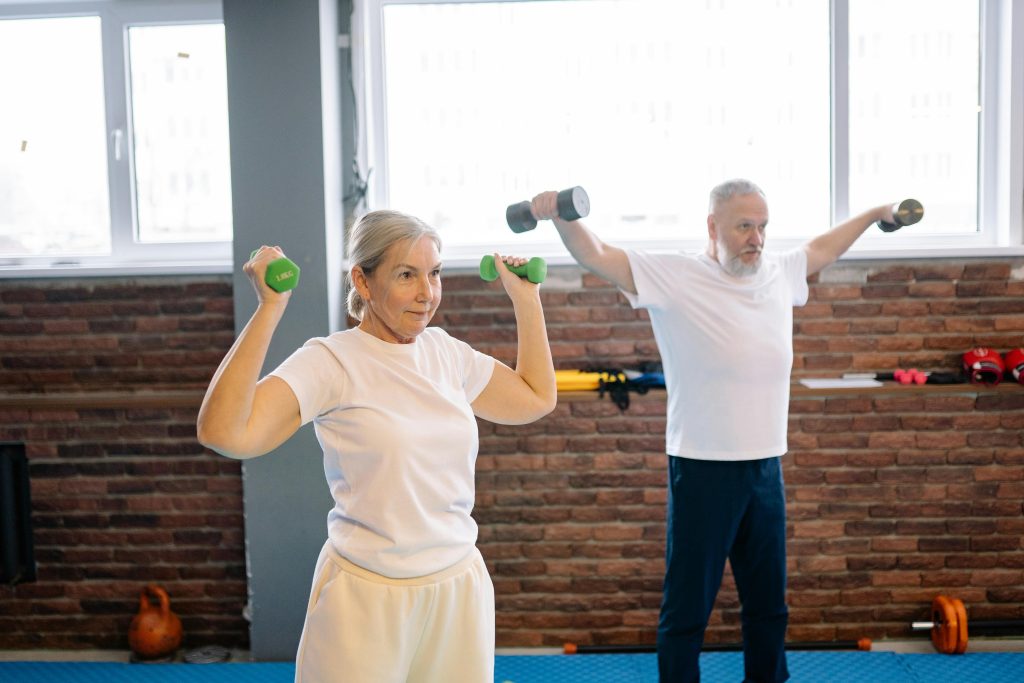
If you noticed the foundation of your home was slowly turning to sand, you wouldn’t wait for the roof to sag before taking action. Yet, for many seniors, a similar erosion is happening within their own bodies. Sarcopenia is a progressive and generalized skeletal muscle disorder that involves the accelerated loss of muscle mass and function. It is often called a “silent” condition because it doesn’t always come with pain; instead, it arrives as a subtle “fading” of your ability to move through the world. At geriatricrehab.es, we don’t view this as an inevitable part of birthdays, but as a clinical challenge that requires a specific, high-intensity solution.
1. The Invisible Erosion of Independence
For decades, the medical community viewed muscle loss as a natural byproduct of aging. However, the current consensus, as detailed in Geriatric Physical Therapy (2020), identifies Sarcopenia as a distinct disease state with profound implications for longevity. It is not merely “getting thin” or “losing your tone.” It is a systemic failure of the musculoskeletal system to maintain the cellular machinery required for strength.
The danger of this erosion lies in its stealth. You might not notice the loss of a few grams of muscle each month, but you will notice when the stairs feel steeper or when you need to use your arms to push yourself out of a chair. By the time a senior is diagnosed with Sarcopenia, they may have already lost 30-50% of their peak muscle mass. This loss represents more than just a change in appearance; it is the loss of your body’s primary engine for movement, metabolism, and recovery.
2. The ‘Why It Matters’ Section: The Functional Carryover of Strength
At geriatricrehab.es, we teach seniors that muscle mass is the “Currency of Freedom.” Every ounce of muscle you preserve is a deposit into your “independence account.” When we discuss reversing Sarcopenia, we aren’t training for a bodybuilding stage; we are training for the “Sport of Life.”
For Seniors: Your Ticket to the World
Having strong legs isn’t just about balance; it’s about Functional Carryover.
- The Grocery Store: Stronger quadriceps mean you can navigate the aisles without leaning on the cart for support and carry your own bags to the car.
- The Family Circle: Strength is what allows you to get down on the floor to play with your grandchildren and—more importantly—gives you the power to get back up without help.
- The Travel Goal: Walking through an airport or exploring a new city requires a “power reserve.” Reversing muscle loss ensures you have the stamina to keep exploring without being sidelined by fatigue.
3. Understanding the Biological Drivers of Sarcopenia
To fix the engine, we must understand why it’s stalling. The “Why” behind muscle decay is a combination of neurological “unplugging” and chemical resistance.
For Professionals: The Cellular Reality. The biological hallmark of Sarcopenia is the preferential atrophy of Type II (fast-twitch) muscle fibers. These are the fibers responsible for power and “saving” you from a fall. As we age, we experience a decline in alpha-motor neuron innervation, effectively “unplugging” these power fibers. Simultaneously, seniors face Anabolic Resistance —a state where the body becomes “deaf” to the signals that normally trigger muscle growth after eating or light exercise.
Furthermore, we see an increase in Intermuscular Adipose Tissue (IMAT) —literally, fat infiltrating the muscle belly. This “marbling” of the muscle reduces the quality of the contraction, meaning even the muscle you have left isn’t working at 100% efficiency. To overcome this, the stimulus must be significantly higher than traditional “senior fitness” classes suggest.
4. Applying Physical Stress Theory to Sarcopenia Management
At geriatricrehab.es, we use the Physical Stress Theory (PST) to determine the exact “dosage” required to treat muscle loss. Your muscles are adaptive tissues; they only maintain the strength required to handle the stress you regularly place on them. If the stress is too low, the body sees muscle as an “expensive” tissue to keep and begins to dismantle it.
To reverse Sarcopenia, we must understand the five tissue responses:
- Death: In end-stage frailty, the loss of motor units is so profound that the muscle can no longer sustain the metabolic cost of movement.
- Injury: The fear many have. However, injury in seniors often occurs not from “heavy” weights, but from “unaccustomed” loads on atrophied tissue.
- Increased Tolerance (The Training Zone): This is where we must live. To stimulate the body to build new muscle, we must apply a load that is 60-80% of your 1-Rep Max (1RM).
- Maintenance: This is the “Safety Trap.” Doing the same light routine for years will not stop muscle loss; it simply keeps you at your current level until the next illness or injury causes a drop.
- Decreased Tolerance (Atrophy): The “Why” behind the 1% annual loss. Without high-intensity stress, the body enters a state of “muscle pruning.”
5. The Biological Mechanism: Myofibrillar Protein Synthesis (MPS)
The “Why” behind the 1RM mandate is found in the cellular signaling pathway known as mTOR. To overcome the “Anabolic Resistance” mentioned earlier, we need a signal loud enough to trigger Myofibrillar Protein Synthesis (MPS).
For Professionals: In the aging population, low-intensity exercise (below 60% 1RM) often fails to reach the threshold required to activate the mTOR pathway significantly. High-intensity resistance training creates mechanical tension that triggers the “shuttling” of amino acids into the muscle cell. Research cited in Geriatric Physical Therapy (2020) confirms that when seniors lift at 70-80% of 1RM, their fractional synthetic rate of muscle protein can match that of much younger individuals. We aren’t just moving joints; we are “re-awakening” the protein assembly line.
For Seniors: The “Building Materials” Analogy
Imagine you want to build a sturdy stone wall to protect your home. If you only bring a few small pebbles to the site every day (light weights), the wall will never get taller or stronger.
To build a wall that lasts, you need to bring in the heavy steel beams and large stones (60-80% intensity). The heavy lifting sends a signal to the “workers” (your cells) that they need to build something serious. At geriatricrehab.es, we make sure you aren’t just playing with pebbles; we give you the “heavy stones” needed to rebuild your wall of independence.
6. Sarcopenia and Its Impact on Cardiovascular Health
Muscle is not just for movement; it is a vital metabolic organ. When you lose muscle mass, your heart has to work significantly harder to keep the car moving.
For Professionals: Skeletal muscle serves as the primary “sink” for glucose disposal. As Sarcopenia progresses, the loss of muscle mass leads to reduced insulin sensitivity and an increase in systemic inflammation. Clinically, this manifests as decreased vascular compliance. Because the muscles are smaller and “marbled” with fat, the heart must push blood through a more resistant system (increased afterload ), which can lead to left ventricular hypertrophy. Strengthening the “peripheral pump” (the muscles) is one of the most effective ways to lower the strain on the “central pump” (the heart).
For Seniors: The “Engine Size” Analogy
Think of your muscles as the engine of a car and your heart as the fuel pump. If your engine shrinks from a V8 to a tiny lawnmower motor, the fuel pump has to work at “max speed” just to get the car up a tiny hill.
By rebuilding your muscles, you are giving yourself a bigger engine. Now, when you walk up the stairs, your heart doesn’t have to “race” because the engine is powerful enough to do the work easily. Reversing muscle loss is the best “gift” you can give to your heart.
7. The Professional Perspective: The ICF Framework and Sarcopenia Diagnosis
At geriatricrehab.es, we use the International Classification of Functioning, Disability, and Health (ICF) Framework to look past the “thinning limb” and focus on the person’s life. Diagnosis is the first step in reversing the “silent” loss.
- Body Structures and Functions: We don’t just guess; we measure. Following the EWGSOP2 (European Working Group on Sarcopenia in Older People) criteria, we look for low muscle strength (usually via grip strength), followed by low muscle quantity or quality (via DXA or Bioimpedance).
- Activities: How does this structural loss affect “Activity”? We use the SARC-F questionnaire and physical performance tests like the 4-meter walk speed or the Timed Up and Go (TUG). If a senior walks slower than 0.8 meters per second, the “engine” is likely failing.
- Participation: This is where Sarcopenia hits hardest. When a senior can’t climb the stairs to their church or carry a bag of gifts to a birthday party, they stop participating in society.
By identifying the structural deficit early, we can intervene with high-intensity loading before “Activity Limitations” turn into “Participation Restrictions.”
8. The Caregiver Corner: Safety Spotting and “The Sit-to-Stand” Audit
High-intensity loading is the cure for Sarcopenia, but it requires a “Safety First” mindset. For caregivers helping a loved one with home-based exercises like the “Sit-to-Stand” (the senior’s version of a squat), “Safety Spotting” is a technical skill.
Safety Spotting Tips for the Sit-to-Stand:
- The “Shadow” Position: Stand slightly behind and to the side of the senior. Do not pull them up by their arms, as this can cause shoulder injury. Instead, keep your hands near their hips or waist to provide a “safety net” if they lose balance.
- The “Knee-Dive” Watch: Ensure their knees do not “dive” inward as they stand. This is a sign of hip weakness. Remind them to “push the floor away.”
- Identifying “True Fatigue”: If their muscles start to shake slightly, that is the “Growth Zone”—encourage them to finish the rep! However, if they start to “cheat” by swinging their torso or if they cannot complete the movement with good form, that is the end of the set.
- The Chair Anchor: Ensure the chair is pushed against a wall or “blocked” so it cannot slide backward as they sit down.
9. Therapeutic Intervention: Reversing the Fade with High-Intensity Loading
The biggest hurdle in geriatric rehab is the “Myth of Fragility.” Many believe that seniors should only do light stretching or water aerobics. However, Geriatric Physical Therapy (2020) proves that to reverse Sarcopenia, the intensity must be high enough to create a “systemic shock” to the muscles.
Why Intensity Matters: To achieve 60-80% of 1-Rep Max (1RM), the senior should be lifting a weight that they can only move for 8 to 12 repetitions before reaching fatigue. If they can do 20 repetitions easily, the intensity is too low to trigger myofibrillar protein synthesis.
Functional Carryover: From Gym to Grocery Store. When we load a senior’s legs with 70% of their maximum capacity, we are essentially “over-building” their engine.
- Before Training: Standing up from a chair requires 90% of their available strength. They are exhausted after five minutes.
- After HIRT: Standing up from a chair only requires 40% of their available strength. Now, they have a 60% “reserve” to go for a walk, carry the laundry, or stay active all day without hitting the “energy floor.”
10. Conclusion: Reclaiming the Powerhouse
The “silent” loss of muscle is a physiological reality of aging, but it is not an irreversible fate. Throughout this guide, we have explored the “Why” behind the fading powerhouse—from the “unplugging” of Type II fast-twitch fibers to the “engine-shrinkage” that forces the heart to overwork. By recognizing that Sarcopenia is a condition that responds specifically to the “dosage” of high-intensity loading, we can move away from the “Maintenance Trap” and back into the “Growth Zone.”
By applying the principles of the Physical Stress Theory, we can pull our muscles out of the “Atrophy Zone” and into the zone of Increased Tolerance. You are never too old to “re-awaken” your protein assembly line or to turn your “stiff garden hoses” of vessels back into “flexible elastic bands” through the metabolic demand of strength training. At geriatricrehab.es, while the years may pass, your power can be reclaimed. Your muscles are waiting for a signal that is loud enough to matter; it is time to give them the hea
Is your “powerhouse” fading? Don’t settle for the myth that you are “too old for heavy weights.” Your muscles are the highly adaptive engine of your independence, and it is never too late to start the rebuilding process. Schedule a Comprehensive Strength and 1RM Assessment at geriatricrehab.es today. Our expert team will help you assess your vascular compliance, measure your Type II fiber power, and create a personalized, evidence-based plan to turn your strength back on. Consult a specialist today at geriatricrehab.es and let’s start your “heavy stone” journey together.













