
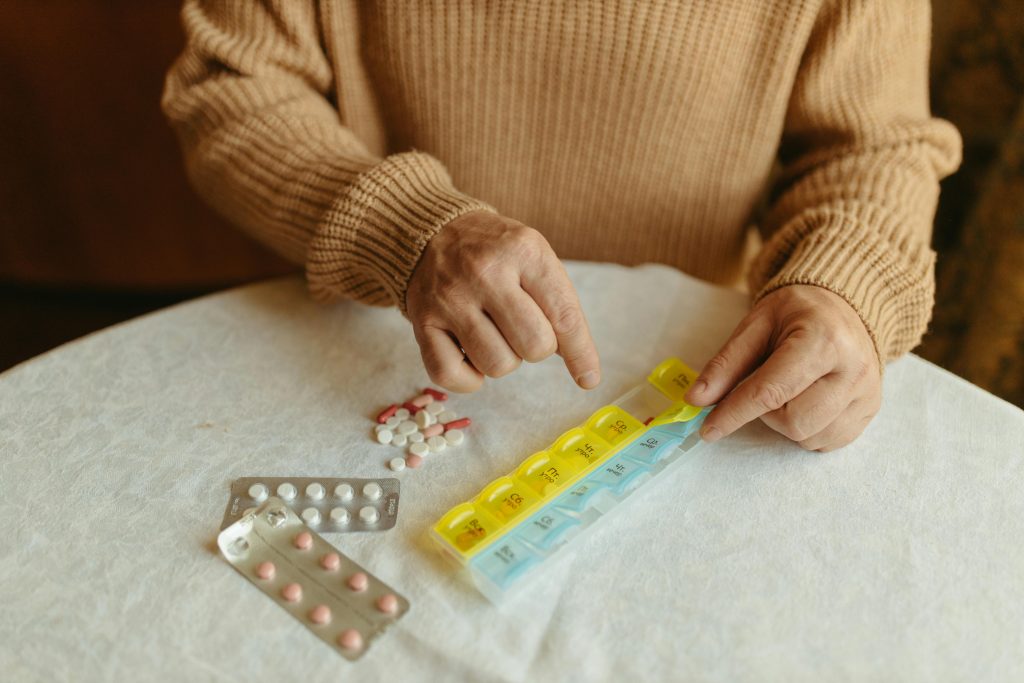
In the landscape of geriatric rehabilitation, the most sophisticated exercise program or physical therapy intervention can be undermined by a single missing link: medication adherence. For older adults, managing multiple prescriptions—often referred to as polypharmacy—is a daunting task that requires precision, memory, and physical dexterity. Medication adherence is not merely a matter of following instructions; it is a critical pillar of patient safety that directly impacts functional outcomes, hospital readmission rates, and overall quality of life. As we explore the tools available today, we must view them through the lens of the “Optimal Aging” philosophy, ensuring that technology and traditional methods serve to empower, rather than overwhelm, the senior.
1. Introduction: The Critical Link Between Adherence and Independence
In the discipline of geriatric rehabilitation, we often talk about the “Slippery Slope of Aging.” This concept describes the natural decline in Physiological Reserve—the “extra” capacity our organs have to handle stress. One of the most significant factors that can either stabilize a senior on this slope or accelerate their slide toward frailty is medication adherence.
When we speak of medication adherence, we are discussing more than just “remembering to take a pill.” We are talking about the clinical synchronization of chemistry and movement. For a senior to remain independent, their body must stay in a state of equilibrium. If a heart medication is missed, the resulting “heavy” feeling in the chest or shortness of breath isn’t just a symptom; it is a barrier that prevents them from performing the very exercises designed to keep them walking. Framing the pillbox as a tool for freedom rather than a symbol of “getting old” is the first step in successful geriatric care. By mastering your tools for adherence, you are essentially protecting your reserve, ensuring you have the energy and stability to engage in the activities you love.
2. Pharmacokinetics: Why the Timing of the Dose is Non-Negotiable
For Allied Health Professionals, the necessity of medication adherence is rooted in the complex world of pharmacokinetics. As we age, our bodies undergo significant changes in composition, specifically an increase in body fat and a decrease in total body water and lean muscle mass. These changes fundamentally alter the Volume of Distribution (Vd).
- Steady State: The goal of chronic medication is to reach a “steady state,” where the amount of drug entering the body equals the amount being eliminated. In older adults, the half-life of many drugs is extended because of decreased renal clearance and altered liver metabolism (first-pass metabolism).
- The “Crash” Feeling: When a dose is missed, the blood plasma levels drop below the therapeutic window. For a senior, this doesn’t just show up as a “missed number” on a chart. It manifests as “the feelings”—the sudden return of that dizzy feeling when you stand up too fast from the couch, or a sharp spike in “breakthrough” pain that makes standing up from a chair feel impossible.
The aging body has a much harder time recovering from these fluctuations. While a 30-year-old might handle a missed dose with minimal symptoms, an 80-year-old may experience a significant “crash” that leads to a fall, simply because their system couldn’t adjust to the sudden chemical imbalance.
3. Improving Safety Through PT Medication Adherence and ADR Detection
Caregivers are the frontline defense against the complications of poor medication adherence. Often, a senior will insist they are “doing fine” with their meds, but their physical function tells a different story. As a caregiver, your role is focused on observation and the detection of “sub-clinical” failures.
Caregiver Checklist: 5 Signs Your Loved One is Struggling with Their Regimen
- The “Leftover” Mystery: You notice pills at the bottom of the pillbox on Sunday night, even though they claimed to have taken them all week.
- Increased Physical Clumsiness: They are suddenly bumping into furniture or reaching for walls more than usual.
- The “Foggy” Morning: They seem unusually confused or “checked out,” specifically in the hours following their morning or evening doses.
- The “Dizzy” Pivot: They express fear of falling when turning around or standing up quickly, often describing “that lightheaded feeling.”
- Bottle Confusion: They are found staring at the labels or struggling with the child-proof caps, which can indicate that the physical task of taking the medication is becoming a barrier.
Take-Home Tip for Caregivers: If you see these signs, do not treat it as a memory problem alone. It could be a physical dexterity issue or a side effect of the drug itself. Bring the “Brown Bag” (all current medications) to their next PT session for a full review.
4. Low-Tech Mastery: The Science of Pill Organizers
For many seniors, the most reliable tool for medication adherence is a high-quality manual pill organizer. However, choosing one is more than just picking a plastic box; it is about “affordance”—how the design of the tool matches the physical abilities of the user. In geriatric rehabilitation, we look at hand function and vision as the primary filters for these tools.
- Tactile and Visual Cueing: A manual box provides a physical “map” of the day. If the “Wednesday Morning” slot is still full and it is currently dinner time, the senior has an immediate, unarguable visual cue that a dose was missed.
- Design for Dexterity: For those with arthritis, “pop-up” buttons or easy-open lids are essential. If a senior has to fight a child-proof cap, they are more likely to skip the dose out of frustration or pain.
- Functional Tip: Set up a “Medication Station” in a high-traffic area, like the kitchen counter near the coffee maker. This uses “habit stacking”—linking the act of taking meds to a routine you already do every day.
5. High-Tech Helpers: Smart Apps and Digital Medication Adherence
As we move into more complex care, digital tools can help extend the ICF Framework goals of “Activities and Participation” by reducing the cognitive load required to manage health. Smart apps are no longer just for the tech-savvy; they are becoming essential for the medication adherence triad.
- The Professional Perspective: For PTs and Allied Health Professionals, the data from these apps is invaluable. If a patient is consistently missing their 2:00 PM dose of a Parkinson’s medication, it explains why their balance and gait deteriorate during their 3:00 PM therapy session. Tracking this correlation allows us to adjust the therapy schedule for “peak performance.”
- Digital Features: Apps like Medisafe or Mango Health provide loud, customizable alerts. They can also show a photo of what the pill looks like, which is crucial if the pharmacy switches from a round white pill to an oval blue one.
- Family Syncing: One of the greatest benefits for caregivers is the ability to receive a notification on their own smartphone if the senior hasn’t marked a dose as “taken” by a certain time. This allows for remote “check-ins” without being overbearing.
6. The “Automatic” Advantage: Smart Dispensers and Medication Adherence
When a senior has a significant cognitive decline or a history of accidental “double-dosing” (which can lead to toxicity), an automatic pill dispenser is the gold standard for medication adherence. These devices act as a locked “gatekeeper” for medicine.
- Preventing Toxicity: These dispensers rotate to the correct slot at a pre-set time and trigger a flashing light or loud alarm. The key feature is that only the current dose is accessible. This eliminates the risk of a senior forgetting they already took their pill and taking another, which is a common cause of emergency room visits.
- The Senior Experience: For the senior, this removes “decision fatigue.” They don’t have to think about which pill is which; they simply wait for the machine to beep, tip it over, and take what is provided.
- Functional Tip: When choosing an automatic dispenser, consider the volume. If a senior takes 10 pills in the morning, ensure the individual compartments are large enough to hold them all without jamming.
7. The Story of Mr. H: A Case Study in the Prescribing Cascade
To understand why medication adherence often fails, we must look at the “chemical load” placed on the senior. In geriatric rehabilitation, we frequently encounter the Prescribing Cascade—a dangerous cycle where the side effect of one drug is mistaken for a new medical condition, leading to yet another prescription.
The Case of Mr. H Mr. H, an 82-year-old retired teacher, was a model of health until he developed “nagging hip pain” from osteoarthritis.
- The Trigger: To keep him walking, he began taking a high-dose NSAID (like Naproxen).
- The First Cascade: Within two weeks, the NSAID caused his body to retain salt and water, which naturally raised his blood pressure.
- The Second Step: At his check-up, his doctor saw the high blood pressure (not realizing the NSAID caused it) and prescribed a Calcium Channel Blocker.
- The Third Step: This new blood pressure pill caused his ankles to swell significantly (peripheral edema). To fix the swelling, he was given a Diuretic (water pill).
The Resulting Adherence Failure: By the time Mr. H arrived for his physical therapy evaluation, he was supposed to be taking four different medications at three different times of the day. Because the diuretic made him run to the bathroom every hour, he started “skipping” it before his walks. Because he skipped the diuretic, his legs became so heavy with fluid that he couldn’t lift them to climb his stairs. He became overwhelmed, confused the morning pills with the evening ones, and eventually stopped taking everything because he felt “worse than before.”
Through PT medication screening, we identified that the “swelling” and “dizziness” weren’t new diseases, but side effects. By coordinating with his physician to switch his oral NSAID to a topical gel, the blood pressure and swelling subsided. Mr. H went from four pills back down to one, and his adherence—and his mobility—returned immediately.
8. Simplifying the System: The Role of the Beers Criteria
For Allied Health Professionals, the most effective tool for improving medication adherence isn’t a better pillbox; it’s a shorter medication list. This is where the Beers Criteria comes into play. Created by the American Geriatrics Society, this is a list of medications that are “potentially inappropriate” for older adults because the risks of falls, confusion, or toxicity outweigh the benefits.
- De-prescribing for Adherence: Every pill added to a regimen decreases the likelihood of 100% adherence. If a senior is taking a “PIM” (Potentially Inappropriate Medication) like a long-acting sedative for sleep, it may be causing “morning brain fog.” This fog makes it impossible for them to remember their critical heart medications.
- The Professional Advocacy: As a PT, you can use the Beers Criteria to advocate for your patient. If you observe that a patient’s balance is worse after a specific dose, you can provide a clinical report to the PCP suggesting a review of that medication.
- Pharmacokinetics and Toxicity: Remember that because of decreased first-pass metabolism and a lower Volume of Distribution (Vd) for water-soluble drugs, the “normal” dose for a younger adult is often a “toxic” dose for a senior. Simplifying the list reduces the risk of these chemical clashes.
9. Environmental Modification: Designing the “Medication Station”
The environment is a silent partner in medication adherence. If pills are kept in a dark bathroom cabinet or a cluttered kitchen drawer, the senior is essentially relying on memory alone—a risky strategy.
- Habit Stacking: Encourage seniors to link their medication to an existing, unbreakable habit. If they have coffee every morning at 7:00 AM, the pill organizer should be sitting right next to the coffee mug.
- Lighting and Contrast: Many adherence errors happen because the senior can’t see the markings on the box or the color of the pill. A “Medication Station” should be well-lit and feature high-contrast labels (black text on a white or yellow background).
- For the Seniors: If you find yourself forgetting your evening dose, it might be because your routine is too varied at night. Try placing a small visual reminder, like a brightly colored coaster, where you usually set your glasses or your remote control.
10. Conclusion: The Collaborative Triad (Senior, Caregiver, Professional)
The success of medication adherence is never the responsibility of a single person; it is a collaborative effort between the senior, the family caregiver, and the healthcare professional. As we have explored, a pillbox is not just a plastic container—it is a critical tool that preserves your Physiological Reserve and keeps you on the “Optimal Aging” side of the Slippery Slope.
Whether you are utilizing high-tech automatic dispensers to prevent toxicity or simple environmental cues to anchor your habits, the goal is the same: consistency. When your internal chemistry is stable, your physical therapy and exercise programs can work at their peak efficiency. By bridging the gap between what is prescribed and what is actually taken, we ensure that the “exercise is medicine” philosophy has a solid, evidence-based foundation.
The “Brown Bag” Final Step
To wrap up your adherence strategy, we recommend the “Brown Bag” method once every quarter.
- Collect: Put every single prescription, over-the-counter med, and herbal supplement into a bag.
- Review: Bring this bag to your Physical Therapist or Pharmacist.
- Cleanse: Use this time to identify any medications that may be causing “brain fog” or balance issues using the Beers Criteria.
Your independence is worth the effort. If you or your loved one is struggling to manage a complex pill schedule, don’t let it become a barrier to your recovery. Bring your “brown bag” to your next session or explore our library of adherence tools and strategies on geriatricrehab.es today.













