
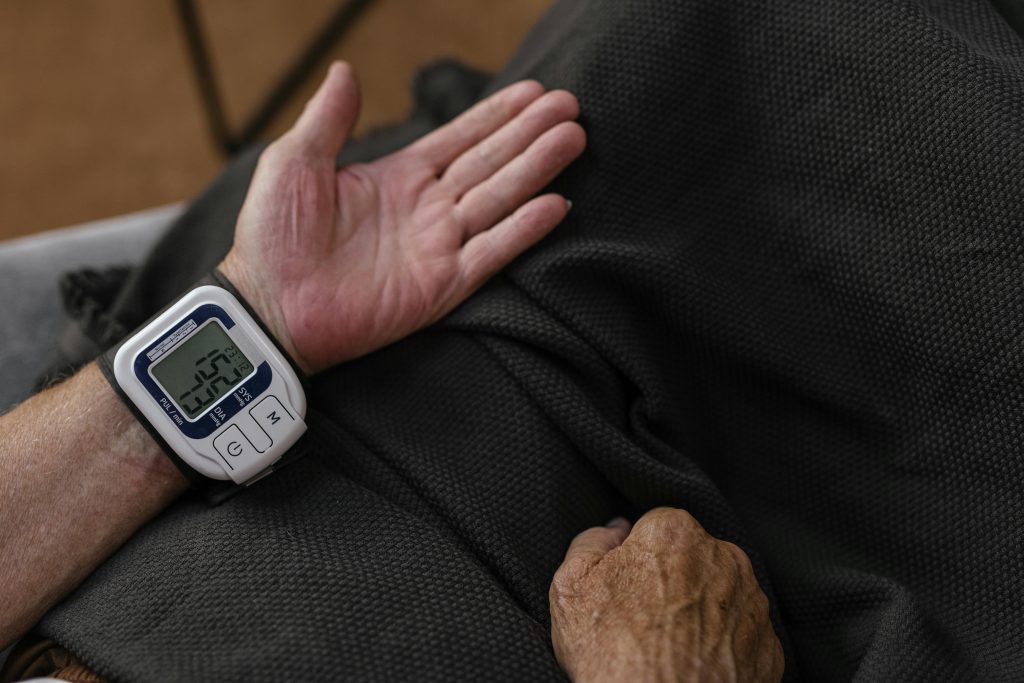
In the field of geriatric rehabilitation, we treat movement with the same clinical rigor as a pharmaceutical intervention. Just as a physician calculates the exact milligrams of a heart medication, we must determine the precise Exercise Dose-Response required to move a patient up the Slippery Slope of Aging. If the “dose” is too low, the senior remains sedentary and loses Physiological Reserve; if it is too high, we risk injury or cardiac strain. Finding that “Goldilocks” zone—where the frequency, intensity, and time are perfectly calibrated—is the secret to adding not just years to life, but life to years.
1. The Medicine of Movement
In the framework of Geriatric Physical Therapy (2020), we treat movement not as a hobby, but as a potent pharmaceutical intervention. We often visualize a senior’s health as being on the Slippery Slope of Aging. At the top, you have a robust Physiological Reserve—the “extra” strength and lung capacity that allows you to weather a cold or a long day. As we age, we naturally slide down this slope, but a correctly calculated Exercise Dose-Response is the only force capable of pushing you back up.
For the senior, exercise is the fuel that adds years to your life and, more importantly, life to your years. We call this Vigor. It is the vitality that keeps you in your own home, gardening, and walking with friends. If the dose of exercise is too low, the medicine doesn’t work; if it’s too high, it can cause strain. This article explores how to find your “Goldilocks” zone—the perfect balance of frequency, intensity, and time.
2. The Science of the Exercise Dose-Response Relationship
From a Professional Perspective, the Exercise Dose-Response refers to the relationship between the “dose” of activity (how much and how hard) and the “response” (the health benefit). In younger populations, the relationship is often linear—the more you do, the better. In geriatrics, however, the curve is much steeper at the beginning. The most significant health gains occur when a senior moves from being “completely sedentary” to “moderately active.”
The biological driver here is the principle of Specific Adaptation to Imposed Demands (SAID). Your body is a dynamic system that changes only when a demand is placed upon it. If you want stronger bones, you must “impose” a weight-bearing demand. If you want a stronger heart, you must “impose” an aerobic demand. In the aging body, the “therapeutic window”—the space between not enough and too much—is narrower, requiring clinicians to be precise with titration to avoid injury while still triggering a positive response.
3. Frequency: The Consistency Factor in Exercise Dose-Response
Frequency is the foundation of the dose. In younger adults, high-intensity training can be done sparsely because recovery is rapid. For seniors, however, muscle protein synthesis and cellular repair happen at a slower rate. Therefore, we often favor a “Low Dose, High Frequency” approach.
- Consistency over Intensity: Spreading activity over 5 to 6 days a week is often more effective than one or two “big” workouts. This maintains a steady metabolic signal to the body, keeping joints lubricated and the nervous system “awake.”
- Recovery and Half-Life: We must also consider the half-life of medications. If a senior is on a diuretic that causes morning fatigue, the frequency of their “dose” should be shifted to when they feel most resilient.
Take-Home Tip for Caregivers (The Dose Detective): Be a “Dose Detective” for your loved one. If they are exhausted for the entire day after a walk, the “dose” was too high. Instead of stopping, try splitting the activity. Two 10-minute walks are often better tolerated than one 20-minute walk. This keeps the Vigor high without depleting their Physiological Reserve for daily tasks like dressing or cooking.
4. Functional Training: The Comprehensive Functional Audit
In geriatric rehabilitation, the “dose” is not just about gym repetitions; it is about the “Biological Message” we send to the body to keep daily life manageable. To apply the Exercise Dose-Response effectively, we must identify the specific movements that are currently depleting a senior’s Physiological Reserve. If a task feels like an “all-out” effort, the senior is at high risk for a fall.
Below is a Functional Audit mapping daily struggles to the corrective “doses” of exercise required to restore independence.
Functional Audit: Mapping Daily Life to Corrective Loading
1. Reaching for a heavy dish on a high shelf
- The Struggle: Shoulder pain or inability to reach upward.
- The Corrective Dose: Wall Slides or Overhead Dumbbell Presses.
- The Response: Strengthens the thoracic extensors and the rotator cuff, preventing the “rounding” of the back that leads to spinal compression.
2. Stepping over the high edge of a bathtub
- The Struggle: Loss of balance or “heavy leg” feeling when lifting the foot.
- The Corrective Dose: Single-Leg Stances or Hip Marches with Resistance.
- The Response: Improves pelvic stability and hip flexor power, providing the “toe clearance” needed to navigate bathroom obstacles.
3. Getting up from a low toilet or soft sofa
- The Struggle: Needing to “rock” back and forth or use arms to push up.
- The Corrective Dose: Progressive Sit-to-Stands.
- The Response: Targets the quadriceps and glutes, which are the primary “anti-gravity” muscles required for independence.
4. Carrying groceries from the car to the kitchen
- The Struggle: Wrist fatigue or losing grip on the bags.
- The Corrective Dose: Farmer’s Carries (Walking while holding weights).
- The Response: Increases grip strength and loads the radius and ulna (wrist bones) to prevent fragility fractures.
5. Intensity: The Critical Driver of Exercise Dose-Response Adaptation
If frequency is the foundation, intensity is the “engine” of the Exercise Dose-Response. For the Allied Health Professional, this is where we apply the SAID Principle (Specific Adaptation to Imposed Demands). If we do not impose a sufficient demand, the body has no reason to adapt.
We often differentiate intensity by monitoring the Heart Rate Reserve (HRR). There is a profound physiological difference between loading at 40% and 85% of HRR:
- The 40% Dose (Low Intensity): This is the entry point for those at the bottom of the Slippery Slope. It improves insulin sensitivity and basic joint mobility but rarely builds significant muscle mass or bone density.
- The 85% Dose (High Intensity): This is the “Vigor” zone. It triggers the release of growth hormone and significantly increases stroke volume in the heart. While it carries a higher risk, it is the most effective dose for “refilling” the Physiological Reserve.
Professional Perspective: When titrating intensity, use the “Two-Rep Rule.” If a patient can perform 12 repetitions of an exercise with perfect form and feels they could have done two more, you are in a moderate therapeutic window. If they could have done ten more, the dose would be sub-therapeutic.
6. Time and Volume: How Much is “Enough”?
A common question from seniors is: “How long do I have to do this?” In the context of Exercise Dose-Response, we look at total weekly volume. The global standard is 150 minutes of moderate activity per week, but for a senior with low Vigor, this can feel like an impossible mountain to climb.
- The Power of “Snackable” Movement: Research shows that three 10-minute bouts of exercise are just as effective as one 30-minute session for blood pressure management. For the aging heart, smaller “doses” allow the baroreceptor response to adjust without the “Dizzy Pivot” that often occurs with prolonged exertion.
- Cumulative Loading: For bone health, the number of loading cycles matters more than the total time. Ten firm “heel drops” performed five times a day provide a better stimulus for Wolff’s Law (bone growth) than 50 heel drops performed all at once, which might lead to fatigue and a fall.
7. Pharmacokinetics and Dosage: Meds and the Exercise Response
For the Allied Health Professional, calculating the Exercise Dose-Response is impossible without accounting for the patient’s “chemical” background. In seniors, the presence of multi-system medications alters how the body perceives and reacts to the physical “dose” of movement.
- Beta-Blockers and the Heart Rate Cap: If a patient is on a beta-blocker, their heart rate is pharmacologically “braked.” Using standard heart rate formulas to gauge intensity will lead to dangerous over-exertion. In these cases, we must rely on subjective scales rather than pulse counts.
- Volume of Distribution (Vd): As body composition shifts toward higher fat and lower water content in the elderly, the Vd of many medications changes. Fat-soluble drugs may have an extended half-life, lingering in the system and causing prolonged “hangover” effects that mimic exercise-induced fatigue.
- Diuretics and Blood Volume: Medications for blood pressure can reduce total blood volume. If the exercise “dose” includes heavy sweating or rapid transitions from sitting to standing, the patient is at a high risk for orthostatic hypotension—the “Dizzy Pivot” that leads to falls.
8. Overcoming “The Feelings”: Navigating the Perception of Effort
For many seniors, the biggest barrier to a therapeutic Exercise Dose-Response is the fear of “the feelings.” This includes the “heavy leg” feeling after a walk or the sensation of being “winded.” In geriatric rehab, we use the Borg Rating of Perceived Exertion (RPE) to help seniors distinguish between “healthy work” and “dangerous strain.”
- Understanding RPE: We ask seniors to rate their effort on a scale of 6 to 20. A “dose” that feels like a 12 to 14 (somewhat hard) is the sweet spot for building Vigor.
- Healthy Fatigue vs. Warning Signs: We teach that a slight “burning” in the muscles or a deeper breath is the “fuel” entering the engine. However, sharp pain, chest pressure, or a sudden cold sweat are “toxic” doses that require an immediate stop.
- The “Heavy Leg” Myth: Often, the sensation of heavy legs is not muscle damage, but the body’s vascular system adjusting to a new demand. By titrating the dose slowly, we “grease the pipes” and reduce this sensation over time.
9. The Story of Mrs. G: A Case Study in Titration
Mrs. G, an 84-year-old widow, provides a classic look at the “Prescribing Cascade.” After a minor trip, her family encouraged her to “take it easy” for safety. This led to a sub-therapeutic activity level, causing her Physiological Reserve to plummet. Within months, she struggled to stand from her favorite armchair. Her doctor, seeing her weakness, prescribed a supplement for “low energy,” which caused stomach upset, leading to further inactivity.
The Intervention: When we began her rehab, her “dose” was just three minutes of standing five times a day. We applied the SAID Principle: we needed to impose a demand on her legs to get a response in her strength.
- Week 4: We moved her to 40% HRR by introducing short walks to the mailbox.
- Week 8: We hit the “Vigor” zone, reaching 70% HRR with weighted sit-to-stands.
The Result: By precisely titrating her Exercise Dose-Response, we moved her back up the Slippery Slope. She didn’t just regain her ability to stand; she regained her ability to walk to church and garden. Mrs. G proved that you are never too old for a “refill” of your physiological tank, provided the dose is right.
10. Conclusion: The Safety Spotter’s Guide to Titrating the Dose
To truly maximize the Exercise Dose-Response, we must respect the profound physiological differences between light activity and true therapeutic loading. In geriatric rehabilitation, we categorize the “dose” based on the Heart Rate Reserve (HRR):
- The 40% Dose (Base Level): This is characterized by a “conversational” pace. While it is excellent for maintaining basic circulation and glucose management, it often fails to build the Vigor needed to climb back up the Slippery Slope.
- The 85% Dose (Growth Level): This higher intensity triggers the “Specific Adaptation” required to increase bone density and peak oxygen consumption. However, this dose requires a stable heart and a clear head. Moving from 40% to 85% is not a jump, but a slow titration over weeks of training.
Caregiver Focus: The Safety Spotter’s Guide
As the dose of exercise increases, the need for a “Safety Spotter” becomes critical. Helping your loved one reach the high-intensity zone requires you to protect their skeleton while also protecting your own.
- The Power Assist (Sit-to-Stand): When assisting with a “Vigor” dose of sit-to-stands, do not pull on the senior’s arms. Stand in front with a wide base of support and have them lean “nose over toes.” Provide a steadying hand on their hips or a gait belt to guide the movement upward.
- The “Dizzy” Check: Always monitor for the “Dizzy Pivot” immediately after a high-intensity bout. If your loved one feels lightheaded, have them sit and perform ankle pumps to push blood back to the heart.
- The Dosage Log: Keep a simple notebook. If a certain “dose” leads to a “heavy leg” feeling that lasts more than 24 hours, you have exceeded their current Physiological Reserve, and it is time to titrate back for a few days.
Movement is the fuel that adds years to your life and life to your years. By treating exercise as a precisely dosed medicine, we ensure that every step, reach, and lift is an investment in your independence.
Are you unsure if your “dose” of movement is actually working? Don’t leave your health to guesswork. Schedule a “Dosage Audit” with our expert clinical team at geriatricrehab.es today and learn how to fuel your future with precision.













