
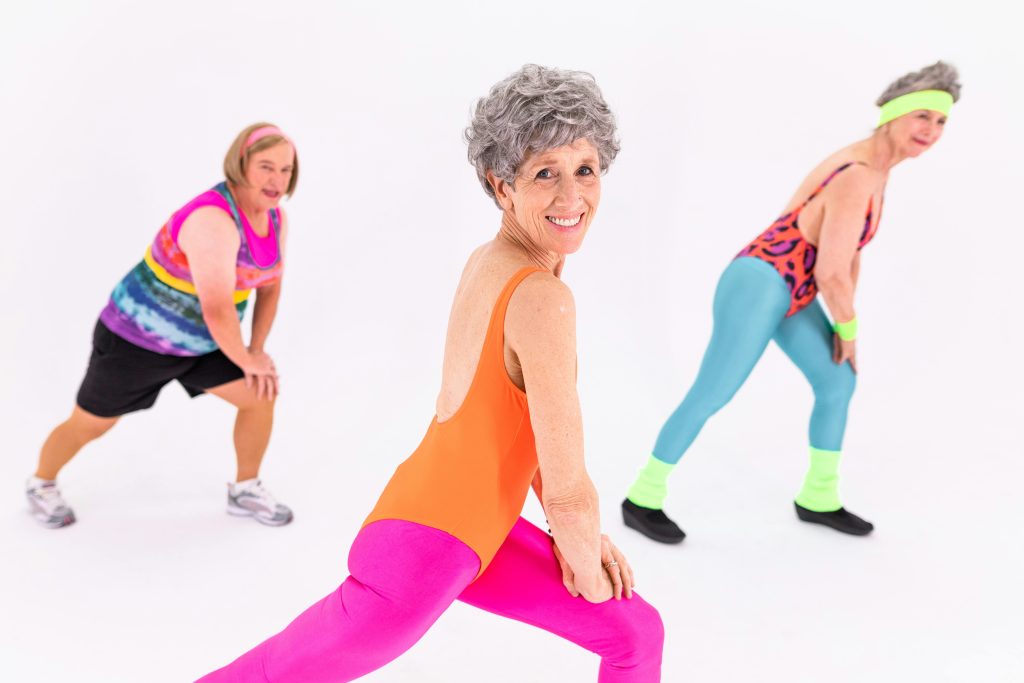
In the world of geriatric rehabilitation, we often treat the body as a collection of levers, pulleys, and pumps. However, as any seasoned therapist knows, the “engine” of the human body runs on more than just calories—it runs on connection. At geriatricrehab.es, we believe that Group Exercise for Seniors is one of the most potent prescriptions available in our “Exercise is Medicine” toolkit. Loneliness is not merely a social inconvenience; it is a physiological stressor that accelerates the “Slippery Slope of Frailty.” According to Geriatric Physical Therapy (2020), social isolation is a significant predictor of functional decline and mortality. By stepping out of the isolation of the home and into a community of peers, seniors find the “high-octane fuel” necessary to add years to their lives and, more importantly, life to their years.
1. The Loneliness Epidemic vs. The Social Solution
The modern era has introduced a “silent epidemic” among the aging population: social isolation. When a senior lives alone, the “Slippery Slope” becomes steeper. The lack of external stimulation leads to a reduction in Vigor —that vital spark of energy that drives us to move, engage, and thrive. Group Exercise for Seniors acts as a powerful intervention against this decline.
When we move together, we aren’t just performing repetitions; we are engaging in a shared reclamation of independence. The group environment provides a unique “bio-psycho-social” stimulus that solitary treadmill walking simply cannot replicate. It shifts the focus from “fixing a deficit” to “celebrating a capability.” In this setting, exercise stops being a clinical requirement and starts being a social highlight, which is the key to long-term adherence and the prevention of deconditioning.
2. The ‘Feelings’ Section: From “Isolation” to “Belonging”
The emotional weight of aging often manifests as a “heaviness” in the limbs and a “fog” in the mind. Many seniors describe their daily routine as a series of quiet, repetitive tasks that lack a sense of purpose.
For Seniors: Reclaiming Your Vigor
- The Silence of the Slope: Isolation feels like “walking through wet cement.” Without the laughter and conversation of others, the motivation to maintain your “fuel” tank drops. You might find yourself sitting longer and moving less, which is exactly how the Slippery Slope gains momentum.
- The “Shared Struggle” Spark: There is a specific type of joy that comes from realizing you aren’t the only one who finds a balance drill challenging. Laughing with a friend after a “wobble” replaces the fear of falling with the confidence of trying.
- The Belonging Effect: Being part of a group gives you a reason to get dressed and leave the house. That sense of belonging is a powerful form of Vigor. It tells your brain that you are still an active participant in the world, not just a spectator.
- Vigor as Community: When you exercise with others, their energy becomes yours. You find yourself doing one more repetition or walking one minute longer because the collective “fuel” of the group keeps you going.
3. The Neurobiology of Group Exercise for Seniors
For the allied health professional, the benefits of group settings are grounded in hard science. We are seeing a profound intersection between social psychology and neurobiology that justifies the move toward cohort-based rehabilitation.
For Professionals: The Neurochemical Shift
- The Oxytocin-Endorphin Synergy: Participating in Group Exercise for Seniors triggers the release of oxytocin (the “bonding hormone”) alongside endorphins. This combination creates a “social high” that increases pain tolerance and improves mood. Geriatric Physical Therapy (2020) notes that this neurochemical environment can actually reduce “protective guarding” and fear-avoidant behaviors.
- BDNF and Cognitive Reserve: Socially complex environments—like a group class where you must mirror an instructor or navigate around peers—stimulate the production of Brain-Derived Neurotrophic Factor (BDNF). This is “Miracle-Gro” for the brain, helping to preserve cognitive function and slow the progression of dementias.
- The SAID Principle in Social Context: The Specific Adaptation to Imposed Demands (SAID) principle applies here, too. The “demand” of a social environment includes auditory processing, visual tracking of others, and verbal interaction. The “adaptation” is a more robust, integrated nervous system that is better equipped to handle the complexities of real-world environments.
Take-Home Tips for Caregivers:
- The “Buddy System” Entry: If your loved one is hesitant to join a group, suggest going together for the first session. The presence of a “Safety Spotter” they trust can bridge the gap from social anxiety to social Vigor.
- Observe the “After-Glow”: Notice how your loved one’s mood changes after a group session. This “emotional fuel” often leads to better appetite and improved sleep—two critical pillars of geriatric health.
- Find the “Vigor Match”: Ensure the class level matches their current ability. A class that is too fast can be discouraging, while one that is too slow won’t provide the “Exercise is Medicine” dose they need.
4. The Köhler Effect: Why We Work Harder Together
For the physical therapist or exercise physiologist, the “dose” of exercise is everything. Interestingly, the social environment naturally optimizes this dose through a phenomenon known as the Köhler Effect. This principle states that individuals work harder when they are part of a group than when they are alone, especially when the task is “conjunctive” (where the group’s success depends on the persistent effort of all members).
For Professionals: Dose-Response in a Social Setting
- Reaching the 85% Threshold: In a solitary home environment, many seniors struggle to push past 40% of their Heart Rate Reserve (HRR) due to perceived exertion or boredom. However, in Group Exercise for Seniors, the desire to “keep pace” with peers often pushes them safely into the 70–85% HRR zone.
- The Physiological Yield: This higher intensity is where the real “medicine” happens. It triggers the myocardial remodeling and mitochondrial biogenesis that are often absent in low-intensity “strolls.”
- Specific Adaptation to Imposed Demands (SAID): The group setting imposes a demand for “rhythmic synchronization.” Adapting to this demand improves motor timing and cerebellar function, which are critical for preventing the “stuttering gait” often seen in the later stages of the Slippery Slope.
5. The Functional Audit: Group Movements for Real-World Socializing
This identifies how the specific drills in a group class map directly to the “Functional Reserve” needed for a busy social life.
- Task: Navigating a crowded grocery store or a busy sidewalk.
- The Demand: Constant weight-shifting, peripheral awareness, and “stop-and-go” agility.
- The Group Drill: “The Conga Walk” or “Mirroring.” Walking in a line with peers requires you to adjust your speed and direction based on others, training your brain to handle unpredictable environments.
- Task: Answering the door or phone while guests are over.
- The Demand: Rapid “Sit-to-Stand” power and cognitive switching.
- The Group Drill: “Musical Chairs” (Clinical Version). Moving from seat to seat on cue. This builds the power to stand quickly while your attention is focused on the social task, not just the movement.
- Task: Playing with grandchildren on the floor or in a park.
- The Demand: Multi-directional reaching and recovering from a loss of balance.
- The Group Drill: “Balloon Volley” or “Soft Ball Pass.” Passing items around a circle forces you to reach outside your “Base of Support” while laughing and communicating.
- Task: Hearing and reacting to someone in a noisy restaurant.
- The Demand: Vestibular stability while turning the head (cervical rotation).
- The Group Drill: “Call and Response” Exercises. Performing a movement only when a specific peer calls your name, requiring you to turn your head quickly while maintaining balance.
6. Ensuring Safety within Group Exercise for Seniors
Managing a group requires a high level of clinical vigilance. We must ensure that the “social high” does not lead to “over-shooting” the safe physiological limit, particularly for those with underlying cardiovascular or orthopedic concerns.
For Professionals: The Safety Net Strategy
- The “Lowest Common Denominator” Fallacy: We do not train to the weakest member; we “tier” the intensity. Using a “main move” with “modifications up or down” ensures everyone hits their 60–85% HRR target based on their individual Vigor level.
- Monitoring the Medication Cascade: In a group, a senior might ignore symptoms like dizziness to avoid “making a scene.” Professionals must watch for “The Pale Look” or sudden changes in coordination—signs that the Medication Cascade (eg, blood pressure meds + high intensity) is causing a drop in cerebral perfusion.
- Environmental Safety: Small group settings at geriatricrehab.es ensure there is adequate space to prevent collisions. We eliminate “trip hazards” like stray resistance bands or water bottles, creating a “Stability Shield” around the cohort.
Take-Home Tips for Caregivers:
- The “Social Battery” Check: If your loved one is an introvert, look for smaller groups (3-5 people) rather than large classes. This reduces the “sensory overwhelm” while still providing the social fuel.
- The “Safety Spotter” Role: During group classes, your role as a caregiver is to be a “silent stabilizer.” Stand near them during balance portions, keeping your feet wide and your back straight, ready to offer a steadying hand without interrupting their social flow.
- Hydration is a Team Sport: Seniors are less likely to feel thirsty. Use the “water break” as a social moment to ensure everyone is fueling their “engine” properly.
7. Combating the “Slippery Slope” via Accountability
One of the primary Home Exercise Barriers is the lack of an external “why.” When you exercise alone, it is easy to skip a session. When you are part of a group, your absence is noticed. This social accountability is a powerful tool for preventing the deconditioning that leads to the “Slippery Slope.”
The Social Contract of Vigor:
- Peer Modeling: Seeing a peer who is similar in age and ability successfully perform a difficult task (like a “Golden Rooster” balance hold) acts as a form of “vicarious experience.” This reduces fear-avoidant behaviors. If they can do it, you feel you can too.
- The “Safety Net” of Eyes: In a group, there are multiple sets of eyes watching. This communal vigilance provides a sense of security that allows seniors to push their limits slightly more than they would in isolation.
- Consistency as Fuel: Group Exercise for Seniors creates a routine. Consistency is the primary driver of the SAID Principle. You aren’t just adding years to your life; you are building a biological “savings account” of strength that protects you during periods of illness or stress.
8. The Caregiver Corner: The “Safety Spotter’s Guide” to Group Transitions
As a caregiver, transitioning a senior into a group environment requires a specific set of skills. You are the “Stability Shield” that helps them navigate the gap between the familiar home and the dynamic group setting.
The “Transition Safety” Protocol:
- Navigating the “Entry Flush”: The most dangerous time in a group class is the beginning and end, when everyone is moving, chatting, and finding their place. Act as a “Safety Spotter” during these transitions. Keep your feet wide and your knees bent. Help your loved one find a “home base” (a sturdy chair or a spot near a wall) where they feel secure.
- Back Safety for the Caregiver: If you need to assist your loved one with a sit-to-stand during the class, do not lean over them. Sink into a squat yourself. Use your legs to provide a steadying hand on their waist or a gait belt. This prevents you from straining your lower back in a crowded room.
- Social “Over-Drive”: Watch for signs that your loved one is trying to “keep up” beyond their safe limit. If they are rocking their body to stand or holding their breath (the Valsalva maneuver), gently cue them to slow down. The “Exercise is Medicine” dose must be effective, not dangerous.
9. Long-Term Mental Health Benefits of Group Exercise for Seniors
The benefits of Group Exercise for Seniors extend far beyond the musculoskeletal system. The psychosocial impact of moving with others is a primary defense against the cognitive and emotional decline often associated with aging.
For Professionals: The Psychosocial Reservoir
- Reducing Cortisol through Connection: Social interaction has been shown to lower systemic cortisol (the stress hormone). High cortisol is a known driver of muscle wasting and cognitive fog. By reducing stress, the group environment creates a more “anabolic” (building) state in the body.
- Self-Efficacy and Autonomy: Successfully participating in a group class boosts a senior’s “Mastery Experience.” This translates to real-world confidence. They are more likely to attempt a walk to the mailbox or a trip to the store because they have “proven” their Vigor in the class.
- The Cognitive Safety Net: Group settings provide a natural environment for therapists and caregivers to observe subtle changes in cognitive function. Difficulty following a multi-step group command or a sudden withdrawal from social interaction can be early “red flags” for cognitive shifts that might be missed in a solitary setting.
10. Conclusion: Finding Your Tribe
The “Slippery Slope” is a journey that no one should have to walk alone. As we have explored, Group Exercise for Seniors is not merely a social luxury; it is a clinical powerhouse that leverages our fundamental human need for connection to drive physical recovery. By moving together, we don’t just build stronger muscles; we build a resilient community that acts as a buffer against the challenges of aging.
Remember, exercise is the “fuel” that adds years to your life, but community is the “spark” that keeps that fuel burning bright. Whether you are laughing through a “Balloon Volley” or finding your rhythm in a “Mirroring” drill, you are doing more than just moving your body—you are reclaiming your Vigor. You are choosing a path of belonging over isolation, and function over frailty. Your tribe is waiting for you; it’s time to find them and climb back up the slope together.
Are you ready to stop exercising in silence and start moving with a mission? Don’t let isolation accelerate your slide down the slope. At geriatricrehab.es, we specialize in creating high-Vigor, low-risk group environments where community meets clinical excellence. Visit geriatricrehab.es today to find a “Vigor-Matched” class near you and book your Group Readiness & Vigor Assessment!













