
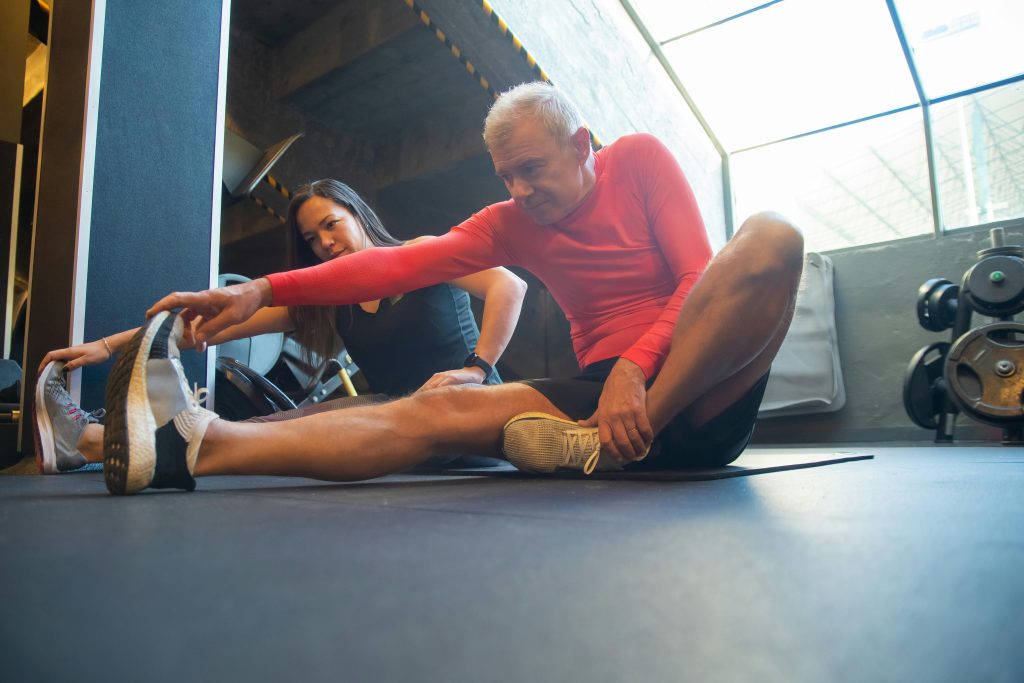
In the lexicon of geriatric rehabilitation, we often talk about “balance” as if it were a static quality, something you either have or you don’t. At geriatricrehab.es, we view balance as a dynamic conversation between your nervous system and gravity. Balance Recovery Strategies are the “words” in that conversation. When you stumble on a rug or get bumped in a crowded market, your brain doesn’t panic; it selects a pre-programmed mechanical response to keep your Center of Mass (COM) over your Base of Support (BOS). According to Geriatric Physical Therapy (2020), these reactive strategies are the “fuel” of independence. By sharpening these reflexes, we don’t just prevent falls; we expand your “Safety Buffer,” giving you the Vigor and confidence to walk in the garden, visit the supermarket, and engage with the world without fear.
1. The Split-Second Architecture of a Save
Most people think of balance as “not falling.” But for a physical therapist, balance is the art of recovery. From the moment you start to tilt, your body has approximately 100 milliseconds to decide how to save you. This “Reactive Vigor” is what separates a minor stumble from a life-altering fracture. Balance Recovery Strategies are organized in a hierarchy: we start with the smallest movements at the ankles, transition to larger movements at the hips, and finally, if the displacement is too great, we take a step.
For many seniors, the “Slippery Slope of Frailty” isn’t just about muscle weakness; it’s about “strategy erosion.” As we age, our reflexes might slow down, or our joints might stiffen, causing us to skip the efficient ankle correction and jump straight to a frantic, unstable step. Rehabilitation is the process of “re-tuning” these strategies. It’s about ensuring your body has a high-performance “internal scaffolding” that reacts automatically, allowing you to focus on the joy of movement rather than the mechanics of staying upright.
2. The ‘Feelings’ Section: The Fear of the “Near-Miss”
If you have ever stumbled and caught yourself, you know that rush of adrenaline, the pounding heart, and the immediate instinct to move more slowly.
For Seniors: Reframing the Stumble
- Proof of Function: A “near-miss” is actually good news. It proves that your Balance Recovery Strategies are working! Your brain successfully identified a threat and deployed a “save.”
- Building the Safety Buffer: Think of rehab as widening the sidewalk you walk on. When your recovery strategies are sharp, your “Safety Buffer” is wide. You can handle a trip or a push because you have the “mechanical fuel” to correct it.
- Confidence is Fuel: Balance isn’t just about safety; it’s about freedom. When you trust your body to catch itself, the world becomes accessible again. You aren’t just “walking”; you are reclaiming your Vigor.
- The Psychology of Stability: We move from “I hope I don’t fall” to “I know how to catch myself.” This shift in mindset is the most powerful tool in geriatric rehab.
3. The Ankle Strategy: Your First Line of Defense
The Ankle Strategy is the most common and efficient of all Balance Recovery Strategies. It is used for small, slow displacements on a firm, wide surface, like a slight sway while standing in line at the pharmacy.
For Professionals: The Pendulum Model
- Distal-to-Proximal Recruitment: In an ankle strategy, the body acts like an inverted pendulum. If you are pushed forward, the nervous system recruits muscles from the ground up: Gastrocnemius, followed by Hamstrings, then Paraspinals. This “bottom-up” firing keeps the head and torso relatively stable.
- Range of Motion (ROM) Requirements: Geriatric Physical Therapy (2020) emphasizes that without adequate talocrural dorsiflexion, the ankle strategy fails. If the ankle is “locked,” the body is forced to use a more energy-expensive hip strategy for even tiny sways.
- The SOT Connection: In Sensory Organization Testing (SOT), the ankle strategy is the dominant response when the support surface is stable. It relies heavily on somatosensory input, the “feel” of the floor through the soles of the feet.
- Clinical Tip: We must strengthen the plantarflexors (calf muscles) not just for power, but for the “stiffness” required to resist small perturbations.
Take-Home Tips for Caregivers:
- The “Floor Audit”: The ankle strategy requires a firm surface. Squishy rugs or thick carpets “mask” the sensory input to the ankles, making this strategy less effective. Check the “high-traffic” areas of the home for surface firmness.
- The Footwear Factor: Ensure your loved one wears shoes with a firm sole. Floppy slippers act like “sensory dampers,” preventing the ankles from feeling the small sways that trigger a save.
- Gentle Encouragement: If you notice your loved one “stiffening” their whole body while standing, encourage them to “soften” their knees. A rigid body cannot use the ankle strategy effectively.
4. Implementing the Hip Strategy for Advanced Balance Recovery Strategies
When the push is too hard, or the surface is too narrow (like walking on a curb or a boat deck), the ankles can no longer provide enough torque to keep you upright. This is where the Hip Strategy takes over. It is a faster, more aggressive correction used for larger or faster displacements.
For Professionals: Sensory Organization and Proximal Control
- Proximal-to-Distal Recruitment: Unlike the ankle, the hip strategy fires from the top down. If pushed forward, the body recruits the Abdominals followed by the Quadriceps. This creates a rapid “folding” at the waist to shift the Center of Mass (COM) back toward safety.
- The Vestibular Trigger: While the ankle strategy relies on “feeling” the floor, the hip strategy is heavily moderated by the vestibular system (the inner ear). When the head moves rapidly, the vestibular system detects the acceleration and triggers a hip-dominant response.
- SOT and Somatosensory Loss: In Sensory Organization Testing (SOT), when the platform is “swayed-referenced” (tilting with the patient), the ankles become useless. The patient is forced to rely on their hip strategy. For seniors with peripheral neuropathy (numb feet), the hip strategy becomes their primary life raft for all Balance Recovery Strategies.
5. The Functional Audit: Mapping Reactive Drills to Real-World Trips
In the clinical framework of Geriatric Physical Therapy (2020), balance is a dynamic series of rapid-fire corrections rather than a static state. To address the hardware of Active Living, we use a Functional Audit to identify daily “Perturbation Hazards”—sudden forces that displace your center of mass—and map them to the specific strategies needed to survive them.
- Task: Being bumped by a grocery cart in a crowded aisle.
- The Strategy: Hip Strategy.
- The Mapping: A cart bump is a “Large/Fast” perturbation. Training “Tall Kneeling Perturbations” or “Reactive Hip Hinges” prepares the senior to fold at the hip and stabilize their torso without taking a frantic step.
- Task: Stepping onto an escalator or moving walkway.
- The Strategy: Ankle Strategy into Stepping Strategy.
- The Mapping: The change in surface speed requires the “stiffness” of the ankles to handle the initial shift, followed by a confident forward step.
- Task: A dog on a leash is suddenly pulling forward.
- The Strategy: Stepping Strategy.
- The Mapping: This is a “Continuous Perturbation.” We train “Clockwork Reaches,” where the senior must reach outside their base of support and quickly bring their foot back to a stable position.
- Task: Walking on a sidewalk with uneven concrete “heaves.”
- The Strategy: Ankle Strategy.
- The Mapping: Small deviations in the surface require the “Inverters and Everters” of the ankle (side-to-side muscles) to make micro-corrections. We train this using “Foam Pad Standing” to build the sensory Vigor of the feet.
6. The Stepping Strategy: The Emergency Exit
When the displacement is so large that the Center of Mass (COM) moves completely outside the Base of Support (BOS), the ankle and hip strategies will fail. You cannot “stand” your way out of this; you must move. The Stepping Strategy is the “Change-of-Support” mechanism, essentially taking a step to create a new, wider base of support under the falling body.
For Professionals: The Swing Phase as a Safety Mechanism
- Step Trigger Speed: In the Slippery Slope of Frailty, the most dangerous deficit is a delayed “Step Trigger.” If the brain waits too long to take that emergency step, the body’s momentum becomes irreversible.
- Cocking the Spring: We focus on the “Unloading” phase. To take a step, the patient must first rapidly shift weight off the stepping leg. In Geriatric Physical Therapy (2020), research shows that fallers often have trouble with this “pre-step” weight shift.
- Reactive Stepping Drills: We don’t just train “walking.” We train “Reactive Stepping” by using a gait belt to give gentle, unpredictable tugs in different directions, forcing the senior to deploy their “Emergency Exit” step with speed and precision.
Take-Home Tips for Caregivers:
- The “Clear Path” Audit: Because the Stepping Strategy is the “Emergency Exit,” the floor around a senior must be clear. A stumble that requires a step becomes a fall if that step lands on a loose shoe, a pet, or a rug edge.
- The “Reaction Game”: While your loved one is standing at the counter, gently tap them on the hip (with a “Stability Shield” ready). Encourage them to stay still using their ankles. This “Micro-Dosing” of perturbations builds the Vigor of their reflexes.
- Watch the “Freezing”: If you notice your loved one “freezes” or grabs for furniture when they wobble, they are bypassing their natural strategies. Encourage them to “Find your feet” rather than “Find a chair.”
7. Using the SAID Principle to Improve Balance Recovery Strategies
The Specific Adaptation to Imposed Demands (SAID) principle is the bedrock of “Exercise is Medicine.” In balance training, we often make the mistake of training “statically,” standing still on one leg. While this has value, it does not satisfy the SAID principle for Balance Recovery Strategies. To get better at catching yourself, you must practice… catching yourself.
For Professionals: The Neuro-Mechanical Demand
- Dynamic vs. Static Training: If we only train static balance, the body adapts to being still. But falls happen during movement. We must impose the demand of “unpredictability.” By using reactive tools like foam pads, rocker boards, or manual perturbations, we force the nervous system to adapt its “strategy selection” speed.
- The “Safety Buffer” Adaptation: Geriatric Physical Therapy (2020) highlights that the brain can be trained to “pre-activate” muscles. Through repeated exposure to small, safe stumbles, the brain builds a more robust “Safety Buffer,” reducing the time it takes to fire the Ankle or Hip strategy.
- Cognitive Loading: Falls often occur when a senior is distracted (eg, talking while walking). We apply the SAID principle by adding a “Dual-Task” demand, asking the patient to name animals or solve simple math while we provide gentle balance challenges.
8. Dose-Response: The “Perturbation Dose” for Vigor
Just like a medication, balance training requires the correct dose. If the challenge is too easy, no adaptation occurs (Atrophy Zone). If it is too hard, the senior falls (Injury Zone). We look for the “Vigor Zone,” the sweet spot of productive instability.
For Professionals: Finding the Threshold
- The 40% vs. 85% Rule: In balance, we don’t just measure heart rate; we measure “Postural Sway.”
- 40% Intensity: The senior feels a slight sway but easily corrects it with the ankles. This is “Maintenance.”
- 85% Intensity: The senior is visibly wobbling and must use a Hip or Stepping strategy to stay upright. This is the “Improvement Zone” where the nervous system is forced to sharpen its Balance Recovery Strategies.
- Frequency and Fatigue: Reactive balance is neurologically expensive. We prioritize short, high-quality bouts (3–5 minutes) rather than long sessions. Once the senior becomes physically fatigued, their “Reaction Time” slows, and the risk of a fall increases. We stop the dose when the quality of the “Save” diminishes.
9. Caregiver’s Tool: The Environmental Audit
A “hostile” home environment can completely undermine a high score on a clinical balance test. As a caregiver, you are the architect of the Safety Buffer. Use this room-by-room audit to ensure the home environment supports your loved one’s balance rather than sabotaging it.
The “Safe Harbor” Checklist:
- Kitchen (The Firm Floor Rule): The Hazard: Throw rugs or “mushy” comfort mats that mute the Ankle Strategy.
- The Vigor Fix: Remove rugs entirely or secure edges with industrial double-sided tape to ensure crisp sensory feedback from the floor.
- Bathroom (The Elevation Fix): The Hazard: Low toilet seats that exhaust the Physiological Reserve during transfers and wet, slick surfaces.
- The Vigor Fix: Install a raised toilet seat to facilitate a power-based Hip Strategy stand and apply non-slip strips to the floor.
- Living Room (The Clearance Audit): The Hazard: Extension cords or floor clutter that force a dangerous “shuffling gait.”
- The Vigor Fix: Move cords behind furniture and ensure “walk-paths” are wide enough for a steady, confident 360-degree turn.
- Bedroom (The Path Light Protocol): The Hazard: Dim lighting during late-night bathroom trips when the Visual System is offline.
- The Vigor Fix: Install motion-sensor “Path Lights” from the bedside to the bathroom to highlight the “floor map” for the feet.
- Stairs (High-Contrast Reinforcement): The Hazard: Loose handrails or dark treads that are difficult to distinguish, increasing the risk of a misstep.
- The Vigor Fix: Tighten all railings and apply high-contrast “Grip Tape” to the edge of each step to provide a clear visual cue for the Stepping Strategy.
Take-Home Tips for Caregivers:
- The “Self-Catch” Affirmation: When your loved one wobbles and recovers, say: “Great catch! Your hips really worked there.” This builds their “Vigor Confidence,” making them less likely to “freeze” during the next stumble.
- Print the Checklist: Take the audit above and walk through the house today. A 10-minute audit can prevent a 10-month recovery.
- Focus on Footwear: In the house, “socks-only” is a major fall risk. Encourage a “house shoe” with a rubber, non-slip sole to give the Ankle Strategy the friction it needs.
10. Conclusion: Building a Body That Catches Itself
Independence is not the absence of stumbles; it is the presence of the Vigor required to overcome them. As we have explored, your Balance Recovery Strategies from the micro-adjustments of the Ankle Strategy to the “heavy artillery” of the Hip Strategy and the “emergency exit” of the Stepping Strategy are the silent guardians of your mobility.
At geriatricrehab.es, we don’t just want you to stay safe; we want you to stay active. By understanding how your body catches itself, you can move from a place of “fragility” to a place of “fortitude.” Every time you practice these reactive drills, you are widening your Safety Buffer and adding years to your life and life to your years. Your body is a resilient, adaptive system, and with the right clinical “fuel,” it is capable of incredible savings.
Summary: The Reactive Balance Blueprint
- The Ankle Strategy: Your first line of defense for small sways. Keep your ankles mobile and your “somatosensory” floors firm.
- The Hip Strategy: The power-move for larger displacements. Strengthen your core and hips to handle the “Large/Fast” pushes of life.
- The Stepping Strategy: Your emergency exit. Train your “Step-Trigger” speed so that when your base of support is lost, your feet are ready to find a new one.
- The SAID Principle: Practice the “Wobble.” You cannot get better at catching yourself if you only practice standing still.
- The Environmental Audit: Clear the path. Ensure your home is a “Vigor-friendly” environment where your emergency steps don’t land on hazards.
Are you ready to widen your Safety Buffer and reclaim your confidence? Don’t wait for a fall to find out if your strategies are working. At geriatricrehab.es, we offer specialized “Reactive Balance & Strategy Assessments” to help you sharpen your internal safety net. Visit geriatricrehab.es today to download our “Balance Vigor Home Guide” and schedule a consultation with our clinical experts!













