
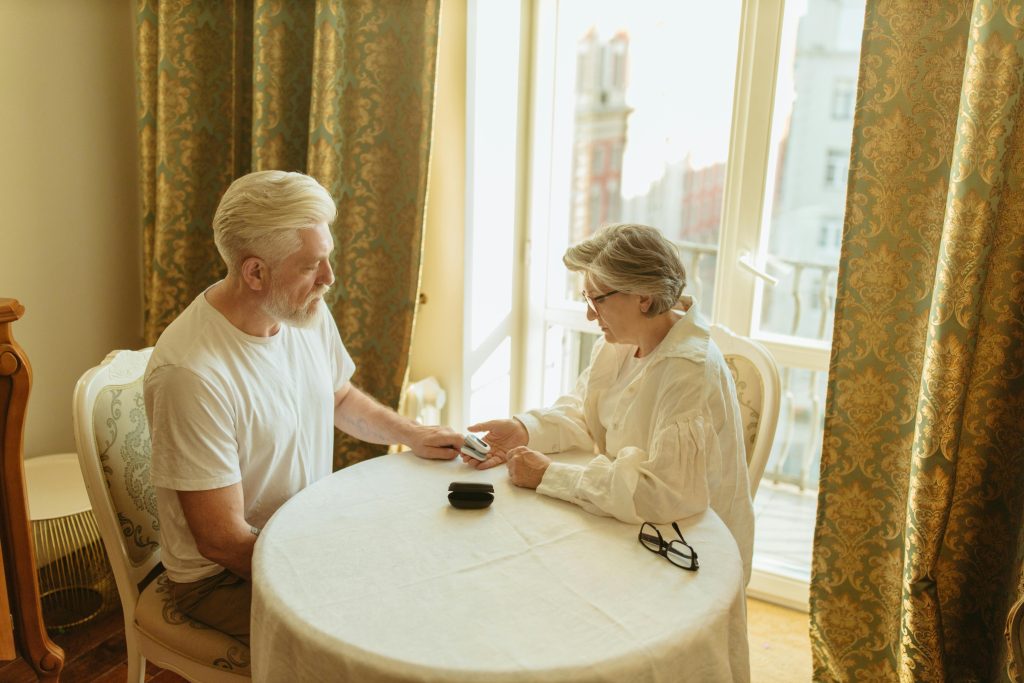
In the clinical framework of Geriatric Physical Therapy (2020), maintaining functional independence is the primary goal of any respiratory intervention. For those navigating COPD in Seniors, the sensation of breathlessness can often lead to a “fear-avoidance” cycle, where the fear of running out of air leads to a sedentary lifestyle. However, Chronic Obstructive Pulmonary Disease is not a stationary diagnosis. By understanding the mechanics of your lungs and expanding your Physiological Reserve, you can regain the Vigor needed to engage with your family and community. This guide offers a rehabilitative lens on managing symptoms and reclaiming your quality of life.
1. Breaking the “Shortness of Breath” Cycle
For many, a diagnosis of Chronic Obstructive Pulmonary Disease feels like a life sentence of sitting still. However, the modern rehabilitative approach to COPD in Seniors focuses on what we call the Physiological Reserve. While the lung tissue itself may have permanent changes, the efficiency of your heart, muscles, and breathing technique can all be improved.
The most dangerous aspect of COPD isn’t just the lung damage—it’s the “Slippery Slope of Aging” caused by inactivity. When you feel out of breath, you stop moving. When you stop moving, your muscles weaken, making your next movement even harder and more breathless. We aim to break this cycle by providing you with a Safety Buffer of knowledge and physical strength, allowing you to move with Vigor once again.
2. Physiology Deep-Dive: Obstructive vs. Restrictive Patterns
To manage COPD effectively, we must understand the “Hard Science” of how it differs from other lung issues. COPD is primarily an Obstructive disease, meaning the main problem is getting air out of the lungs, not necessarily getting it in.
- Emphysema (The “Pink Puffer” Pattern): This involves the breakdown of elastin in the walls of the alveoli (air sacs). Without elastin, the air sacs lose their “spring” and collapse during exhalation, trapping “old” air in the chest.
- Chronic Bronchitis (The “Blue Bloater” Pattern): This involves chronic inflammation and the buildup of mucus in the bronchial tubes.
- The Diaphragm Challenge: As air gets trapped, the lungs stay over-inflated (hyperinflation). This pushes the diaphragm down, flattening it out. A flat diaphragm cannot contract effectively, forcing you to use your neck and shoulder muscles to breathe—a high-energy process that leads to rapid fatigue.
3. Understanding COPD in Seniors: The Aging Lung Connection
Managing COPD in Seniors requires a specific clinical lens because the lungs are already undergoing age-related changes. According to Geriatric Physical Therapy (2020), even a healthy senior faces decreased lung compliance. When you add COPD to the mix, the effect is compounded.
- Chest Wall Stiffening: As we age, collagen builds up in the rib cage cartilages, making the chest wall rigid. In a senior with COPD, the muscles have to fight both the “trapped air” inside and a “rusty cage” outside.
- Reduced Gas Exchange: The surface area available for oxygen to enter the blood naturally decreases with age. COPD accelerates this, meaning seniors have a narrower Safety Buffer when their oxygen levels drop during activity.
- Vascular Stiffening: Stiffened pulmonary arteries increase the workload on the right side of the heart, a condition often linked to the advanced stages of COPD.
4. The “Safety Box”: Vital Signs and When to Call the Doctor
In the management of COPD in Seniors, distinguishing between “normal” exertional breathlessness and a medical emergency is the cornerstone of the Safety Buffer. Because patients with COPD often live at a baseline of mild respiratory distress, they may ignore worsening symptoms until they reach a state of crisis.
The “Safety Box” Rule: When to Call the Doctor
Every senior and caregiver should monitor these vital signs at rest and during activity. Seek immediate medical attention if any of the following occur:
- Oxygen Saturation (SpO2): Drops below 90% (or below the specific target range prescribed by your pulmonologist, such as 88%).
- Resting Heart Rate: Exceeds 120 bpm or feels irregular/pounding.
- Resting Respiratory Rate: Exceeds 30 breaths per minute while sitting still.
- Cyanosis: A bluish or grayish tint to the lips, tongue, or fingernails.
- Altered Mental Status: Sudden confusion, extreme irritability, or unusual sleepiness (often a sign of carbon dioxide retention).
- The “Rescue” Failure: Shortness of breath that does not improve after using a rescue inhaler or performing 10 minutes of Pursed-Lip Breathing.
Clinical Evidence: Research cited in Geriatric Physical Therapy (2020) emphasizes that “Silent Hypoxia” is common in the elderly; a senior may feel “fine” even as their oxygen levels plummet, which directly increases fall risk.
5. Managing COPD in Seniors through Energy Conservation and Pacing
Rehabilitation is not just about “working harder”; it is about “working smarter.” For a senior with limited Physiological Reserve, every movement has a metabolic cost. We use the “4 Ps” to help patients maintain Vigor without triggering a breathing crisis.
The 4 Ps of Energy Conservation
- Pacing: Move at a steady, slow rhythm. Never rush to the phone or the door. If you can’t speak in a full sentence while moving, you are moving too fast.
- Planning: Gather all items needed for a task (like cooking) before beginning. This reduces the number of trips across the kitchen.
- Prioritizing: Decide which tasks are essential. If you have a family dinner in the evening, plan for “rest chunks” in the afternoon to save your energy.
- Posturing: Use high stools for kitchen work or grooming. Standing consumes significantly more oxygen than sitting.
6. The Caregiver Action Plan: Coaching Pursed-Lip Breathing
When a senior experiences a “breathing attack,” panic is the enemy. Panic causes shallow, rapid chest breathing, which traps more air in the lungs and worsens the sensation of suffocation. As a caregiver, you act as the external nervous system for your loved one.
The Coaching Script
Use a calm, firm, and low voice. Do not ask them questions; give clear, one-sentence directions.
- Step 1 (Positioning): “I need you to sit down and lean forward. Put your elbows on your knees. Good.” (This is the Tripod Position, which helps the diaphragm move).
- Step 2 (The Nose): “Breathe in slowly through your nose for two seconds. 1… 2…”
- Step 3 (The Lips): “Pucker your lips like you are going to whistle or blow out a candle.”
- Step 4 (The Out-breath): “Now, blow the air out slowly for four seconds. 1… 2… 3… 4… Make the ‘out’ breath twice as long as the ‘in’ breath.”
- Step 5 (Repeat): “Keep your shoulders dropped. Smell the roses… blow out the candle.”
Why it works: Pursed-lip breathing creates “back pressure” in the airways. This keeps the small air sacs open longer, allowing more trapped air to escape and more fresh oxygen to enter.
7. Professional Insight: Heart Rate Reserve (HRR) for Respiratory Rehab
From a Professional Insight perspective, prescribing exercise for COPD in Seniors based on a generic “one-size-fits-all” heart rate is clinically irresponsible. Many seniors with COPD are also managing cardiovascular conditions and may be taking beta-blockers, which artificially suppress the heart rate. To ensure we are building Vigor without exceeding the Safety Buffer, we use the Karvonen Formula to calculate a personalized training zone.
The Formula: Target Heart Rate = ((Max HR – Resting HR) × % Intensity) + Resting HR
The Comparison: Consider two 75-year-old patients with a predicted Max HR of 145 bpm (220 – 75):
- Patient A (Resting HR of 60): Generally well-conditioned but has early-stage COPD. Training at 50% intensity.
- Calculation: ((145 – 60) × 0.50) + 60 = 103 bpm
- Patient B (Resting HR of 85): Deconditioned and struggles with chronic bronchitis. Training at 50% intensity.
- Calculation: ((145 – 85) × 0.50) + 85 = 115 bpm
Clinical Takeaway: Patient B must reach a higher heart rate (115 bpm) to achieve the same 50% intensity because their heart is already working harder just to sustain them at rest. For someone with COPD, hitting 115 bpm might trigger severe dyspnea. This calculation allows a therapist to adjust the “Work of Breathing” so the patient stays in a zone where they can still utilize Pursed-Lip Breathing effectively.
8. SOT Deep-Dive: Balance and the Respiratory Cost of Stability
In geriatric rehabilitation, we use Sensory Organization Testing (SOT) to determine how a senior uses visual, inner ear (vestibular), and touch (somatosensory) signals to maintain balance. What many don’t realize is that COPD in Seniors is a significant, independent risk factor for falls.
- The Postural Conflict: When a senior is short of breath, they naturally adopt a Tripod Position or use accessory muscles in the neck. This creates a “stiff” upper body.
- Condition 5 & 6 (The “Sway” Test): In SOT conditions where the floor or surroundings move, the body relies on an “Ankle Strategy” (small sways at the ankle) to stay upright. However, because the senior with COPD is so focused on the metabolic cost of breathing, their brain often “ignores” these small balance corrections.
- The Metabolic Trade-off: The brain prioritizes oxygen over balance. If a senior is gasping for air, the motor cortex reduces its attention to postural stability. This is why a simple “shortness of breath” episode frequently ends in a catastrophic fall.
9. Reversing the Slippery Slope: Activity Diaries for COPD in Seniors
To reverse the Slippery Slope of Aging, we must track progress. Below is a structured diary for a senior with COPD to move from a sedentary state to active community engagement.
The COPD Vigor Diary
| Week | Target Activity | Breathing Technique | Goal |
| Week 1 | 5 mins of “Sit-to-Stands” | Inhale on sit, Exhale on stand | Focus on rhythmic pacing |
| Week 2 | 10 min indoor walk | Pursed-lip every 3rd step | Maintain SpO2 above 90% |
| Week 3 | 15 min walk with 1 rest | Tripod position during rest | Monitor recovery time (< 3 mins) |
| Week 4 | Community walk (Mall/Park) | Continuous pacing | Engage in “Talk Test” (Short phrases) |
Instructional Note: During Week 1, the goal is simply to coordinate breath with movement. By Week 4, we are testing the Physiological Reserve. If the senior can walk and speak a 3-word phrase without gasping, they have successfully expanded their Safety Buffer.
10. Conclusion: Reclaiming Vigor and Aerobic Capacity
The journey of managing COPD in Seniors is not defined by the damage shown on a lung scan, but by the resilience of the person behind it. In the framework of Geriatric Physical Therapy (2020), we transition our patients from a state of “fragility” to the mindset of a Pulmonary Athlete. A pulmonary athlete understands that while their lungs have a fixed ceiling, their heart, muscles, and technique have immense room for growth.
The Psychological Shift: From Avoidance to Engagement
Reclaiming your life requires a fundamental shift in how you view breathlessness. It is not a sign to stop; it is a signal to utilize your tools.
- Expanding the Safety Buffer: By consistently using the 4-Week Progressive Activity Diary, you are teaching your nervous system that exertion is safe. This reduces the “startle response” and the panic that often leads to ER visits.
- The Vigor Dividend: Every percentage point you gain in your Heart Rate Reserve is a dividend paid in independence. It means you can play with your grandchildren, walk through the grocery store, and participate in your community without the constant shadow of “running out of air.”
Final Clinical Summary
Your diagnosis does not dictate your destination. By mastering the Physiology Deep-Dive of your own body, adhering to the “Safety Box” limits, and executing the Caregiver Action Plan, you are taking active control of the Slippery Slope of Aging. Remember: we don’t breathe just to survive; we breathe to power the activities that make life worth living.
Are you ready to move from the couch back into the world? Download our full “COPD Vigor Toolkit” at geriatricrehab.es, including printable versions of the Pursed-Lip Coaching Script and the 4-Week Progressive Activity Diary. Let’s expand your safety buffer today!













