
For many seniors, the simple act of standing up from a favorite chair can feel like a high-stakes gamble. One moment you are relaxed, and the next, the room is spinning, your vision is tunneling, and you are reaching for the nearest stable surface. This phenomenon, known clinically as Orthostatic Hypotension, is more than just a nuisance; it is a primary risk factor for falls and fractures in the elderly population. At geriatricrehab.es, we recognize that while age plays a role, the culprit is frequently found in the medicine cabinet. Understanding how your prescriptions interact with your body’s blood pressure regulations is the first step toward reclaiming your balance and moving with confidence.
1. The Gravity Struggle
Every time a human moves from a lying or sitting position to standing, gravity pulls approximately 500 to 1,000 mL of blood toward the lower extremities and abdomen. In a healthy system, the body compensates instantly by tightening blood vessels and increasing the heart rate to ensure the brain remains oxygenated. However, when this mechanism fails, a sudden drop in blood pressure occurs.
Citing principles from Geriatric Physical Therapy (2020), Orthostatic Hypotension is defined as a sustained reduction in systolic blood pressure of at least 20 mmHg or in diastolic blood pressure of 10 mmHg within 3 minutes of standing. For the senior in a rehabilitation environment, this drop creates a window of vulnerability. If the “plumbing” of the vascular system cannot push blood uphill fast enough, the brain experiences a temporary “brownout,” leading to the staggering and swaying we often see at the start of a therapy session.
2. The ‘Feelings’ Section: “Blacking Out” and the “Floating Head”
For a senior, Orthostatic Hypotension is not a set of numbers on a sphygmomanometer; it is a series of jarring and often frightening physical sensations.
For Seniors: Translating the “Head Rush”
- The “Floating Head”: You might describe it as a sensation where your head feels “light and disconnected from your shoulders” the moment you stand. It feels as though your brain is trailing a few inches behind your body.
- The “Speckled Vision”: Have you ever seen “stars” or “gray speckles” after getting up too fast from the couch? This is your retinas reacting to a split-second lack of blood flow.
- The “Jelly Knees”: Sometimes the dizziness isn’t in your head—it’s in your legs. You might feel a sudden “buckling” or “weakness in the knees” that makes you want to sit back down immediately.
- The “Coat-Hanger Pain”: Interestingly, some people feel a dull ache in their neck and shoulders (the “coat-hanger” distribution) when standing. This is often a hidden sign that blood pressure is struggling to reach the upper muscle groups against the pull of gravity.
3. Understanding the Mechanisms of Orthostatic Hypotension
For the Allied Health Professional, managing Orthostatic Hypotension requires an appreciation of the “Baroreflex.” These pressure-sensitive receptors in the carotid sinus and aortic arch are the body’s first responders to gravity.
For Professionals: The Blunted Reflex
- Baroreceptor Sensitivity: With age, the baroreceptor reflex becomes “blunted.” It takes longer for the signal to reach the brain and longer for the vessels to respond. When we add medications into this mix, we often effectively “handcuff” this reflex.
- Vascular Stiffness: Arterial stiffness prevents the rapid “squeezing” (vasoconstriction) necessary to redirect blood flow. In a rehab setting, if a patient has been supine for 20 minutes of manual therapy and then stands, the “lag time” in this reflex is at its peak.
- Volume and Tone: Many medications work by either reducing the total volume of blood (diuretics) or by relaxing the “tone” of the blood vessels (alpha-blockers). While this is great for treating high blood pressure, it leaves the patient with very little “reserve” to fight the effects of gravity when they stand up.
Take-Home Tips for Caregivers:
- The “Count to Ten” Rule: Before your loved one stands up completely, have them sit on the edge of the bed or chair for ten seconds. This gives the baroreceptors a “head start” to adjust.
- The “Ankle Pump” Prime: Ask your loved one to point and flex their feet ten times before standing. This uses the “calf pump” to push blood back toward the heart before they even move their center of gravity.
- The “Water First” Strategy: A glass of cold water 15 minutes before getting out of bed in the morning can actually provide a temporary “pressor effect,” raising blood pressure just enough to make the morning transition safer.
4. Pharmacokinetics: Volume Depletion and Vascular Tone
For the allied health professional, the timing of a patient’s dizziness is often a map to their medication’s pharmacokinetics. We must understand how the body’s handling of a drug influences the stability of the patient on the treadmill or during gait training.
For Professionals: Metabolism and Distribution
- First-Pass Metabolism: As liver function and hepatic blood flow decrease with age, drugs that undergo extensive first-pass metabolism (like certain beta-blockers) can reach higher systemic concentrations. This results in a more profound “drop” in blood pressure than what might be seen in a younger adult.
- Volume of Distribution (Vd): Changes in body composition—specifically increased body fat and decreased total body water—alter the volume of distribution. Water-soluble drugs (like many diuretics) can become more concentrated in the blood, leading to excessive volume depletion and a higher risk of Orthostatic Hypotension.
- The Half-Life Window: A drug’s half-life determines how long the patient remains at risk. If a senior takes a medication with a long half-life in the evening, they may still be experiencing vascular relaxation during their 9:00 AM physical therapy session.
5. Common Medications That Trigger Orthostatic Hypotension
While many drugs are intended to lower blood pressure, others cause Orthostatic Hypotension as an unintended secondary effect. The Beers Criteria highlights several “Red Flag” categories that clinicians must monitor.
- Alpha-Blockers (e.g., Terazosin, Tamsulosin): Often prescribed for prostate issues, these are notorious for causing “first-dose” hypotension. They prevent blood vessels from tightening when a person stands, leaving gravity in total control.
- Diuretics (e.g., Furosemide, Hydrochlorothiazide): By reducing total blood volume, these medications leave less “fluid in the pipes.” If the volume is too low, there simply isn’t enough pressure to reach the brain during a quick transition.
- SGLT2 Inhibitors: Used for diabetes, these can have a mild diuretic effect. If a patient is already slightly dehydrated, this can be the “tipping point” for a dizzy spell.
- Tricyclic Antidepressants (TCAs): These can interfere with the autonomic nervous system’s ability to signal the heart to speed up upon standing.
6. The Medication Cascade: The “Dizzy-to-Depression” Domino
To understand the complexity of Orthostatic Hypotension, we must look at the “Medication Cascade”—where one pill’s side effect is treated with another pill.
- The Trigger: Mr. Aris, age 78, was prescribed an alpha-blocker for a prostate issue.
- The Second Domino: He began experiencing “that dizzy feeling when standing up too fast.” One night, he stood up to use the bathroom, became lightheaded, and fell, bruising his ribs.
- The Third Domino: His doctor prescribed a strong NSAID and a muscle relaxant for the rib pain. The muscle relaxant further suppressed his nervous system, making him even dizzier and causing a “floating head” feeling all day.
- The Fourth Domino: Because he felt “foggy” and unstable, Mr. Aris stopped leaving the house. This led to a diagnosis of “late-life depression,” for which he was prescribed a TCA (Tricyclic Antidepressant).
- The Fifth Domino: The TCA further blunted his baroreflex. Now, Mr. Aris couldn’t even sit up in bed without the room spinning.
The Result: What started as a simple prostate pill ended in a cycle of physical decline. At geriatricrehab.es, we work to “unwind” this cascade by identifying the original culprit and using physical strategies to manage the dizziness.
Take-Home Tips for Caregivers:
- The “Visual Check”: If your loved one is on a new heart or prostate pill, watch their face when they stand. If they blink rapidly, grab for a chair, or “stare into space” for a second, they are likely experiencing Orthostatic Hypotension.
- The “Morning Hydration” Ritual: Ensure they drink a full 8-ounce glass of water before even swinging their legs out of bed. This “pre-loads” the system.
- The “Reaction” Checklist: Use a 1-10 scale. Ask: “How much did your head spin just now?” If they are consistently at a 7 or above, it is time for a medication review.
7. Screening for Orthostatic Hypotension in Geriatric Rehab
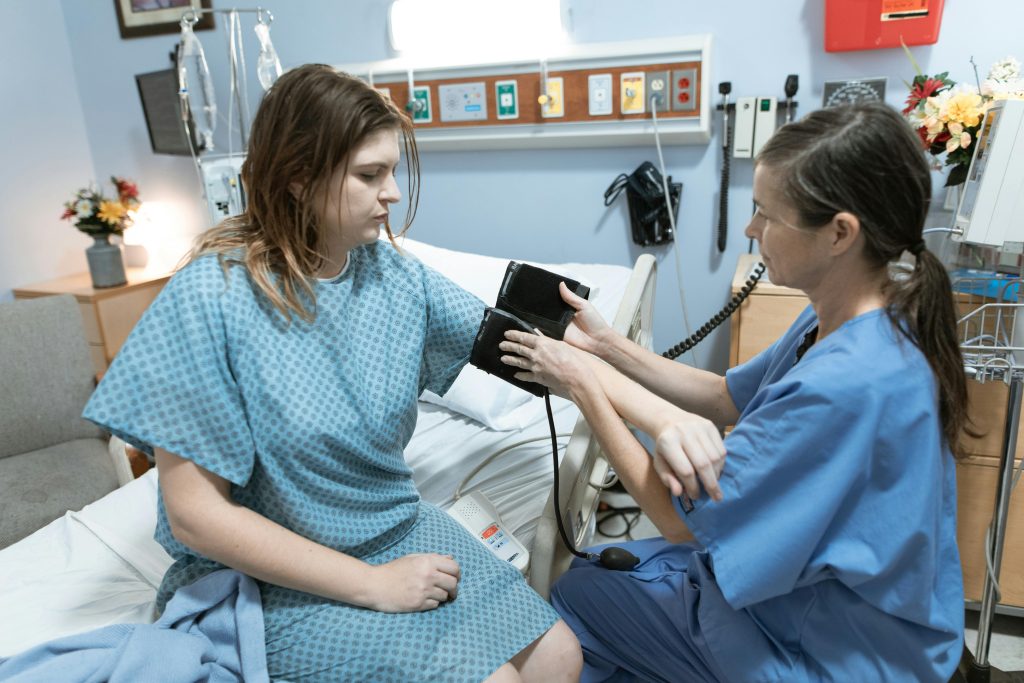
At geriatricrehab.es, we do not rely on subjective reports alone. Because many seniors have “blunted” internal warning systems, they may not feel dizzy until they are already on the verge of collapsing. We utilize a standardized “Orthostatic Vital Signs” protocol to catch these drops before they lead to an injury.
- The 1-3 Minute Rule: We measure blood pressure and heart rate in three stages: after the patient has been lying flat (supine) for five minutes, after one minute of standing, and again after three minutes of standing.
- The “Asymptomatic” Drop: It is common to see a clinical drop in numbers without the patient feeling “that dizzy feeling.” However, this “silent” Orthostatic Hypotension is just as dangerous, as it often precedes a sudden “blackout” during more strenuous activity.
- Correlating with the Borg Scale: We often ask patients to rate their “perceived lightheadedness” on a scale of 0 to 10. If the blood pressure drops by 20 mmHg but the patient feels “fine,” we still implement safety precautions, as their brain is currently receiving less oxygen than required for optimal function.
8. The Caregiver Corner: The “Safe Transition” Checklist
For a caregiver, the most dangerous times of day are the “first stand” in the morning and the “midnight bathroom run.” When the body is in a state of deep relaxation, the vascular tone is low, making Orthostatic Hypotension much more likely.
5 Signs Your Loved One is About to Faint:
- The “Stare-Through”: If they stand up and suddenly stop moving, staring straight ahead with a “blank look,” their brain is momentarily struggling for blood flow.
- Sudden Paleness: Watch the lips and earlobes. If they turn white or gray immediately upon standing, it’s a sign of a significant pressure drop.
- The “Hand-Reach”: If they are frantically grasping for a wall or your arm, do not try to “keep them up.” Gently guide them back down to the chair or the floor.
- Excessive Blinking: This is often an attempt to “clear” the tunnel vision or gray speckles associated with low blood pressure.
- Confusion or Slurred Speech: If they were talking a moment ago but now seem “garbled” or confused after standing, sit them down immediately.
9. Hydration, Compression, and Counter-Maneuvers
Management of Orthostatic Hypotension is not always about removing meds; sometimes it’s about adding physical barriers against gravity.
- The “Abdominal Binder”: Many seniors have “venous pooling” in the belly. A snug abdominal binder can help push that blood back up toward the heart.
- Compression Stockings: While difficult to put on, knee-high or thigh-high stockings (20-30 mmHg) act as an external “vascular squeeze,” preventing blood from getting trapped in the ankles.
- Physical Counter-Pressure Maneuvers (PCM): We teach our patients the “Cross-Leg Squeeze” and “Gluteal Clenching.” By squeezing the large muscles of the lower body right before and during standing, you manually force blood upward.
- The “Bolus” Strategy: Drinking 16 ounces of cold water quickly (within 5 minutes) can trigger a sympathetic nervous system response that raises blood pressure for about 60 to 90 minutes—perfect for a morning walk or a therapy session.
Take-Home Tips for Caregivers:
- The “Staged Stand” Ritual: Sit up -> Ankle pumps (10x) -> Wait 30 seconds -> Stand up -> Wait 30 seconds while holding the walker -> Move. Never skip a stage.
- The “Nightlight” Requirement: Ensure the path to the bathroom is bright. Dizziness is much harder for the brain to manage in total darkness.
- The “Salt” Conversation: Ask the doctor if it is safe to increase salt intake. For most people, salt is bad for BP, but for those with severe Orthostatic Hypotension, a little extra salt helps “hold” water in the pipes.
10. Conclusion: Standing Tall with Stability
At geriatricrehab.es, we believe that dizziness should never be accepted as an inevitable part of aging. While the “floating head” and “jelly knees” of Orthostatic Hypotension are common, they are manageable clinical conditions that respond to a combination of pharmacological adjustment and physical strategy. The goal of rehabilitation is to ensure that your body’s internal “plumbing” can keep up with your desire to move.
Success in managing blood pressure drops requires a three-way partnership: the physician must manage the Beers Criteria risks, the physical therapist must train the “vascular squeeze” through exercise, and the caregiver must ensure safe transitions at home. By mastering the “Staged Stand” and understanding the pharmacokinetics of your medications, you can drastically reduce your risk of a fall and maintain your independence. Remember, every time you perform your ankle pumps or reach for that extra glass of water, you are taking an active step toward standing taller and moving stronger.
Are you or a loved one struggling with frequent dizziness or the fear of falling when you get up? Don’t let instability keep you grounded. At geriatricrehab.es, we offer a comprehensive “Balance and Blood Pressure Audit” to identify your specific triggers and teach you the “staged standing” techniques you need to stay safe. Schedule your assessment today at geriatricrehab.es and let’s help you stand up with confidence.













