
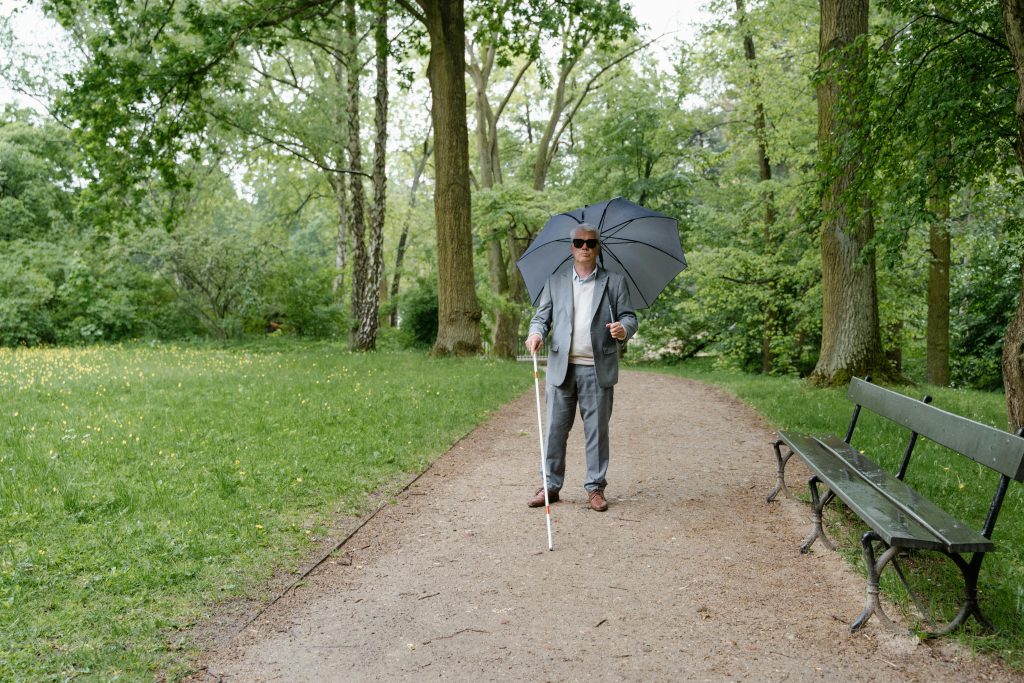
In clinical circles, gait speed is often referred to as the “sixth vital sign.” It is a powerful predictor of hospitalization, cognitive decline, and overall mortality. However, the speed at which an older adult walks is not merely a product of muscle force and joint range of motion. Emerging research reveals that senior stereotypes, the pervasive, negative cultural beliefs about aging, can actually act as a physiological brake. When an older adult internalizes the message that they are inherently “frail” or “slow,” their body often follows suit. To provide truly evidence-based geriatric care, we must address the psychological barriers of senior stereotypes as aggressively as we address sarcopenia.
1. Gait Speed as the “Sixth Vital Sign”
In the world of geriatric rehabilitation, we have long moved beyond simply measuring heart rate and blood pressure. We now recognize gait speed the velocity at which a person walks as the “sixth vital sign.” It is a robust, evidence-based biomarker that provides a window into the body’s complex systems, including cardiorespiratory fitness, muscular power, and neurological integrity. A walking speed of less than 1.0 m/s is often a tipping point, signaling an increased risk for falls, hospitalization, and cognitive decline.
However, a person’s walking speed is not dictated solely by their physical hardware. Science is increasingly uncovering a powerful psychological “brake” on mobility: senior stereotypes. The pervasive cultural narrative that aging equals inevitable frailty creates a phenomenon known as “stereotype threat.” When an older adult is in an environment, whether a doctor’s office or a family dinner, where they feel they are being judged through the lens of ageist tropes, their performance drops. This isn’t just “in their head”; it is a measurable physiological slowing that can compromise their independence.
2. The ‘Why it Matters’ Section: Physiological Reserve & The Slippery Slope
To understand why senior stereotypes are so dangerous, we must look at the concept of physiological reserve. This is the excess capacity built into the organ systems that allows us to bounce back from a stressor, such as a minor illness or a trip on the sidewalk. Healthy aging is defined by maintaining enough reserve to stay above the “threshold of frailty.”
When an older adult internalizes negative Senior Stereotypes, they often begin to self-limit their activity to “stay safe.” This caution leads to the “Slippery Slope of Aging.” This framework, cited in Geriatric Physical Therapy (2020), describes four stages: Vigorous, Independent, Frail, and Dependent. Negative messaging pushes seniors down this slope by causing “disuse atrophy.” If a senior believes they are too old for brisk walking, they stop doing it; their physiological reserve then shrinks, making them actually more susceptible to the very frailty they feared.
3. The Biomechanics of Belief: How Internalized Ageism Affects Stride
How exactly does a thought become a slower step? It happens through a process called “Embodied Cognition.” The brain’s prefrontal cortex, which handles executive function and emotional regulation, is also heavily involved in motor planning. When Senior Stereotypes trigger anxiety or a lack of confidence, the motor plan changes. The result is what we call a “guarded gait.”
Clinicians can identify this guarded pattern through several biomechanical markers:
- Reduced Hip Extension: A “hesitant” stride that lacks power.
- Increased Double-Limb Support Time: Spending more time with both feet on the ground because the brain doesn’t trust the body’s balance during the “swing” phase.
- Decreased Arm Swing: A sign of rigid trunk control, which ironically makes a person less stable and more prone to falls.
Take-Home Tip for Caregivers:
Watch for the “shuffle.” If you notice your loved one has stopped swinging their arms or is taking shorter, flatter steps, don’t just tell them to “be careful.” Instead, encourage them to “walk tall” and “swing your arms like you’re in a march.” This simple shift in posture can override the “guarded” motor plan and improve stability.
4. Stereotype Threat: The Neuroendocrine Response to Negative Messaging
When a senior is exposed to senior stereotypes, the impact is not just psychological; it is biochemical. This phenomenon, known as “stereotype threat,” activates the HPA (hypothalamic-pituitary-adrenal) axis, the body’s central stress response system. When an older adult feels they are being monitored for signs of “typical” age-related decline, the brain perceives this social judgment as a threat, triggering a spike in cortisol and adrenaline.
In a mobility context, high cortisol levels are detrimental. Chronically elevated cortisol promotes muscle catabolism (breakdown) and interferes with the neural signaling required for rapid balance corrections. Furthermore, the acute anxiety caused by Senior Stereotypes leads to “co-contraction” of opposing muscle groups. Instead of a fluid, efficient stride, the patient becomes stiff. This muscle tension increases the “metabolic cost” of walking, making the senior feel exhausted more quickly, reinforcing the false belief that they are too frail for community mobility.
5. Challenging Senior Stereotypes in Clinical Settings
For allied health professionals, the ICF Framework (International Classification of Functioning, Disability, and Health) provides a roadmap for dismantling these barriers. Traditionally, clinicians focused solely on “Body Functions and Structures” (e.g., knee strength). However, the ICF model requires us to consider “Environmental Factors,” which include societal attitudes and senior stereotypes.
To provide evidence-based care, therapists must shift from a paternalistic “caretaker” role to an “empowerment” role. If a therapist uses “elderspeak,” high-pitched, simplified speech often used with infants, they are clinically sabotaging the patient. Research shows that seniors treated with elderspeak perform worse on functional tasks and walk more slowly. To counter this, clinicians must use professional, adult-to-adult communication and set “aggressive” functional goals that challenge the patient’s perceived limits, thereby proving the negative stereotypes wrong through physical achievement.
6. Overcoming Senior Stereotypes Through Intensity as Medicine
The biological counterpart to the psychological slowdown is sarcopenia, the age-related loss of muscle mass and strength. Specifically, aging often leads to the atrophy of Type II (fast-twitch) muscle fibers, which are responsible for the “power” needed for a brisk gait and quick recovery from a trip. Senior stereotypes often lead to “under-dosing” in exercise; well-meaning people tell seniors to “just do some light stretching” or “take a slow stroll.”
Citing Geriatric Physical Therapy (2020), the evidence is clear: High-Intensity Resistance Training (HIRT) is the primary medical intervention for sarcopenia. To improve gait speed, we must challenge the musculoskeletal system at 70-80% of its maximum capacity. When a senior lifts heavy weights or performs explosive movements, they aren’t just building muscle; they are shattering the senior stereotypes they’ve been told. This “biological resilience” creates a positive feedback loop: as the body gets faster, the mind feels younger, further increasing walking velocity.
Take-Home Tip for Caregivers:
Don’t be afraid of “intensity.” If your loved one is performing exercises and doesn’t seem to be working hard, the “dose” is likely too low to create change. Ask their physical therapist, “How can we safely increase the resistance to help build back those fast-twitch muscles?” Strength is the foundation of speed.
7. The Caregiver Corner: Language as a Clinical Intervention
The way we speak to seniors is not just a matter of etiquette; it is a clinical intervention that directly affects their gait. As previously mentioned, “elderspeak” the use of simplified vocabulary, overly endearing terms like “sweetie” or “honey,” and a patronizing tone is a primary reinforcer of senior stereotypes. When a caregiver uses this type of speech, they are inadvertently signaling to the senior that they are incompetent or fragile.
Studies have shown that when caregivers shift to “empowerment messaging,” the results are immediate. Instead of saying, “Let’s take a little walk, honey, be careful not to fall,” a caregiver might say, “Let’s work on your brisk pace today to keep your heart healthy.” This shift in language moves the focus from fear-avoidance to goal-attainment. It treats the senior as an active participant in their health rather than a passive recipient of care.
Take-Home Tip for Caregivers: The “Adult-to-Adult” Audit.
Practice speaking to your loved one with the same tone and vocabulary you would use with a colleague or a friend. Focus your comments on their strengths (e.g., “Your balance looked very steady on that turn”) rather than their limitations. Empowered language leads to empowered movement.
8. Cognitive Load and Gait: The Mind-Body Connection
Walking is not an automatic task; it requires significant “executive function.” This is especially true as we age and our Physiological Reserve decreases. In clinical terms, we look at “dual-tasking,” the ability to walk while performing a secondary mental task. When an older adult is preoccupied with senior stereotypes, their “cognitive load” increases. They are essentially “dual-tasking” between the physical act of walking and the mental stress of worrying about looking “old” or “frail.”
This mental interference “steals” neural resources from the motor cortex. If a senior is worried about being judged for their speed, they have less mental “bandwidth” to process the sensory input from their feet and inner ear. This leads to errors in foot placement and a slower, more cautious gait. To improve walking speed, we must clear the mental clutter. By fostering an environment that rejects Senior Stereotypes, we free up the brain to focus entirely on the mechanics of movement, resulting in a more fluid and confident stride.
9. Environmental Audits: Creating Spaces of Empowerment
Our physical environment often mirrors our senior stereotypes. Many facilities or homes are designed with a “safety-first” mentality that inadvertently discourages brisk walking. If every hallway is lined with chairs to encourage sitting and every sign warns of “slippery floors,” the environment is screaming, “you are frail.”
An “empowerment audit” of the environment looks for ways to encourage challenge. This might include:
- Measured Walkways: Marking distances on the floor so seniors can see their progress and try to “beat their time” over a 10-meter stretch.
- Varied Surfaces: Safely introducing different textures (rugs vs. hardwood) to build confidence in adaptability.
- Positive Imagery: Replacing stereotypical images of “sedentary” seniors with those of older adults engaged in high-intensity activities.
When the environment suggests that movement is expected and capability is assumed, the subconscious “brake” on gait speed begins to release.
10. Conclusion: Reclaiming the Narrative for Optimal Aging
The science is clear: the speed at which we walk is a reflection of both our physical capacity and our psychological environment. While we must continue to address the biological aspects of mobility, such as building power in the lower extremities and maintaining cardiovascular health we cannot ignore the invisible weight of senior stereotypes. Internalized ageism acts as a chronic stressor that drains the physiological reserve, triggers a “guarded” gait, and increases the risk of falling through cognitive interference.
Reclaiming the narrative of aging requires a multi-pronged approach. Clinicians must adopt the “Exercise as Medicine” philosophy, prescribing high-intensity interventions that challenge the musculoskeletal system. Caregivers must audit their language, replacing the “safety-only” focus of elderspeak with adult-to-adult empowerment. Most importantly, seniors themselves must be encouraged to reject the societal “scripts” of frailty. When we dismantle these Senior Stereotypes, we don’t just see faster walking speeds; we see a return to community participation, a reduction in the “slippery slope of aging,” and a significant boost in quality of life.
Final Summary Checklist for Faster Walking:
- The “Sixth Vital Sign”: Track gait speed regularly. A goal of 1.0 m/s or higher is ideal for community independence.
- Stop the “Shuffle”: Focus on postural cues like “walking tall” and swinging the arms to break the guarded gait pattern.
- High Intensity Is Key: Utilize resistance training at 70-80% of maximum effort to target the fast-twitch muscles needed for speed.
- Language Matters: Eliminate “elderspeak” and replace it with goal-oriented, empowering communication.
The journey toward “optimal aging” is as much about the mind as it is about the body. By lifting the psychological burden of Senior Stereotypes, we allow the physiological systems to function at their peak. It is time to treat gait speed not just as a measure of how fast a person moves, but as a measure of how free they feel to move.If you are concerned about your walking speed or want to build the strength needed to defy Senior Stereotypes, consult a board-certified geriatric physical therapist at geriatricrehab.es to develop an individualized, high-intensity mobility plan today.













