
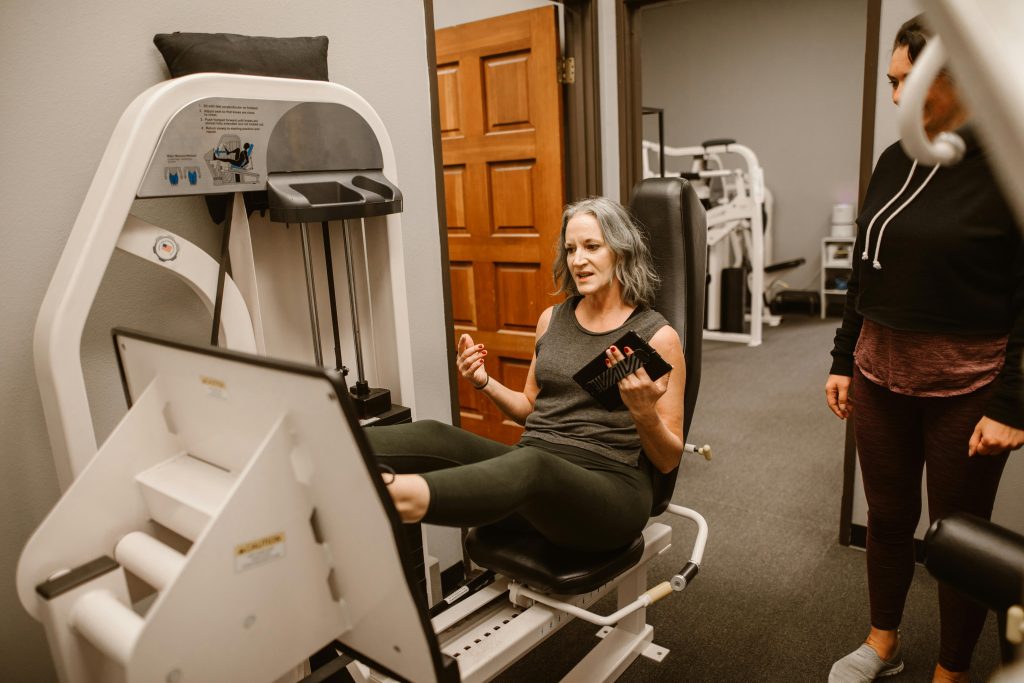
In the clinical pursuit of longevity, we often focus on the visible aspects of aging: graying hair, slower gait, or reduced muscle mass. However, the true driver of these changes lies beneath the surface in the complex world of the endocrine system. As we age, we enter a phase known as “somatopause,” characterized by a gradual decline in growth hormone (GH) and Insulin-like Growth Factor 1 (IGF-1).
This hormonal shift is a primary culprit behind sarcopenia, but it is not an irreversible sentence. At geriatricrehab.es, we recognize that Hormonal Muscle Growth is not solely the domain of the young; rather, it is a physiological process that can be re-ignited through specific, high-intensity interventions. By understanding the aging connection between hormones and muscle, we can transform our approach to rehabilitation from passive maintenance to active restoration.
1. The Endocrine Environment of Aging
The aging process is intrinsically linked to a changing hormonal landscape. For many older adults, the decline in anabolic hormones leads to a state where muscle protein breakdown consistently outpaces muscle protein synthesis. This imbalance is where frailty begins. Hormonal Muscle Growth depends on a delicate symphony of signals, primarily driven by the growth hormone-IGF-1 axis.
When these signals weaken, muscle tissues become “resistant” to repair. Standard, low-intensity exercises—like casual walking or light stretching—often fail to provide a strong enough stimulus to overcome this hormonal lull. To change the internal chemistry of the aging body, we must provide a signal that is loud enough to be heard. At geriatricrehab.es, we emphasize that training intensity is the primary lever we can pull to shift the endocrine environment back toward an anabolic state.
2. The ‘Why It Matters’ Section: Hormones and Functional Carryover
For our seniors, the discussion of IGF-1 and testosterone might seem abstract, but the results of optimizing these hormones are deeply practical. We are training for Functional Carryover —the ability to take the strength gained in the clinic and apply it to the moments that make life meaningful.
For Seniors: Reclaiming Your Vitality
- The “Grocery Store” Victory: Optimized hormones mean your muscles repair faster and stay stronger. This turns a tiring trip to the grocery store into a routine task. You aren’t just “getting through the day”; you have the energy to spare.
- Playing with Grandchildren: Keeping up with active grandkids requires more than just muscle; it requires the metabolic “snap” that comes with healthy growth factor levels.
- Resilience Against Fatigue: When we stimulate Hormonal Muscle Growth, we improve the body’s overall recovery rate. This means you wake up feeling refreshed rather than stiff, ready to engage with your community and hobbies.
3. The Role of IGF-1 in Hormonal Muscle Growth
For the healthcare professional, the most critical player in the geriatric anabolic environment is Insulin-like Growth Factor 1 (IGF-1). This hormone is produced primarily in the liver in response to growth hormone, but it is also produced locally within the muscle tissue itself in response to mechanical load.
For Professionals: Satellite Cells and Protein Synthesis
IGF-1 is the primary driver of satellite cell activation. These “stem cells” of the muscle are essential for the repair and growth of muscle fibers. As cited in Geriatric Physical Therapy (2020), aging muscle often shows a blunted response to IGF-1, leading to decreased myofibrillar protein synthesis rates . To overcome this blunting, the mechanical load must be significant.
Low-intensity activity does not generate sufficient “mechano-growth factor” (a variant of IGF-1) to activate these dormant satellite cells. However, when we apply high-intensity stress, we force the local secretion of growth factors that bypass systemic limitations. This is why a precise, high-load protocol is not just a preference—it is a physiological necessity for reversing age-related muscle loss.
4. Driving Hormonal Muscle Growth Through High-Intensity Training
In geriatric rehabilitation, the “dosage” of exercise is often far too low to elicit a systemic change. To achieve Hormonal Muscle Growth, we must look to the Physical Stress Theory (PST) as our clinical North Star. According to the PST, as detailed in Geriatric Physical Therapy (2020), biological tissues only undergo positive adaptation when the stress exceeds a specific threshold.
For Professionals: The 60-80% 1RM Threshold
In older adults, the threshold for hormonal release is significantly higher than in younger populations. A “moderate” walk might maintain current levels, but it will not stimulate the pituitary gland or local mechano-growth factors. To move a patient from the “Maintenance Zone” to the “Increased Tolerance Zone,” we must utilize loads between 60-80% of their 1-Rep Max (1RM).
This high-intensity stimulus is required to recruit Type II fast-twitch muscle fibers —the very fibers that are most sensitive to anabolic hormones but also the first to atrophy with age. By applying this “Mechanical Shout,” we create sufficient structural tension to trigger the release of local IGF-1 and systemic growth hormones, effectively overriding the “somatopause” plateau.
5. Common Myths of Fragility: The “Safe” Hormone Fallacy
A significant barrier to high-intensity training is the “Fragility Myth” —the idea that a senior’s endocrine system is “broken” and can only be fixed with external prescriptions like Testosterone Replacement Therapy (TRT) or Growth Hormone injections.
- Myth: “I’m too old for my body to produce its own growth factors.”
- The Reality: Research on nonagenarians (those in their 90s) shows that high-intensity resistance training leads to an immediate spike in local growth factors. The “machinery” is not broken; it is simply dormant from disuse.
- Myth: “Heavy lifting will crash my cortisol and exhaust my system.”
- The Reality: While overtraining is a risk, a structured 12-week protocol actually improves the cortisol-to-testosterone ratio. It makes the body more efficient at managing stress, not less.
- Myth: “Testosterone is only for men’s muscles.”
- The Reality: Testosterone is a vital hormone for both men and women in the geriatric population, serving as a primary protector of bone density and cognitive clarity.
6. Testosterone and the Aging Skeleton: The Muscle-Bone Unit
The connection between Hormonal Muscle Growth and skeletal integrity cannot be overstated. We often treat osteoporosis (bone loss) and sarcopenia (muscle loss) as separate issues, but they are two sides of the same endocrine coin.
The Endocrine Bridge
Testosterone is a major regulator of the Muscle-Bone Unit. When testosterone levels are optimized through high-intensity loading, it stimulates osteoblast (bone-building cell) activity. As we push a senior toward 60-80% 1RM during a leg press or a weighted sit-to-stand, the muscle pulls on the bone with significant force.
This mechanical pull, combined with the resulting hormonal spike, tells the body that both the muscle and the bone need to be reinforced. This is why high-intensity training is the most effective non-pharmacological treatment for maintaining height, posture, and hip strength in the aging population. By targeting the muscle, we are essentially “tricking” the skeletal system into staying young.
7. Cardiovascular Synergy: Hormones and Vascular Health
The quest for Hormonal Muscle Growth is often viewed through the lens of strength, but its impact on the heart and blood vessels is equally profound. Growth hormones and IGF-1 play a vital role in maintaining the “springiness” of our vascular system.
For Professionals: Vascular Compliance and TPR
In the aging population, the “stiffening” of the arteries leads to an increase in Total Peripheral Resistance (TPR), which forces the heart to work harder to circulate blood. However, a high-intensity training stimulus that triggers a hormonal response also promotes the release of nitric oxide and other growth factors that improve vascular compliance.
As we build stronger, more metabolically active muscle tissue, we create a larger “vascular bed” for blood to flow into. This synergy reduces the workload on the heart and improves heart rate variability (HRV), a key marker of longevity. By training for hormonal output, we are essentially performing a tune-up on the senior’s entire circulatory system.
8. The Caregiver Corner: Monitoring Vitality and Safety
When a loved one is training at 60-80% 1RM, the intensity is high. This can be intimidating for a caregiver, but with the right Safety Spotting protocols, you can provide the support they need to reach that critical “hormonal threshold” without risk.
Safety Spotting Tips for High-Effort Sit-to-Stands:
- The “Shadow” Stance: Stand slightly behind and to the side of your loved one. Avoid standing directly in front of them, as this can impede their forward weight shift.
- The Hip-Hinge Guard: Place your hands near (but not necessarily touching) their hips. This allows you to provide a “micro-lift” if they stall mid-way through the movement.
- Recognizing “True Effort”: Watch for the “Slow Down.” If the last two repetitions are significantly slower than the first, they are hitting the intensity needed for Hormonal Muscle Growth.
- The “No-Holding” Rule: Avoid pulling on their arms or hands. Let their legs do the work. Your hands are only there to prevent a fall, not to do the exercise for them.
9. A 12-Week Roadmap for Naturally Supporting Hormonal Muscle Growth
To re-awaken a dormant endocrine system, we follow a graded exposure model. This ensures the body “earns” the right to lift heavy while allowing the pituitary-muscle axis to recalibrate.
Phase 1: Neuromuscular Priming (Weeks 1-4)
- Focus: Improving movement quality and “waking up” the nervous system.
- Intensity: 40-50% 1RM.
- Hormonal Goal: Reducing systemic cortisol and preparing the joints for higher loads. We are building the habit of consistency.
Phase 2: Hypertrophy and IGF-1 Optimization (Weeks 5-8)
- Focus: Crossing the “Intensity Mandate” threshold.
- Intensity: 60-70% 1RM.
- Hormonal Goal: This is where we begin to see significant increases in local IGF-1 and myofibrillar protein synthesis rates. The senior should feel a sense of “productive fatigue” after these sessions.
Phase 3: Peak Power and Endocrine Resilience (Weeks 9-12)
- Focus: Maximum force production and power.
- Intensity: 75-80% 1RM.
- Hormonal Goal: Maximizing the release of growth factors and testosterone. This phase builds the “Power Reserve” that makes daily life feel easy. This is the peak of the Hormonal Muscle Growth cycle.
10. Conclusion: Reclaiming the Anabolic Signal
The decline of growth factors and anabolic hormones is often framed as an inevitable part of the “aging” package—something to be accepted and managed. However, the science of geriatric rehabilitation tells a different story. By understanding the link between Hormonal Muscle Growth and high-intensity stress, we shift the narrative from one of inevitable loss to one of potential restoration.
We are not just training muscles; we are training the entire endocrine system. Every weighted sit-to-stand and every high-intensity push is a “mechanical shout” that reaches the pituitary gland and the liver, demanding that the body remain resilient. At geriatricrehab.es, we believe that “staying active” is the baseline, but “training with intensity” is the medicine. By applying the Physical Stress Theory and pushing towards that 60-80% 1RM threshold, you are giving your body the signal it needs to rebuild your future.
Are you ready to go beyond “maintenance” and start reclaiming your vitality? Don’t let your hormonal health be a mystery. At geriatricrehab.es, we offer the “Hormonal Vitality & Strength Audit” —a comprehensive assessment designed to identify your current strength levels and design a 12-week high-intensity protocol tailored to your unique endocrine needs. Consult a specialist today at geriatricrehab.es and let’s turn your “Somatopause” into “Momentum” together.













