
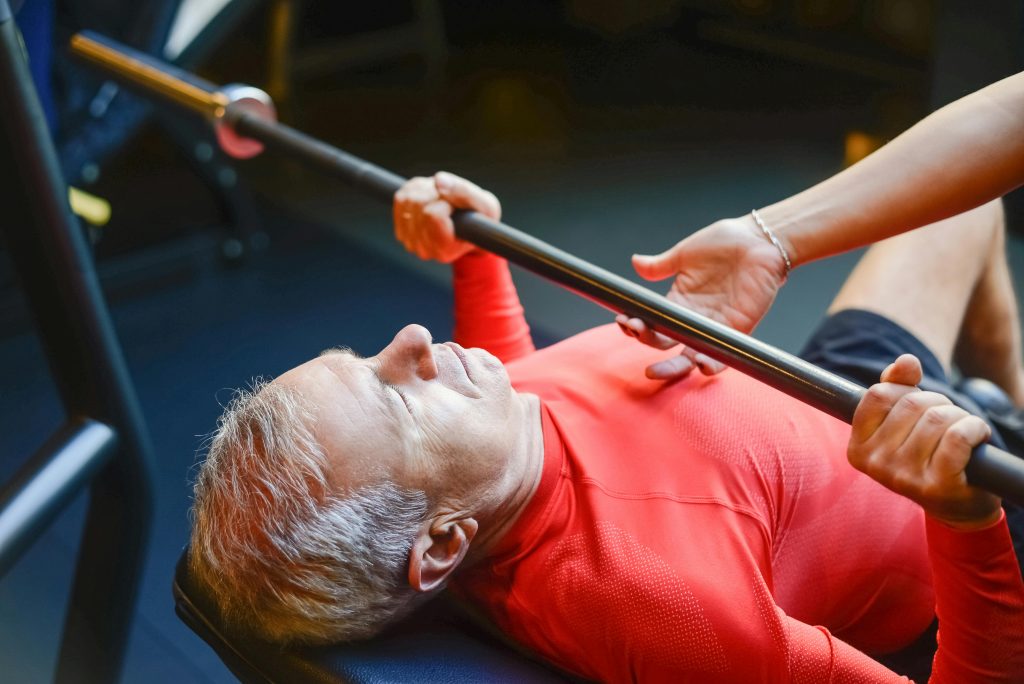
The common perception of aging often involves a transition toward “gentle” movements—brisk walks, water aerobics, or light stretching. While these activities have their place, they often lack the mechanical tension necessary to stop the biological clock of muscle loss. At geriatricrehab.es, we advocate for a paradigm shift. The aging body isn’t a fragile vessel that needs protection from effort; it is a resilient system that requires a specific “dosage” of intensity to remain functional. This is the foundation of High-Intensity Resistance Training (HIRT): a clinical approach that prioritizes meaningful loading over high-repetition, low-impact exercise.
1. The Fragility Myth
The “Fragility Myth” suggests that as we age, our bones and muscles become too brittle to handle significant weight. This narrative is not only incorrect but creates a self-fulfilling prophecy of weakness. When we avoid intensity, we inadvertently accelerate sarcopenia (muscle wasting) and osteopenia (bone loss).
Clinical evidence from Geriatric Physical Therapy (2020) confirms that the musculoskeletal system retains its ability to adapt to high loads well into the tenth decade of life. High-Intensity Resistance Training is the process of safely applying those loads to trigger a survival response in the tissue. By rejecting the myth of fragility, we allow seniors to build a “buffer” of strength that protects them from the very injuries they were told to fear.
2. The ‘Why It Matters’ Section: Functional Carryover for Real Life
At geriatricrehab.es, we define success by Functional Carryover. The goal of HIRT is to ensure that the physical demands of independent living feel like “low-intensity” tasks because your maximum capacity has been raised.
For Seniors: Reclaiming Your Power
- The Grocery Test: If your legs are trained to squat 40lbs in the clinic, carrying a 10lb bag of groceries becomes effortless. Without HIRT, that 10lb bag represents a much higher percentage of your total strength, leading to fatigue and instability.
- The Grandchild Connection: Picking up a toddler or playing on the floor requires a “burst” of power. HIRT builds the explosive capacity needed to transition from the floor to standing without needing to pull yourself up on furniture.
- The Stair Buffer: Stronger legs mean you use less energy per step, allowing you to navigate a flight of stairs without feeling winded at the top.
3. The Biological Necessity of High-Intensity Resistance Training
Why is intensity non-negotiable? It comes down to Anabolic Resistance. As we age, the chemical pathways that build muscle become less sensitive. A light walk or a 2lb dumbbell isn’t a “loud” enough signal to wake up the body’s building machinery.
For Professionals: Myofibrillar Protein Synthesis and Recruitment. To reverse muscle wasting, we must stimulate myofibrillar protein synthesis (MPS). This requires the recruitment of high-threshold motor units—the Type II (fast-twitch) fibers. These fibers are the first to atrophy with age, but the most important for balance. To recruit them, the central nervous system must be challenged with a load of 60-80% of 1-Rep Max (1RM). Anything less is handled by the slow-twitch endurance fibers, leaving the “power” fibers dormant and prone to further wasting.
4. Applying Physical Stress Theory to High-Intensity Resistance Training
To understand why “playing it safe” is actually a risk, we must look at the Physical Stress Theory (PST). This framework, central to Geriatric Physical Therapy (2020), states that tissues like muscle, bone, and tendon adapt based on the level of stress they encounter.
For the geriatric population, the “Stress Threshold” for positive change is higher than most people—and many clinicians—realize. We categorize the body’s response into five zones:
- Atrophy (Disuse): Stress levels are too low. The body dismantles Type II fibers to save energy.
- Maintenance: Light activity (like walking) keeps the system from failing further but provides zero growth.
- Increased Tolerance (The HIRT Zone): By loading at 60-80% 1RM, we force the muscle to adapt. This is the only zone that improves Functional Carryover.
- Injury: Stress that exceeds the tissue’s immediate capacity.
- Death: Total tissue failure.
Common Myths of Fragility
To reach our goal of total resilience, we must debunk the myths that keep seniors in the “Maintenance” or “Atrophy” zones:
- “Heavy weights cause strokes”: Research shows that resistance training, when paired with proper breathing (avoiding the Valsalva maneuver), actually increases arterial elasticity.
- “Joints wear out like brake pads”: Joints are living tissue. Controlled loading increases the thickness of articular cartilage and the strength of the surrounding ligaments.
- “I’m too old to build muscle”: Studies on centenarians show that the body never loses the ability to increase myofibrillar protein synthesis rates if the intensity is high enough.
5. Cardiovascular Impact: The “Pressure” Paradox
A common concern with High-Intensity Resistance Training is the acute spike in blood pressure. However, this is a “Pressure Paradox.” While blood pressure rises momentarily during a lift, the long-term effect is a significant reduction in resting blood pressure and improved heart health.
For Professionals: Vascular Compliance When a senior lifts a heavy load, the peripheral muscles compress the blood vessels. This “vascular gymnastics” forces the arteries to become more compliant (flexible). Over a 12-week HIRT program, this leads to a decrease in Total Peripheral Resistance (TPR). Effectively, the heart does not have to work as hard during daily life because the “pipes” of the circulatory system are more elastic and the “muscle pump” in the legs is more efficient at returning blood to the heart.
6. The 12-Week Protocol: A Roadmap to Power
Safety in HIRT is found in Graded Exposure. We don’t start at 80% 1RM on Day 1; we earn the right to lift heavy through a structured 12-week progression.
Weeks 1-4: The Foundation Phase (Neuromuscular Priming)
- Intensity: 40-50% of estimated 1RM.
- Goal: Teaching the brain how to “talk” to the muscles. This phase focuses on perfecting the movement patterns of the squat, hinge, and push.
- For Caregivers: Focus on the “setup.” Ensure the chair is braced, and the senior is breathing out on the “effort” phase of the movement.
Weeks 5-8: The Hypertrophy Phase (Building the Engine)
- Intensity: 60-70% of 1RM.
- Goal: This is where we trigger myofibrillar protein synthesis. We move from “learning the move” to “challenging the muscle.”
- The Shift: Repetitions drop to 8-12, and rest periods increase to 2 minutes to allow for full ATP recovery.
Weeks 9-12: The Power Phase (The Resiliency Peak)
- Intensity: 75-80% of 1RM.
- Goal: Maximal motor unit recruitment. This is the phase that prepares a senior for the most demanding real-world tasks, like catching themselves during a trip.
7. The Professional Perspective: The ICF Framework and HIRT
At geriatricrehab.es, we do not view strength in a vacuum. We utilize the International Classification of Functioning, Disability, and Health (ICF) Framework to bridge the gap between biological tissue and social participation. For the geriatric professional, HIRT is the primary tool to move a patient through this framework.
- Body Structures & Functions: We target the physical density of the muscle and the integrity of the motor unit. By achieving 60-80% 1RM, we directly combat the structural “thinning” associated with age-related atrophy.
- Activities: We measure progress through standardized tests like the 30-Second Chair Stand or the Timed Up and Go (TUG). High-intensity training ensures these activities are performed with a significant “safety buffer,” meaning the senior isn’t working at their absolute limit just to stand up.
- Participation: This is the ultimate goal—allowing the senior to return to gardening, traveling, or community volunteering. When the “Body Structure” is resilient, “Participation” is no longer restricted by physical fear.
Clinical Marker: The 1RM Estimation Professionals must move away from “guessing” the weight. We use sub-maximal testing (eg, finding the maximum weight a senior can lift 10 times) and apply the Brzycki formula to estimate the 1-Rep Max safely. This allows for a “prescribed dose” of exercise, ensuring the patient is neither under-loaded nor over-strained.
8. The Caregiver Corner: Safety Spotting for HIRT at Home
When a senior transitions their High-Intensity Resistance Training from the clinic to the home, the caregiver becomes the “on-site coach.” High-intensity requires a specific spotting technique to ensure safety without stripping the senior of their autonomy.
The “Shadow Position” and Support Protocols:
- Positioning: Always stand behind and slightly to one side of the senior during standing or squatting movements. This is the Shadow Position.
- The Hip-Hinge Guard: Instead of pulling on the senior’s arms (which can cause shoulder strain), keep your hands 2 inches away from their hips. If they begin to lose balance or “wobble” during a heavy sit-to-stand, guide them by the hips back to a seated position.
- Managing the “Sticking Point”: In HIRT, there is often a “sticking point” halfway through the movement. If the senior stalls, provide a “micro-assist”—just 5% of the effort—to help them clear the point while they maintain the other 95% of the work.
- The “Exit Strategy”: Before starting a set, ensure there is a clear, stable surface (like a reinforced chair or a weight bench) directly behind them.
9. Essential Components of Safe High-Intensity Resistance Training
To ensure HIRT remains a therapeutic success, the environment and equipment must meet specific clinical standards.
- Measurability: You cannot manage what you do not measure. Use adjustable dumbbells, resistance bands with known tension levels, or weighted vests. This allows for the Graded Exposure necessary to reach the 80% 1RM mark over 12 weeks.
- Stability: High-intensity effort requires a stable base. Exercises should prioritize “Closed Kinetic Chain” movements (where the feet or hands are fixed against a solid surface), such as leg presses or wall push-ups, rather than free-standing balance work, which might limit the amount of weight that can be safely lifted.
- The “Repetition in Reserve” (RIR) Scale: We teach seniors to use the RIR scale. If they finish a set of 8 and feel like they could have done 5 more, the intensity is too low. For HIRT, we aim for 1-2 Reps in Reserve—meaning they finish the set feeling they could have done only one or two more reps with perfect form.
10. Conclusion: Choosing Strength over Decline
The evidence is clear: the greatest risk to a senior is not the weight they lift, but the weakness they allow to persist. By embracing High-Intensity Resistance Training, we are not just building muscle; we are building a “biological insurance policy.” As we have explored through the Physical Stress Theory, our bodies are designed to adapt to challenge. When we provide that challenge through a structured 60–80% 1RM protocol, we flip the internal switch from “wasting” to “growing.”
At geriatricrehab.es, we see the results of this intensity every day. It is found in the senior who can now stand up from their favorite armchair without using their hands. It is found in the grandfather who can pick up his grandson without a second thought about his “bad back.” These are not miracles; they are the predictable results of myofibrillar protein synthesis and progressive loading. Intensity is not the enemy of the aging body—it is its most powerful ally.
Ready to stop “playing it safe” and start getting strong? Don’t let the fear of fragility hold you back from your best years. Your journey to a more powerful, independent life starts with a single, evidence-based step. Schedule a HIRT Readiness Assessment at geriatricrehab.es today. Our expert clinical team will evaluate your 1RM, screen your movement patterns, and design a custom 12-week protocol tailored to your unique goals. Consult a specialist today at geriatricrehab.es and let’s redefine what your body is capable of.













