
In the clinical framework of Geriatric Physical Therapy (2020), balance is described as a complex interaction between three primary systems: the visual, the vestibular, and the somatosensory. While we often rely on our eyes to navigate, the “sixth sense” that truly keeps us upright is proprioception, the ability of the brain to perceive the position and movement of our limbs without looking at them. As we age, this sense can dull, leading to a “leaky” connection with the ground. Integrating specific Proprioception Exercises into your daily routine is a clinical necessity to broaden your Safety Buffer and reclaim the Vigor required for independent living.
1. The Invisible Map of Movement
Proprioception is often called our “sixth sense,” but in the framework of Geriatric Physical Therapy (2020), it is a foundational component of your Physiological Reserve. It is the body’s internal GPS, a sophisticated network of sensors in your joints and muscles that tells your brain exactly where your limbs are without you having to look at them.
For many seniors, a decline in this sense leads to “visual dependency,” where you feel the need to stare at your feet while walking. This habit actually shrinks your Safety Buffer because it prevents you from seeing obstacles in your path. By engaging in specific Proprioception Exercises, you aren’t just practicing balance; you are recalibrating your internal map. This recalibration is what gives you the Vigor to walk with your head held high, reclaiming the freedom to visit the garden or the supermarket with confidence.
2. The Science of Proprioception Exercises: Closing the Neural Loop
From a Professional Perspective, proprioception relies on a feedback loop between peripheral mechanoreceptors, specifically muscle spindles and Golgi tendon organs, and the cerebellum. When we perform Proprioception Exercises, we are utilizing the SAID Principle (Specific Adaptation to Imposed Demands) to sharpen these neural pathways.
As we age, the “gain” on these sensors can turn down, leading to a “leaky” signal to the brain. However, the geriatric nervous system remains plastic. By “up-regulating” the demand, such as practicing balance on a foam pad or with reduced lighting, we force the brain to tune in more clearly to the signals coming from the ankles and feet. This “neural tuning” is essential for reactive balance; it is the difference between a minor stumble and a catastrophic fall.
3. Sensory Organization Testing (SOT): Finding the Weak Link
For clinicians, the gold standard for assessing this system is Sensory Organization Testing (SOT). This test systematically disrupts the three pillars of balance to find where the “leak” is occurring.
- Condition 4: The person stands on a “sway-referenced” platform. This makes the ground feel “mushy” or dishonest, forcing the brain to ignore the feet and rely on the eyes and ears.
- Condition 5 & 6: These are the “proprioceptive deep-dives.” By closing the eyes or tilting the visual surround while the platform sways, we isolate the vestibular and proprioceptive systems.
- Take-Home Tip for Caregivers: If your loved one struggles significantly more on thick carpets or in the dark, they aren’t “just getting old”; they are likely failing a real-world version of SOT Condition 5. Their brain isn’t getting clear data from their feet. Simple drills to “wake up” the feet before walking can provide an immediate boost to their Psychological Reserve.
4. The Slippery Slope: When the Internal GPS Fails
As we age, the precision of our internal GPS can begin to drift. In Geriatric Physical Therapy (2020), this is viewed as a primary driver for the Slippery Slope of Aging. When proprioception declines, the brain no longer receives a crisp “high-definition” signal from the ankles. To compensate, many seniors adopt a “shuffling gait.”
- The Shuffling Strategy: By keeping the feet close to the ground and shortening the step, the senior is attempting to maximize the time both feet are in contact with the floor. While this feels “safer” in the short term, it actually increases the risk of tripping over minor thresholds or carpet edges.
- Cognitive Overload: Because the “automatic” sense of where the feet are is missing, the senior must use conscious thought to monitor every step. This drains the Physiological Reserve, leading to rapid fatigue and an inability to multitask while walking, such as talking to a friend or carrying a grocery bag.
- Caregiver Focus: If you notice your loved one “furniture walking” (touching walls or tables for stability), it’s a sign that their proprioception is no longer providing a sufficient Safety Buffer. They are using their hands to replace the “eyes” in their feet.
5. Transitioning Strategies: From Ankle to Hip to Step
Balance is not a static state; it is a dynamic series of corrections. The speed and accuracy of these corrections depend entirely on the quality of your proprioceptive feedback. From a Professional Perspective, we categorize these as “Balance Strategies.”
- The Ankle Strategy: For small displacements (like a slight breeze or a minor sway), the body uses the ankles to pivot and stay upright. This requires high-precision proprioception from the ankle joint.
- The Hip Strategy: If the displacement is larger or the surface is too “mushy” for the ankles to grip, the body shifts to a hip strategy. This involves a rapid forward or backward tilt of the pelvis.
- The Stepping Strategy (The Emergency Brake): When the displacement is too large for the ankles or hips to handle, such as a significant trip, the brain must trigger a rapid step to widen the base of support.
- The “Sensory Gap”: If proprioception is slow, the brain may miss the window for an ankle correction and jump straight to a clumsy stepping strategy. Proprioception Exercises aim to tighten this timing, ensuring the body chooses the right “tool” for the job.
6. Safety Buffer Training: Proprioception Exercises for Real-World Confidence
Rehab is about more than just physical strength; it’s about Psychological Reserve. A senior who is afraid of falling will naturally limit their life. Proprioception Exercises are designed to restore the confidence needed to move through the world without a constant “fear-scan” of the floor.
- The Nighttime Challenge: Many falls occur during late-night bathroom trips because the Visual system is offline. By training balance with “dimmed eyes” (squinting or in low light), we force the somatosensory system to take the lead. This expands the Safety Buffer for those vulnerable moments in the dark.
- Confidence in the Community: Training for the garden or the supermarket requires “Reactive Stepping.” We practice taking large, deliberate steps on uneven surfaces. This mastery allows a senior to step onto a patch of grass or navigate a crowded aisle without the brain sounding a “danger” alarm.
- Take-Home Tip for Seniors: Think of these exercises as “tuning your instruments.” You aren’t just getting stronger; you are becoming more “aware.” That awareness is what allows you to walk through the supermarket with your head up, greeting neighbors rather than staring at your toes.
7. Functional Audit: Mapping the Proprioceptive Environment
In the clinic, we recognize that the home is not a static environment; it is a series of “sensory filters.” For the allied health professional, conducting a Functional Audit means looking at how different surfaces either support or “lie” to the somatosensory system. By applying the SAID Principle, we can transform these household features into training tools.
- The “Compliant Surface” Trap: Thick, plush carpeting or “mushy” bathroom mats mimic a sway-referenced platform. They provide dishonest feedback to the feet, effectively putting the senior in a permanent state of SOT Condition 4.
- The Transition Zone: The most dangerous areas in a home are where the floor texture changes, for example, moving from a firm hardwood hallway to a soft bedroom rug. This requires the brain to rapidly “re-map” its GPS.
- Audit Tip: Walk through the home and identify “sensory blind spots.” Areas with low visual contrast (black rugs on dark floors) or unpredictable textures are where Proprioception Exercises are most needed to ensure the senior can navigate without a loss of Vigor.
8. The Daily Drill: A Progressive Guide to Proprioceptive Mastery
To hit clinical targets, we break down the “how-to” of neural recalibration. These Proprioception Exercises should be performed in a safe environment, ideally near a sturdy countertop serving as your “safety harbor”. By systematically increasing the challenge, we use the SAID Principle to fix the “leak” in your internal GPS.
Level 1: Weight Shifting (The Sway Control)
Stand with feet hip-width apart. Slowly shift your weight toward your toes until you feel your calves engage, then back toward your heels.
- The Goal: Feel the pressure change in the soles of your feet without looking down. This trains the Ankle Strategy.
Level 2: Tandem Standing (The Tightrope)
Place one foot directly in front of the other, heel-to-toe.
- The Progression: Once stable, try “dimming your eyes” (squinting or looking at a distant point). This forces the brain to “up-regulate” the signals from the narrow base of support.
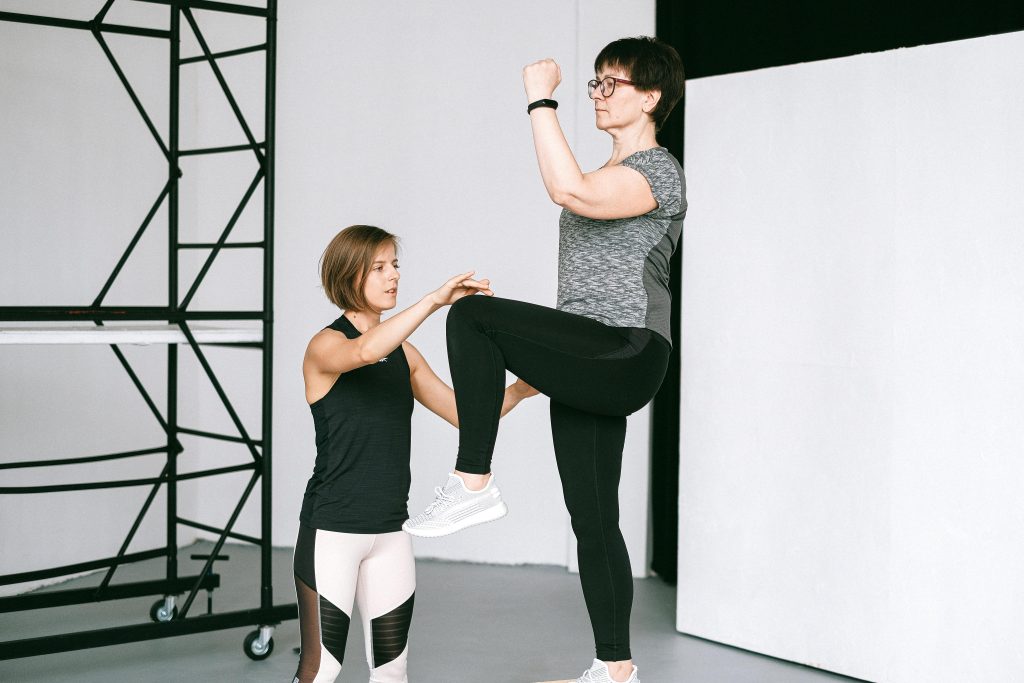
Level 3: Single-Leg Stance (The Statue)
Lift one foot slightly off the floor.
- The Goal: Hold for 10–30 seconds.
- Caregiver Focus: Use the Hips, Not Hands rule. Stand behind the senior. If they sway, place your hands firmly on their hips to help them find their center of mass, rather than pulling on their arms.
9. Caregiver’s Tool: The 30-Minute Proprioceptive Environmental Audit
As a caregiver, your goal is to reduce “sensory noise.” When the environment is clean and high-contrast, the “sixth sense” has less work to do, preserving the senior’s Psychological Reserve. Use this room-by-room checklist to perform an immediate audit:
Living Room & Hallways
- [ ] Establish Visual Anchors: Ensure there are clear, non-moving objects (like a sturdy bookshelf or heavy picture frame) in every room. These allow the senior to “lock on” visually to stabilize themselves if they feel a proprioceptive drift or a dizzy spell.
- [ ] Apply Contrast Striping: For homes with stairs, place a strip of high-contrast tape (e.g., yellow on dark wood) on the edge of each step. This provides a visual cue that prepares the Ankle Strategy for the upcoming height change.
The Bathroom
- [ ] Enforce the “Firm Floor” Rule: Replace thick, shaggy bath mats with thin, high-traction rubber mats. Thick foam “mutes” the feedback to the feet; a firm surface ensures the Ankle Strategy is activated immediately upon contact.
- [ ] Optimize Lighting: Install motion-sensor lights at ankle height along the path to the bathroom. Floor-level lighting highlights the physical “map” the feet need to follow during nighttime trips when the visual system is compromised.
The Entryway
- [ ] Perform a Threshold Check: Ensure all door thresholds are flush with the floor. If they cannot be removed, mark them with a bright, contrasting color. Tripping on a threshold is often a failure of the Stepping Strategy caused by a lack of awareness of where the feet are in relation to the obstacle.
10. Conclusion: Reaching the 85% HRR with Proprioception Exercises
The ultimate goal of performing Proprioception Exercises is not merely to stay upright in a quiet room; it is to build the Vigor required to thrive in a complex, moving world. In the clinical framework of Geriatric Physical Therapy (2020), we understand that true safety is a product of high-intensity physiological adaptation. When your internal GPS is sharp, you are no longer a “passive” walker; you are an active participant in your own mobility.
Professional Perspective: Moving to High-Intensity Functional Training (HIFT)
For the allied health professional, proprioceptive training is the gateway to safe, high-intensity work. We cannot push a patient into the “training zone” if their sensory foundation is unstable.
- The 40% HRR Zone (Baseline Stability): If a senior has poor proprioception, they often remain stuck in this low-intensity zone, walking slowly and cautiously. While this prevents immediate falls, it does nothing to climb the Slippery Slope of Aging.
- The 85% HRR Zone (The Vigor Zone): Once the “sixth sense” is sharpened through targeted Proprioception Exercises, we can safely increase the intensity. We move from static balance to dynamic movements like weighted carries or rapid “Step-and-Reach” drills that push the heart rate toward 85% of the reserve. This intensity is what triggers the cardiovascular and muscular changes necessary to refill the Physiological Reserve.
Living with Confidence
By committing to these drills, you are expanding your Safety Buffer. You are moving from a place of “Fear of Falling” to a place of “Confidence in Moving.” Whether it is navigating the vegetable aisle at the supermarket or walking across the lawn to greet a neighbor, your body now has the tools to handle the unexpected.
Is your internal GPS giving you the data you need to live with Vigor? Don’t let a “leaky” sense of balance shrink your world. Visit geriatricrehab.es today to download our “Sixth Sense Masterclass” or to schedule a session with a clinical specialist who can help you recalibrate your balance for the life you want to lead!













