
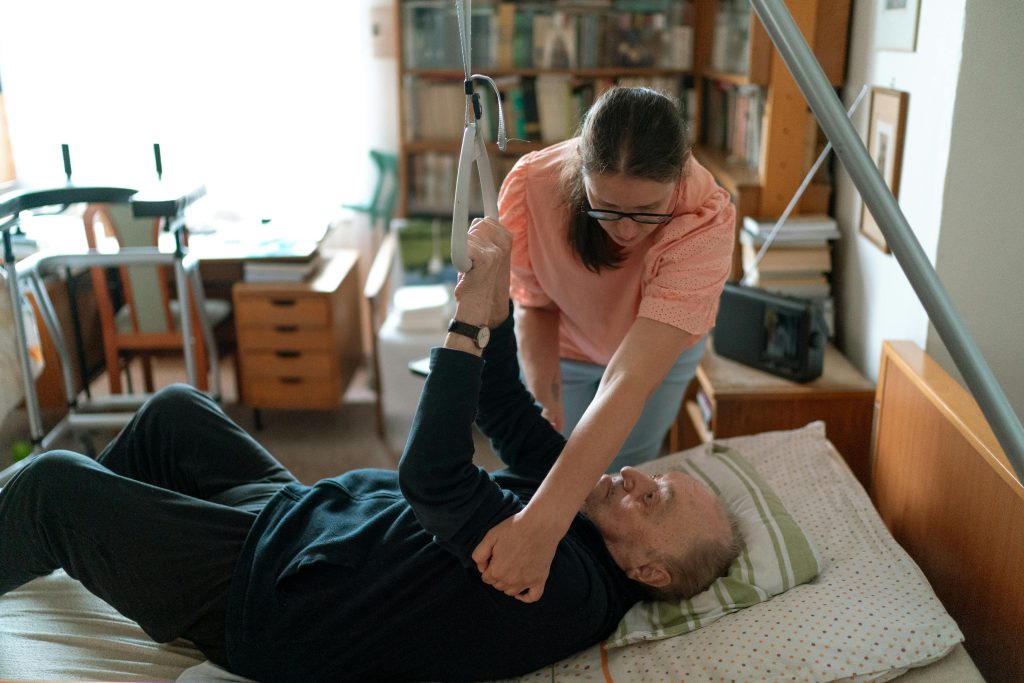
As we age, our bodies undergo a biological “tightening.” While a younger person’s body functions like a high-flow system that can process large amounts of fuel with ease, the senior body becomes a more sensitive machine. The “Why” behind this is the Basal Metabolic Rate —the baseline energy your body requires to maintain vital organs. As this rate slows, the “window” for what we eat narrows. You require fewer total calories because your “engine” is smaller, but your need for repair materials—like protein, vitamins, and minerals—actually increases to combat cellular stiffening. At geriatricrehab.es, we focus on maximizing this “Nutrient Density” so you can fuel your recovery without overloading a slowing system.
1. The Biological Shift in Energy Processing
In the geriatric population, the Basal Metabolic Rate is the fundamental speed at which your body repairs itself. It is not merely a number that dictates weight gain; it is the measure of your cellular “housekeeping.”
According to Geriatric Physical Therapy (2020), this decline is driven by a loss of metabolically active tissue and a decrease in the efficiency of our “cellular batteries.” At geriatricrehab.es, we emphasize that this shift changes the “math” of senior health. When your BMR drops, your body has less energy to spare for “non-essential” tasks like repairing micro-tears in muscles or flushing toxins from the system, this makes every meal a critical intervention: if the fuel doesn’t contain the right “repair parts,” the body continues to stiffen and age at an accelerated rate.
2. The ‘Why It Matters’ Section: The Energy Reservoir
Why does a Physical Therapist care about your Basal Metabolic Rate? Because your metabolism is the primary source of your Physiological Reserve. When we talk about the “Slippery Slope of Aging,” we are often describing a state where a senior’s metabolic engine is running so low that they have no “extra” energy to deal with a crisis.
If your metabolic rate is sluggish, your body prioritizes immediate survival over long-term maintenance. This means that after a minor fall or a bout of the flu, a senior with a low metabolic reserve will take weeks to recover compared to someone with a “revved-up” system. A low metabolic rate doesn’t just make you feel tired; it makes your tissues “stiff” and slow to heal. By addressing the rate at which your body produces energy, we are essentially widening your safety net, allowing you to “bounce back” from life’s inevitable stressors.
3. How Basal Metabolic Rate Shifts with Cellular Aging
The primary driver of a declining Basal Metabolic Rate is the loss of metabolically active tissue—specifically skeletal muscle—and the declining health of our mitochondria.
For Professionals: The age-related decline in Basal Metabolic Rate is largely attributed to Sarcopenia (the loss of muscle mass) and a reduction in mitochondrial biogenesis. Mitochondria are the cellular power plants responsible for ATP production. As we age, these power plants become less efficient, leaking reactive oxygen species that further damage cellular structures. This leads to a state of “anabolic resistance,” where the body requires a much higher “signal” (in the form of protein and exercise) to initiate muscle protein synthesis. When the body has fewer “active” muscle cells, the baseline energy required to keep the lights on—the BMR—naturally drops.
For Seniors and Caregivers: The “Old Battery” Analogy
Imagine your body is like a high-end smartphone. When the phone was brand new, the battery could hold a charge for two days, and it could run twenty apps at once without getting hot. This is your metabolism in your youth.
As the phone gets older, the battery doesn’t hold a charge as long as it used to. Even if you charge it to 100%, it drains quickly if you try to do too much. Furthermore, the phone takes much longer to “plug in and recharge” once it hits zero. Basal Metabolic Rate is like that battery life. Your body isn’t “broken,” but its internal battery is older and less efficient. You have to be more strategic about which “apps” (activities) you run, and you need to make sure you’re using the “high-quality charger” (nutrients) to get the most out of every minute. At geriatricrehab.es, we help you optimize that battery life so you don’t run out of power when you need it most.
4. Applying Physical Stress Theory to Basal Metabolic Rate
At geriatricrehab.es, we use the Physical Stress Theory (PST) to illustrate how metabolic systems adapt to the demands we place on them. Your Basal Metabolic Rate responds to stress in five distinct ways:
- Death: This represents metabolic collapse. In cases of extreme malnutrition or complete sedentary behavior, the body’s “idle speed” drops so low that organ systems begin to fail.
- Injury: This is the zone of Metabolic Syndrome and Insulin Resistance. The system is being stressed by the “wrong” type of fuel (excess sugar/fats) or a lack of movement, leading to systemic inflammation.
- Increased Tolerance (Training): The “Rev Zone.” By engaging in resistance training and interval movement, we force the mitochondria to become more efficient. We are essentially “toughening up” the metabolic engine so it can handle more fuel and produce more power.
- Maintenance: This is the balance point. The senior is consuming exactly what they need to maintain their “stiff” but functional state.
- Decreased Tolerance (Atrophy): When a senior stops moving, the body decides it no longer needs its expensive “furnace” (muscle). It breaks the muscle down and lowers the Basal Metabolic Rate to save energy, leading to the rapid spiral of frailty.
5. The Biological Mechanism: The Insulin and Hormone Tug-of-War
The “Why” behind the senior body’s tendency to store fat while losing muscle lies in our hormonal signaling.
For Professionals: Aging is characterized by a decrease in insulin sensitivity and a decline in anabolic hormones like Growth Hormone (GH) and IGF-1. This creates a “partitioning” problem. Instead of nutrients being driven into the muscle cells for repair, they are diverted into adipose tissue. This metabolic inflexibility makes it harder for seniors to switch between burning carbohydrates and burning fat.
For Seniors and Caregivers: The “Rusty Fuel Line” Analogy
Imagine your body is a furnace that runs on oil. When you were young, the fuel lines were clear and wide. Every time you added oil, the furnace roared to life.
As you age, the fuel lines become “rusty” and clogged. You can pour as much oil (food) as you want into the tank, but because the lines are clogged, the oil just overflows and spills onto the floor (stores as fat). Meanwhile, the furnace itself is barely flickering because the fuel isn’t reaching the fire. At geriatricrehab.es, we use specific types of exercise to “flush the lines,” helping the fuel get back to the fire so you can burn energy instead of storing it.
6. The Link Between Basal Metabolic Rate and Heart Health
There is a hidden metabolic cost to cardiovascular aging. As the heart and vessels change, the energy required just to circulate blood increases.
For Professionals: Systemic vascular stiffening increases afterload, forcing the heart to work harder to maintain stroke volume. This often leads to left ventricular hypertrophy. Paradoxically, while the Basal Metabolic Rate is dropping due to muscle loss elsewhere, the metabolic demand on the heart muscle increases. If the heart is pumping against “stiff garden hoses” (non-compliant vessels), it consumes more ATP, leaving less energy for other vital “housekeeping” tasks like immune surveillance.
For Seniors and Caregivers: The “Clogged Filter” Analogy
Think of your heart as a pump trying to push water through a clogged filter. If the filter is clean and the pipes are a “flexible elastic band,” the pump barely has to work.
But if the pipes are like “stiff garden hoses,” the pump has to strain and use twice as much electricity (metabolic energy) just to get the same amount of water through. This is why seniors with poor metabolic health feel “exhausted” even when they haven’t been active; their heart is using up all their “electricity” just to keep the blood moving through stiff pipes.
7. The Professional Perspective: The ICF Framework and Nutritional Autonomy
At geriatricrehab.es, we use the International Classification of Functioning, Disability, and Health (ICF) Framework to understand how a falling Basal Metabolic Rate impacts a senior’s daily life. It’s not just a number; it dictates their ability to function.
- Body Structures and Functions: We identify the loss of mitochondrial density and the decline in vascular compliance. A “stiff” system requires more energy to move, but produces less energy at a cellular level.
- Activities: These changes lead to “Activity Limitations.” If a senior doesn’t have the metabolic “fuel” to cook or clean, they begin to rely on processed, low-nutrient foods, which further clog their “metabolic filters.”
- Participation: Eventually, this results in “Participation Restrictions.” A senior may stop attending social gatherings because the “metabolic cost” of getting dressed and traveling is simply too high.
Our goal in physical therapy is to use movement to “soften” these limitations, restoring the senior’s metabolic energy so they can participate in life again.
8. The Caregiver Corner: Monitoring the “Bounce Back” Factor
For caregivers, the most important metric of metabolic health is the “Bounce Back” Factor. This is the speed at which a senior recovers their “zip” after a period of exertion or a large meal.
Practical Tips for Caregivers:
- The “Post-Meal Slump” Audit: If a senior is consistently exhausted after eating, their body is struggling with “metabolic flexibility.” Their system is so “stiff” it can’t handle the influx of fuel.
- Temperature Checks: A very low Basal Metabolic Rate often manifests as cold hands and feet. If the “furnace” is low, the body stops sending heat to the “outer rooms” (limbs).
- The Recovery Timer: Notice how long it takes them to feel “ready to go” the day after a busy event. A healthy metabolic reserve should allow for a “bounce back” within 24 hours.
9. Therapeutic Intervention: Resistance Training as a “Biological Softener” for Metabolism
The most common mistake seniors make is thinking they should eat less and move less to “save energy.” At geriatricrehab.es, we teach the opposite: you must move to “soften” the engine.
For Professionals: Resistance training acts as a “biological softener” for metabolic resistance. By placing a load on the muscle, we trigger GLUT-4 translocation, which bypasses “rusty” insulin signals and pulls sugar directly into the muscle for fuel. This improves metabolic compliance and reduces the systemic afterload on the liver and heart.
For Seniors and Caregivers: Oiling the Metabolic Gears
Imagine your metabolism is like a bicycle chain that has been sitting in the rain. It’s gotten “stiff” and rusty, making it very hard to pedal.
When you do the strength exercises we prescribe, you are essentially “oiling the chain.” You are taking those “stiff garden hoses” of vessels and turning them back into “flexible elastic bands” that can carry fuel easily. The movement “softens” the rust on the gears, so that every calorie you eat goes toward moving your legs instead of just getting stuck in the “rust” of your midsection.
10. Conclusion: Fueling for Resilience
Understanding that your Basal Metabolic Rate naturally shifts with age is not a reason to accept a loss of vitality. It is a call to change your strategy. Throughout this guide, we have explored the “Why” behind the metabolic slowdown—from the “old batteries” of our mitochondria to the “rusty fuel lines” of insulin resistance. By recognizing that our “engine” has become smaller and more sensitive, we can move away from the “Efficiency Paradox” where we store fat but starve our muscles.
By applying the Physical Stress Theory, we move away from the dangerous atrophy of a low-energy lifestyle and towards the “Increased Tolerance” zone. Through targeted resistance training, we can act as a “biological softener” for our metabolism, forcing the body to prioritize repair and energy production over storage. At geriatricrehab.es, we believe that while your calorie needs may drop, your potential for strength does not have to. You can’t stop the clock, but you can certainly ensure that every “gallon of fuel” you provide your body goes toward keeping your engine running strong.
Is your metabolic engine sputtering? Don’t settle for “feeling old” when you can be fueling for strength. Your metabolism is an adaptive system, and it is never too late to “oil the gears.” Schedule a Comprehensive Metabolic and Mobility Audit at geriatricrehab.es today. Our expert team will help you assess your muscle-to-fat ratio, check your vascular compliance, and create a personalized, evidence-based plan to rev up your internal furnace. Consult a specialist today at geriatricrehab.es and let’s get your engine running smoothly again.













