
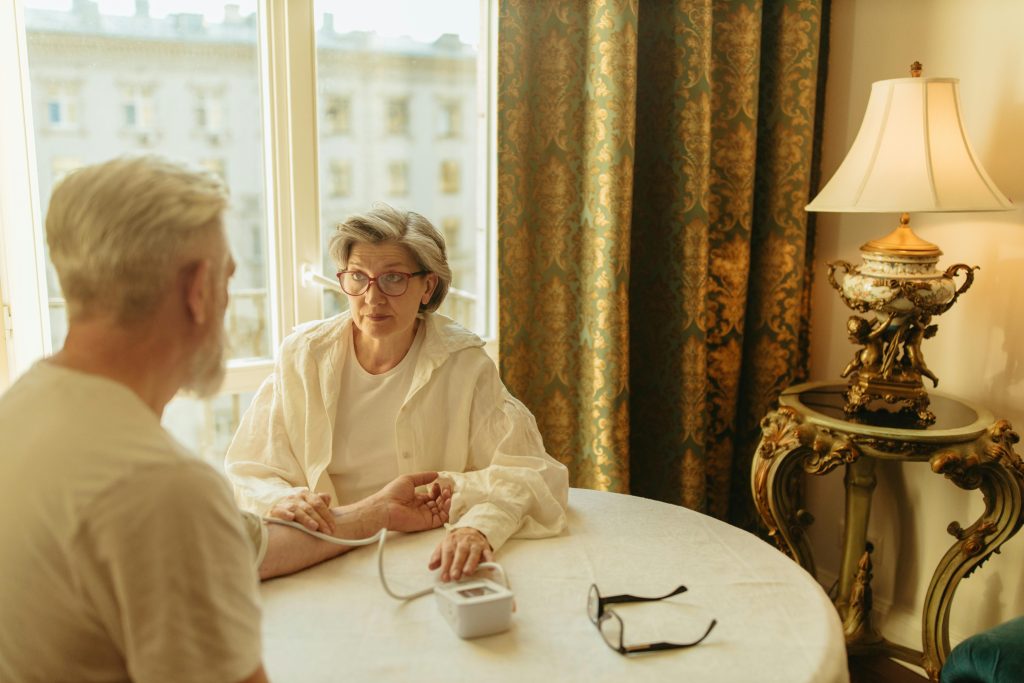
Most people think of heart health as a simple matter of the “pump” the heart itself. If the heart is beating, everything must be fine. However, in geriatric health, we must look at the “pipes.” At geriatricrehab.es, we focus on a critical, often invisible process: Cardiovascular Aging. This is the structural change in our arteries that dictates how hard the heart must work to keep us alive. Understanding the “Why” behind vascular stiffening is the first step in moving from a state of high-pressure fatigue back to a life of flexible, resilient movement.
1. The Internal Pressure Cooker
As we age, our cardiovascular system undergoes a transformation that is as much about physics as it is about biology. While we measure aging by years, our heart measures it by resistance. Cardiovascular aging is characterized by a gradual loss of elasticity in the major arteries, particularly the aorta. This isn’t just a minor inconvenience; it is a fundamental shift in the body’s hemodynamics.
In a younger body, the arteries are remarkably compliant, expanding and contracting with every heartbeat to buffer the pressure. In the senior body, these same vessels begin to resemble rigid pipes rather than flexible tubes. According to principles in Geriatric Physical Therapy (2020), this stiffening is the primary driver of isolated systolic hypertension and decreased exercise tolerance in older adults. Our goal at geriatricrehab.es is to explain that while this stiffening is a physiological reality, it is not a fixed destiny. By understanding the cellular and structural changes within your “pipes,” we can implement strategies to keep the system flowing efficiently.
2. The ‘Why It Matters’ Section: The Erosion of Resilience
Why should a senior or a caregiver care about arterial stiffness? It matters because it is the silent engine behind the Slippery Slope of Aging. When the arteries stiffen, the body’s Physiological Reserve the extra capacity we have to handle stress begins to evaporate.
In a healthy system, the heart can easily increase its output to help you climb a flight of stairs or walk to the grocery store. But when the vessels are rigid, every beat requires more effort. This constant “overwork” drains your energy “bank account.” If you have no reserve left, a simple task like walking uphill can feel like running a marathon. In the clinical setting, we see this manifest as a rapid decline in “Function,” eventually leading to “Frailty.” By addressing Cardiovascular Aging early, we are essentially protecting your reserve and ensuring you have the energy to participate in the activities you love.
3. Understanding Cardiovascular Aging through Arterial Stiffness
The primary biological mechanism behind this change is the replacement of elastin with collagen in the arterial walls. Think of elastin as the “rubber” that allows for stretch, and collagen as the “steel” that provides structure. As we age, the rubber wears out and the body replaces it with steel, making the vessels much harder.
For Professionals: This process results in a significant decrease in compliance. In a compliant aorta, the energy from the heart’s contraction is stored in the vessel wall and released during diastole (the resting phase). When compliance is lost, this “Windkessel effect” fails. This results in a much higher afterload — the pressure the heart must overcome to eject blood. This increased resistance is a direct cause of a widened pulse pressure and increased pulse wave velocity, which are hallmarks of the aging vascular system.
For Seniors and Caregivers: The “Stiff Garden Hose” Analogy
Think of your blood vessels like a brand-new garden hose. When it’s new, it’s a “flexible elastic band.” It’s soft, easy to coil, and when you turn the water on, the hose expands slightly to handle the pressure. It’s a very efficient system.
However, cardiovascular aging turns those vessels into a “stiff garden hose” that has been left out in the sun for twenty years. It has become hard, brittle, and rigid. When the “pump” (your heart) turns on, the hose can’t expand to help out. The pressure inside goes way up, and the pump has to work twice as hard just to get the water to the end of the hose. At geriatricrehab.es, we use exercise as a “biological softener” to help those old hoses regain some of their flexibility.
4. How Physical Stress Theory Influences Cardiovascular Aging
At geriatricrehab.es, we apply the Physical Stress Theory (PST) to help patients understand that the heart and vessels are adaptive tissues. They don’t just “wear out”; they change based on the level of stress they receive. Understanding these five tissue responses is the “Why” behind our exercise prescriptions.
- Death: In the cardiovascular system, this refers to myocardial infarction (heart attack) or stroke. This occurs when stress (pressure or blockage) exceeds the ultimate limit of the tissue, leading to cellular necrosis.
- Injury: This happens when the heart is forced to pump against rigid pipes for too long. Chronic high pressure causes “injury” to the delicate capillary beds in the kidneys and brain, leading to long-term organ damage.
- Increased Tolerance (Training): This is our clinical target. When we apply controlled aerobic stress, we trigger the release of enzymes that help “clean” the vessel walls and improve the heart’s stroke volume. This is how we push back against cardiovascular aging.
- Maintenance: In many seniors, the “status quo” is actually a slow decline. If you only do the activities you are comfortable with, your vessels will continue to stiffen because the maintenance threshold for older adults naturally drops over time.
- Decreased Tolerance (Atrophy): This is the most dangerous zone. Prolonged bed rest or a sedentary lifestyle causes the heart muscle to shrink and the vessels to lose their “stretch” even faster. This rapid atrophy makes it much harder to return to normal activities later.
5. The Biological Mechanism: Left Ventricular Hypertrophy
As the arteries become “stiff garden hoses,” the heart must adapt to the increased resistance. This adaptation is a physiological reality that often leads to a condition we monitor closely in geriatric rehab.
For Professionals: Because the afterload is constantly high due to low compliance in the aorta, the heart muscle specifically the left ventricle must generate more force to eject blood. This leads to left ventricular hypertrophy (LVH) . While hypertrophy in a skeletal muscle is usually good, in the heart, it makes the chamber wall thick and stiff, eventually leading to diastolic heart failure.
For Seniors and Caregivers: The “Overworked Bicep” Analogy
Imagine you are doing bicep curls with a heavy weight every single second of every single day. Your bicep would get huge, right? But it would also be exhausted, stiff, and unable to relax.
That is exactly what happens to your heart during cardiovascular aging. Because your blood vessels are stiff, your heart has to “flex” as hard as it can just to move the blood. This creates an “overworked bicep” effect in your heart. A bigger heart muscle isn’t a stronger one in this case; it’s a stiff one that can’t fill with enough blood. At geriatricrehab.es, we use aerobic exercise to lower that resistance so your heart doesn’t have to “powerlift” all day long.
6. Combating Cardiovascular Aging with Movement
The “Why” behind our recommendation for walking or cycling isn’t just about weight loss; it’s about the chemical signaling that happens when blood flows quickly through your vessels.
For Professionals: Aerobic exercise increases “laminar shear stress” on the endothelial lining of the arteries. This triggers the production of nitric oxide, a powerful vasodilator that improves vascular compliance. Over time, this signaling promotes vascular remodeling, actually reversing some of the structural stiffening by improving the elastin-to-collagen ratio.
For Seniors and Caregivers: Movement as a “Biological Softener”
Think of a leather shoe that has become hard and stiff because it hasn’t been worn in years. If you just leave it in the closet, it will eventually crack. But if you apply a softener and start walking in it, the leather becomes supple again.
Aerobic exercise is the “biological softener” for your cardiovascular system. When you get your heart rate up, you are essentially “oiling” your pipes and “massaging” your heart. It keeps the “flexible elastic bands” in your vessels from turning into “stiff garden hoses.”
7. The Professional Perspective: The ICF Framework and Cardiac Output
At geriatricrehab.es, we don’t just treat “high blood pressure”; we treat the human being using the International Classification of Functioning, Disability, and Health (ICF) Framework. This allows us to see how cardiovascular aging ripples through a senior’s entire life.
- Body Structures and Functions: We identify the structural stiffening of the aorta and the resulting decrease in vascular compliance. We monitor for signs of left ventricular hypertrophy and reduced stroke volume.
- Activities: These structural changes directly impact “Activities” specifically exercise tolerance. A senior might find that they can no longer walk the length of a shopping mall without feeling breathless, even if their muscles feel strong.
- Participation: Eventually, this leads to a decline in “participation.” A senior may stop attending church, visiting grandchildren, or gardening because the “metabolic cost” of these activities is too high for their stiffened cardiovascular system to handle.
By using the ICF model, our rehabilitation programs are designed to restore the Physiological Reserve, moving the patient from “struggling to breathe” back to “actively participating” in their community.
8. The Caregiver Corner: Monitoring the “Bounce Back” Factor
Caregivers play a vital role in identifying Cardiovascular Aging before it leads to a cardiac event. The most important metric you can track is what we call the “Bounce Back” Factor the heart’s ability to recover after exertion.
Practical Tips for Caregivers:
- The Recovery Audit: After a walk or a flight of stairs, notice how long it takes for the senior to speak in full sentences without gasping. If this time is getting longer, it is a sign that their afterload is too high and their heart is struggling to keep up.
- The “Vascular Fatigue” Check: Look for signs of “heaviness” in the legs or a sudden lack of energy in the late afternoon. This is often a sign that the heart is working so hard against “stiff pipes” that it is running out of fuel by mid-day.
- Consistent Hydration: Dehydration makes the blood thicker and harder to pump, which adds even more stress to a heart already fighting against a “stiff garden hose.”
9. Therapeutic Intervention: Aerobic Dosing for Seniors
The “How” of our treatment is aerobic exercise, but the “Why” is all about finding the “Sweet Spot” of stress. At geriatricrehab.es, we emphasize that exercise is a drug, and like any drug, the dose must be precise.
For Professionals: We use the Physical Stress Theory to prescribe a dose that hits the “Increased Tolerance” zone. This requires a heart rate that is high enough to create “shear stress” (which releases nitric oxide) but low enough to avoid the “Injury” zone where the heart muscle is strained. Consistent, low-to-moderate intensity aerobic activity is the most effective way to improve vascular compliance and reduce the structural thickness of the left ventricle.
For Seniors and Caregivers: Avoiding the “Powerlifting Heart”
We don’t want your heart to be a “powerlifter” that only knows how to strain against heavy weights. We want it to be an “endurance athlete” that knows how to flow. By staying active every day, you are teaching your heart that it doesn’t need to flex like an “overworked bicep.” You are keeping the system “oiled” and ensuring your vessels stay like “flexible elastic bands.”
10. Conclusion: A Flexible Future
The transition from the elastic resilience of youth to the structural rigidity of older age is a physiological reality, but it does not have to be a one-way street toward frailty. Throughout this guide, we have explored the “Why” behind the internal pressure cooker—from the replacement of elastin with rigid collagen in the aorta to the development of an “overworked bicep” in the heart muscle. By recognizing that the stiffening of our “pipes” increases afterload and leads to left ventricular hypertrophy, we can finally see aerobic exercise for what it truly is: a powerful “biological softener” that maintains vessel elasticity and protects our Physiological Reserve.
By applying the principles of the Physical Stress Theory, we move away from the dangerous atrophy of a sedentary lifestyle and towards the “Increased Tolerance” zone. We cannot stop the clock, but we can prevent our vessels from turning into “stiff garden hoses.” A flexible future is possible when we prioritize the movement that “oils” our system and keeps our “flexible elastic bands” strong. At geriatricrehab.es, our goal is to help you maintain the “flow” of your life by ensuring your heart and vessels are prepared for every activity, from a quiet walk in the park to a busy day with family.Don’t wait for high blood pressure or shortness of breath to limit your life. Your heart and vessels are adaptive, and it is never too late to start the “softening” process. Schedule a Comprehensive Cardiovascular Resilience and Mobility Audit at geriatricrehab.es today. Our expert team will help you “oil the pipes,” assess your vascular compliance, and create a personalized, evidence-based plan to keep your heart healthy and your body moving. Consult a specialist today at geriatricrehab.es and let’s keep your cardiovascular system flexible and strong together.













