
The most profound transformation we witness at geriatricrehab.es isn’t measured in inches or pounds, but in the look in a patient’s eyes when they realize they are no longer “fragile.” In geriatric care, we often focus on the mechanics of the body, yet the mind is the ultimate governor of physical performance. Without the right Motivation for Exercise, even the most scientifically perfect program will fail. By shifting the focus from “avoiding injury” to “pursuing mastery,” we tap into a wellspring of psychological vigor. For the aging adult, strength training is more than just muscle maintenance; it is a declaration of autonomy and a direct challenge to the societal narrative of decline.
1. The Identity Shift
In many geriatric settings, the unspoken goal is “safety through stillness.” We tell seniors to be careful, to use their walkers, and to avoid exertion. While well-intentioned, this creates a “Patient Identity”—a psychological state where the individual views themselves as a collection of risks rather than a reservoir of potential. To find lasting Motivation for Exercise, we must dismantle this identity and replace it with “Self-Efficacy.”
Self-efficacy is the clinical term for the belief in one’s ability to succeed in specific situations. When a senior begins a high-intensity program, every successful repetition of a heavy squat acts as a “micro-win” for their self-perception. They are no longer a person who might fall; they are a person who can lift. This shift in identity is the “spark plug” of rehabilitation. It moves the senior from extrinsic motivation (doing it because the doctor said so) to intrinsic motivation (doing it because they value the feeling of being strong).
2. The ‘Why It Matters’ Section: Functional Carryover of Psychological Fortitude
The confidence built in a controlled clinic environment does not stay in the clinic. We call this the “Psychology of Can-Do,” and its impact on a senior’s life is immense.
For Seniors: The Courage to Engage
- The “Fear of Falling” (FOF) Erosion: Fear of falling is often more disabling than an actual fall. It causes seniors to stay home, avoid social gatherings, and shrink their world. As you build stronger legs, your brain receives a constant stream of “Safety Signals,” allowing you to walk into a restaurant or navigate a crowded park without the paralyzing anxiety of a stumble.
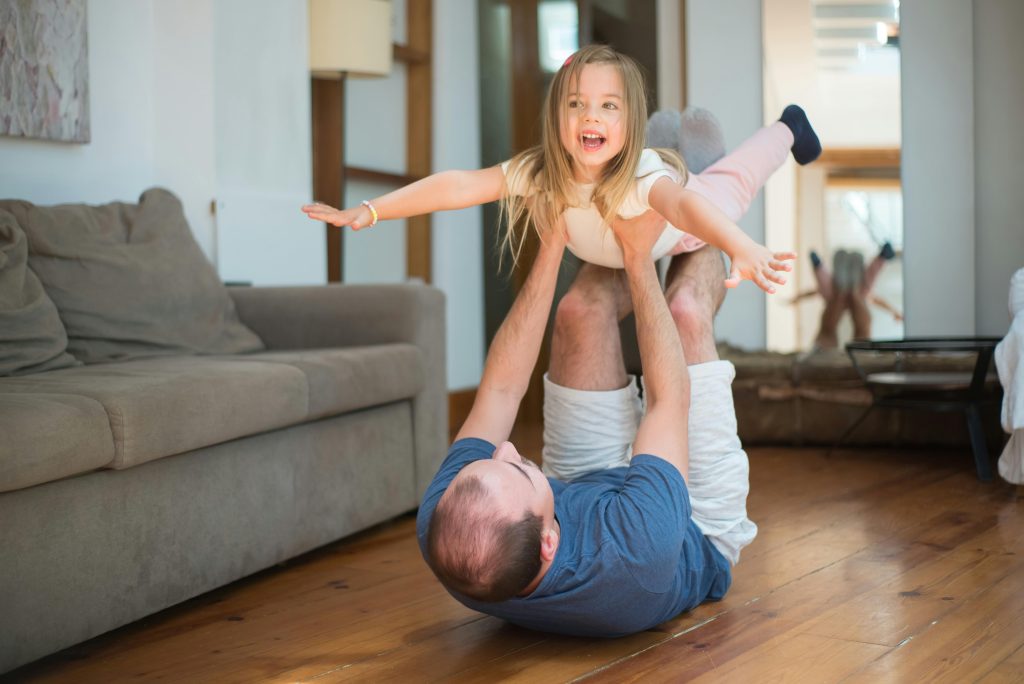
- The Grandparent “Power Move”: There is a specific psychological boost that comes from picking up a grandchild without hesitation. When you know your legs can handle 60–80% 1RM, lifting a 25lb child feels like a joyful choice rather than a risky gamble.
- Shopping with Swagger: Imagine walking through the grocery store without leaning on the cart for support. This physical independence breeds a sense of “Vigor”—a feeling of being capable and energetic that permeates every aspect of daily life.
3. The Biological Basis of Motivation for Exercise
For the allied health professional, the link between mind and muscle is deeply rooted in neurobiology. High-intensity loading does more than just tear muscle fibers; it remodels the brain.
For Professionals: BDNF and the Feedback Loop of Growth. As discussed in Geriatric Physical Therapy (2020), high-intensity resistance training stimulates the release of Brain-Derived Neurotrophic Factor (BDNF). BDNF is essentially “fertilizer” for the brain, promoting neuroplasticity and improving mood. When we prescribe loads at 60-80% 1RM, we are also triggering an increase in myofibrillar protein synthesis rates.
From a psychological perspective, this synthesis provides the tangible evidence the brain needs to sustain Motivation for Exercise. Unlike “gentle” movement, where progress is hard to measure, high-intensity training offers clear, objective feedback: “Last week I lifted 20 lbs; this week I lifted 25 lbs.” These data point to the Physical Stress Theory (PST) in action—the brain sees the adaptation, receives the dopamine reward of achievement, and reinforces the desire to continue the “Overload” process.
Take-Home Tips for Caregivers:
- The “Victory Log”: Help your loved one track their progress. Don’t just record the weight; record how it made them feel. Use phrases like, “You stood up much faster today,” to reinforce their growing sense of mastery.
- Safety Spotting for Confidence: When they perform a “Sit-to-Stand” at home, stand nearby but don’t “hover.” Hovering signals that you think they are fragile. Instead, use “Active Spotting”—stay within reach but allow them to struggle slightly through the rep. This “productive struggle” is where confidence is born.
- Celebrate Effort, Not Just Result: If they are experiencing Motivation for Exercise lulls, remind them of how much their “Functional Carryover” has improved. Remind them of the first time they walked to the mailbox without a cane.
4. How High Intensity Drives Sustained Motivation for Exercise
There is a common misconception that seniors prefer “easy” workouts. In reality, boredom is a primary reason for drop-out in geriatric fitness. When a program lacks challenge, it also lacks the physiological reward system that sustains long-term motivation for exercise.
For Professionals: The “Flow State” and PST According to the Physical Stress Theory (PST), adaptation only occurs when the stressor is sufficient. From a psychological standpoint, this “Overload Zone” (60–80% 1RM) is where the “Flow State” happens. In this state, the task is difficult enough to require total focus but achievable enough to provide a sense of mastery.
When we prescribe high-intensity training, we are giving the senior a problem to solve. “Can I lift this?” The moment they do, the brain releases a cocktail of dopamine and endorphins. This neurochemical reward is far more powerful for maintaining Motivation for Exercise than a low-intensity walk. We aren’t just building muscle; we are building a “reward-seeking” behavior that views effort as a pathway to pleasure.
5. Common Myths of Fragility: “I’m Too Old to Push Myself”
Staff Tip for Length: Breaking the “Learned Helplessness” Cycle. Many seniors suffer from “learned helplessness”—a psychological condition where they have been told so often that they are “at risk” that they stop trying to be capable.
- Myth: “Pushing myself will cause a heart attack or a break.”
- The Reality: Under the supervision of a physical therapist, high-intensity loading is a safe and effective way to strengthen the heart and skeleton. The real danger is the “sedentary spiral” that occurs when we stop pushing.
- Myth: “I should just do enough to get by.”
- The Reality: “Getting by” is a recipe for sarcopenia. We need to aim for myofibrillar protein synthesis rates that exceed the rate of natural age-related breakdown. This requires intensity, not just attendance.
- Myth: “Intensity is for young people.”
- The Reality: Intensity is actually more important for seniors. While a 20-year-old can stay fit with moderate effort, a 70-year-old must use high-intensity stimulus to tell their body that it is still “in the game.”
6. The “Self-Efficacy” Scale: Measuring Mental Gains
At geriatricrehab.es, we don’t just track how much you lift; we track how much you believe you can lift. One of the primary tools we use is the Falls Efficacy Scale-International (FES-I).
Moving from Extrinsic to Intrinsic Goals. In the early weeks, Motivation for Exercise is often “extrinsic”—the senior is there because their child or their doctor insisted. However, as they move through our Month 3 protocol, we look for the shift to “intrinsic” motivation.
- Extrinsic: “I’m doing this so I don’t get sent to a nursing home.”
- Intrinsic: “I’m doing this because I love the feeling of being powerful and seeing what my body can do.” This transition is the hallmark of a successful rehabilitation program. When a senior starts asking, “Can we add 5 more pounds today?” we know we have won the psychological battle.
Take-Home Tips for Caregivers:
- The “I Can” Prompt: Instead of saying, “Be careful, let me help you,” try saying, “You’ve been getting so strong in your sessions, do you think you can handle this step yourself?”
- Safety Spotting for Empowerment: During a home “Sit-to-Stand,” if your loved one hesitates, don’t grab them immediately. Stay in your “Safety Spotter” stance (directly behind or slightly to the side) and give a verbal cue: “Drive through your heels; you have the strength.”
- The Language of Trainee vs. Patient: Refer to their exercise time as “training” or “practice” rather than “therapy.” A “trainee” is someone pursuing a goal; a “patient” is someone being treated for a deficit. This subtle shift in language does wonders for motivation for exercise.
7. Vigor and Vitality: The Endocrine Response to Loading
When we discuss Motivation for Exercise, we often treat it as a purely “mental” hurdle. However, motivation has a powerful hormonal component. High-intensity resistance training acts as a systemic modulator for the aging endocrine system.
The “Feel-Good” Chemistry of Power. Heavy resistance training (at the 60–80% 1RM threshold) modulates the body’s cortisol levels and stimulates the release of growth-related hormones. For seniors, this hormonal shift is a primary driver of “Vigor”—the psychological state of feeling energetic, alert, and physically capable.
As you engage in these high-intensity bouts, the increase in myofibrillar protein synthesis rates isn’t just building muscle; it’s reinforcing a “Will to Live.” There is a documented clinical link between muscular power and a reduction in depressive symptoms in the elderly. When your body feels strong and your “metabolic engine” is humming, the world feels more accessible, and your psychological drive to participate in life skyrockets.
8. The Caregiver Corner: Encouraging Effort Without Pressure
For caregivers, the psychological challenge is balancing “safety” with “autonomy.” It is a natural instinct to want to “rescue” a loved one during a difficult task, but over-assisting can inadvertently crush a senior’s Motivation for Exercise by reinforcing the idea that they are incapable.
The Psychology of Positive Risk-Taking. We encourage caregivers to adopt the “Safety Spotter” mindset. Your goal is not to do the work for them, but to provide a secure environment where they can safely fail or struggle.
- Safety Spotting for Empowerment: During home sit-to-stand exercises, position yourself behind the loved one. Instead of pulling them up by their hands, place your hands lightly on their hips to guide their center of gravity. This allows the senior to feel the “effort” of their own muscles working, which is essential for building confidence.
- The “Wait and See” Rule: If your loved one is struggling to rise from a chair or navigate a step, wait three seconds before offering help. Give their nervous system time to “recruit” those Type II fibers. Success achieved after a brief struggle provides a much larger psychological boost than a task made easy by a caregiver’s intervention.
9. A 12-Week Roadmap: Building the “Armor of Confidence”
Confidence is not a switch; it is a muscle that must be trained. This 12-week protocol focuses on the psychological milestones that run parallel to physical gains.
Phase 1: Overcoming Kinesiophobia (Weeks 1-4)
- Goal: Moving from “I’m afraid to move” to “I am safe when I move.”
- Intensity: 40-50% 1RM.
- The Psychological Win: Proving that movement does not equal pain. By the end of Week 4, the senior should feel comfortable in the gym environment and less anxious about “breaking” something.
Phase 2: The “Evidence” Phase (Weeks 5-8)
- Goal: Witnessing tangible gains through the Intensity Mandate.
- Intensity: 60-70% 1RM.
- The Psychological Win: This is where Motivation for Exercise becomes self-sustaining. The senior sees the numbers on the weights going up and notices they are walking faster. The “Identity Shift” from patient to trainee begins here.
Phase 3: Autonomy and Mastery (Weeks 9-12)
- Goal: Establishing a “Can-Do” lifestyle.
- Intensity: 75-80% 1RM.
- The Psychological Win: The senior begins to set their own goals. They no longer ask, “What do I have to do?” and start saying, “I want to be able to lift this because I want to garden this weekend.” This is the peak of Motivation for Exercise —complete autonomy.
10. Conclusion: Forging a Resilient Spirit
At geriatricrehab.es, we have learned that while we train the body, we are actually rehabilitating the spirit. The true success of a high-intensity program isn’t just the ability to lift more weight; it is the newfound “vigor” that allows a senior to re-engage with the world. When you stop fearing your own body, your world stops shrinking.
By applying the Physical Stress Theory and pushing towards that 60-80% 1RM threshold, you are doing more than just building muscle fibers; you are building a psychological “armor of confidence.” You are proving to yourself every day that you are not a bystander in your own life. Every heavy rep is a vote for your independence and a rejection of the “fragility” narrative. Strength is the foundation upon which all other freedoms are built.
Are you tired of feeling “fragile” and ready to reclaim your confidence? It’s time to move from “safe” to “strong.” At geriatricrehab.es, we offer a specialized “Confidence & Strength Assessment”—a clinical evaluation that bridges the gap between your physical potential and your mental resolve. Consult a specialist today at geriatricrehab.es to start building the “Armor of Confidence” you deserve.













