
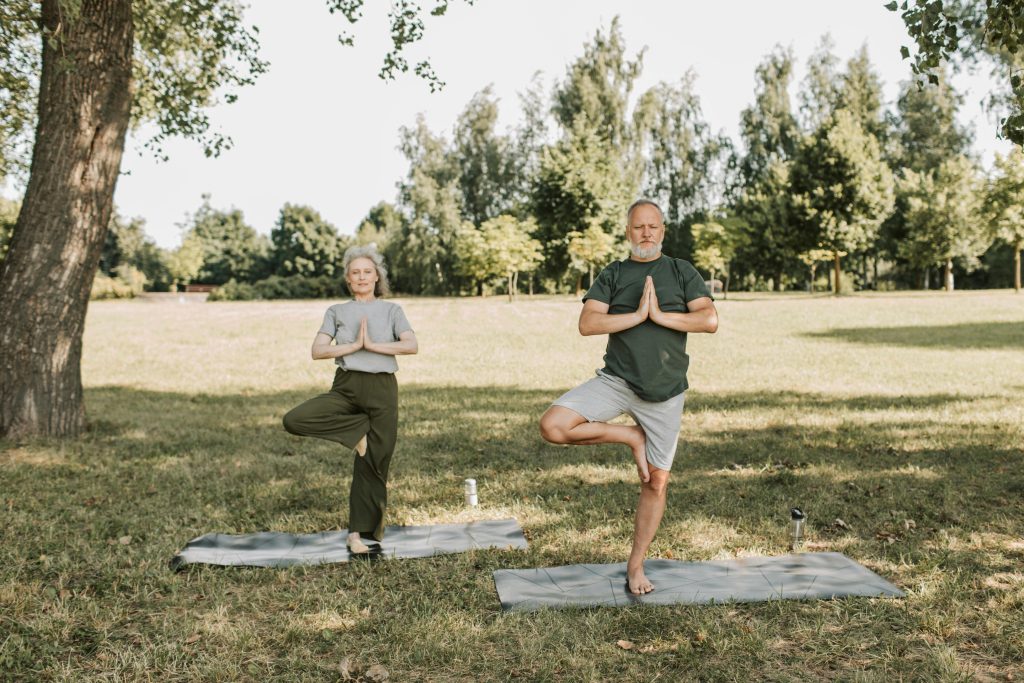
In the clinical framework of geriatric rehabilitation, a fall is rarely a single “accident.” Instead, it is the result of a complex interplay between a person’s internal physiology and their external world. According to Geriatric Physical Therapy (2020), understanding the multidimensional nature of balance is the cornerstone of effective Fall Prevention in Seniors. By identifying the biological “leaks” in our system and the environmental hazards in our homes, we can stop the descent down the Slippery Slope of Aging, refill our Physiological Reserve, and reclaim the Vigor needed to live an active, independent life.
1. Beyond “Clumsiness”
In the clinical framework of Geriatric Physical Therapy (2020), aging is visualized as a journey along the Slippery Slope of Aging. At the top of the slope, we have an immense Physiological Reserve—the “extra” strength and balance that allow us to trip on a rug and catch ourselves without a thought. However, as we move down the slope, that margin for error—our Safety Buffer—begins to shrink.
Falls are often dismissed as “just getting old” or “being clumsy,” but this is a dangerous myth. A fall is a clinical event with a cause. By shifting our focus to proactive Fall Prevention in Seniors, we move from a state of frailty to a state of Vigor. Rehab isn’t just about avoiding a hospital visit; it’s about having the confidence to walk in your garden, carry your groceries, and visit your family without the constant, paralyzing fear of the floor moving beneath you.
2. The Biological Pillar: Intrinsic Fall Prevention in Seniors
From a Professional Perspective, intrinsic factors are the internal changes within the body that contribute to instability. These are the “biological leaks” that drain our reserve. They typically fall into three categories:
- Sensory Decline: This includes vision changes, decreased “feeling” in the feet (proprioception), and a sluggish inner ear (vestibular system).
- Musculoskeletal Weakness: Specifically, the loss of power in the “anti-gravity” muscles—the quads and glutes.
- Neurological Processing: A delay in the brain’s ability to recognize a trip and send a “step” command to the legs.
Managing these internal risk factors requires the SAID Principle (Specific Adaptation to Imposed Demands). If we want to stay steady on our feet, we must challenge the balance system with specific “doses” of exercise.
Take-Home Tip for Caregivers: Watch for “furniture walking.” If a senior is touching tables and walls as they navigate a room, it is a sign that their internal balance systems are struggling. This is the time to intervene with a targeted strength program.
3. The Environmental Pillar: Extrinsic Risk Factors
While biological factors are about the “who,” extrinsic factors are about the “where.” Even a senior with high Vigor can be brought down by a poorly designed environment. Common extrinsic hazards include:
- The “Trippers”: Loose area rugs, oxygen tubing, or a pet running underfoot.
- The “Sliders”: Wet bathroom tiles or wearing only socks on hardwood floors.
- The “Dim-Out”: Poor lighting in hallways and stairwells that hides the edge of a step.
- Polypharmacy: Taking four or more medications is a significant extrinsic risk, as drug interactions often cause dizziness or “orthostatic hypotension” (a drop in blood pressure when standing up).
Extrinsic factors are often the easiest to fix, providing an immediate expansion of the Safety Buffer. By clearing the “extrinsic clutter,” we ensure that the senior can focus their energy on movement, not just obstacle avoidance.
Take-Home Tip for Caregivers: Perform a “Shadow Audit.” Walk through the home at night. If there are dark patches on the floor or shadows on the stairs, your loved one is at risk. Plug-in motion-sensor nightlights are one of the cheapest and most effective tools in our safety kit.
4. Functional Training: The Mobility Audit
In the field of geriatric rehabilitation, we move beyond generic exercises to a targeted Mobility Audit. This process identifies the specific “land struggles” where a senior’s Physiological Reserve is being drained by daily tasks. For the senior, Vigor is the ability to get in and out of a car or a low sofa without needing a “boost” from another person.
- The “Couch Launch” Struggle: Many seniors struggle to stand from soft, low surfaces. This isn’t just a leg strength issue; it’s a failure of the Safety Buffer. The corrective dose is the Sit-to-Stand Drill, focusing on “power” by standing up quickly and sitting down slowly.
- The “Car Entry” Challenge: Navigating the narrow space of a car door requires both balance and trunk rotation. Following the SAID Principle, we train for this by practicing lateral steps combined with reaching, ensuring the senior has the coordination to manage transit without a trip.
- The “Staircase Fatigue”: If a senior feels winded or shaky halfway up the stairs, their reserve is empty. We train this using Step-Up Intervals, gradually increasing the “dose” to ensure they can navigate their home safely at the end of a long day.
5. Professional Deep-Dive: Sensory Organization Testing (SOT)
For the Allied Health Professional, the gold standard for understanding why a patient is unstable is Sensory Organization Testing (SOT). The human brain relies on three primary inputs for balance: Visual (eyes), Somatosensory (feet/ankles), and Vestibular (inner ear).
The SOT systematically isolates these systems through six distinct conditions to identify where the “communication breakdown” is occurring:
- Condition 1 (Baseline): All systems available.
- Condition 2 (No Vision): Eyes closed; tests the feet and inner ear.
- Condition 3 (Visual Conflict): The visual environment moves; tests if the patient is “visually dependent.”
- Condition 4 (Ankle Challenge): The floor tilts; tests if the patient can ignore “lying” data from their feet.
- Conditions 5 & 6 (The Vestibular Test): Both the floor and eyes are challenged; this forces the brain to rely solely on the inner ear.
Clinical Pearl: If a senior fails Conditions 5 and 6, they have a vestibular deficiency. In Fall Prevention in Seniors, we must then provide a “substitution” strategy, teaching them to use their eyes and feet more effectively while we work to habituate the inner ear.
6. Balance Strategies: The Body’s Emergency Brake in Fall Prevention in Seniors
When a senior encounters a nudge or a slip, the nervous system must employ a Balance Strategy to stay within the Safety Buffer. As a professional, identifying which strategy a senior “defaults” to is crucial for effective Fall Prevention in Seniors.
- The Ankle Strategy: For small sways (e.g., standing in a moving elevator), the muscles around the ankle fire to pull the body back to center. This is the most efficient, low-energy strategy.
- The Hip Strategy: If the “nudge” is larger or the surface is unstable (like a plush carpet), the brain switches to the hips, thrusting them to move the center of mass. Many seniors skip the ankle strategy and go straight to the hips, which can look “shaky.”
- The Stepping Strategy: When the center of mass moves completely outside the base of support, the body must take a step. This is the “emergency brake.”
In rehab, we use “perturbation training”—gentle, controlled pushes—to retrain the senior to choose the right strategy. By practicing these transitions, we ensure the senior doesn’t “over-react” to a small bump, which is often what leads to a secondary fall.
7. Assistive Devices: A Buyer’s Guide for Independence
When we talk about Fall Prevention in Seniors, an assistive device is often the most controversial topic. Many seniors view a cane or walker as a “white flag” of surrender to the Slippery Slope of Aging. We must address the Psychology of the Cane: helping a senior accept a device means reframing it as a “performance enhancer” rather than a sign of weakness. A properly chosen tool expands the Safety Buffer, giving the user the Vigor to walk to the park or attend a family wedding without fear.
The Buyer’s Guide to Stability
- The Single-Point Cane: Best for those with mild “intrinsic” weakness who just need a “sensory anchor.” It provides a third point of contact with the ground to tell the brain where the floor is.
- The 2-Wheeled (Front-Wheeled) Walker: The gold standard for indoor safety. Because the back legs slide, it provides a stable, “braked” feel that won’t roll away from the user during a dizzy spell.
- The 4-Wheeled Rollator: Excellent for community mobility. It features a seat for rest breaks but requires higher “executive function” to manage the hand brakes and prevent the vehicle from rolling too fast on inclines.
- The Hemi-Walker: A wide-based, four-legged device used with one hand. It offers significantly more stability than a standard cane for those with one-sided weakness.
8. Case Study: Refilling the Reserve
Mrs. J, a 78-year-old retired librarian, began avoiding the supermarket after a “near-miss” where she tripped on a floor mat. Her world was shrinking, and she was sliding down the Slippery Slope. Her Physiological Reserve was so low that the thought of navigating crowds left her exhausted.
The Intervention: We applied the SAID Principle, moving her from simple leg lifts to “supermarket-simulated” walks in the clinic. We added “visual noise”—moving objects and scanning tasks—to challenge her vestibular system while she walked. We also fitted her with a 2-wheeled walker to restore her Safety Buffer.
The Result: Within six weeks, Mrs. J was back in the supermarket. The walker wasn’t a “shackles”; it was her passport to independence. By addressing the multidimensional risks, she reclaimed her Vigor and proved that a fall doesn’t have to be the end of an active life.
9. Caregiver’s Tool: The Environmental Audit
As a caregiver, you are the “architect” of the Safety Buffer. While the physical therapist works on the body, you can eliminate “extrinsic” hazards today. Use this room-by-room checklist to ensure your home supports Fall Prevention in Seniors.
The “Clear Path” Room-by-Room Audit
- The Living Room: Remove all throw rugs or secure them with heavy-duty double-sided tape. Ensure there is a “3-foot clear path” through the furniture for a walker or cane.
- The Kitchen: Place frequently used items (mugs, coffee, spices) at waist-level. Reaching high or bending low can cause a shift in the center of mass that triggers a fall.
- The Bathroom: Install “high-contrast” grab bars (e.g., a dark bar against a white wall). A white-on-white bathroom is a “visual whiteout” for a senior with poor vision.
- The Bedroom: Use a nightstand lamp with a “touch” sensor. Fumbling for a tiny switch in the dark is a major fall risk during midnight bathroom trips.
- The Entryway: Ensure there is a sturdy chair near the door so the senior can sit while putting on or taking off shoes.
10. Conclusion: Reclaiming Vigor through Fall Prevention in Seniors
In the clinical framework of geriatric rehabilitation, we move from the “scary” unpredictability of accidents to a proactive state of readiness. By understanding the multidimensional nature of balance—addressing the biological “leaks” in our physiology and the extrinsic hazards in our environment—we can systematically push back against the Slippery Slope of Aging. Whether you are a professional using the SAID Principle to “re-weight” a patient’s sensory inputs or a senior reclaiming your Safety Buffer to walk into the garden, remember that safety is a skill that can be trained. Fall Prevention in Seniors isn’t about shrinking your world; it’s about expanding your freedom and ensuring you can move with Vigor for years to come.
Caregiver Focus: The Safety Spotter’s Guide
Assisting a loved one with balance practice requires a blend of physical technique and “Vigor-focused” encouragement. Use these principles to be a world-class safety spotter without taking away their independence:
- The “Nose Over Toes” Assist: When helping a loved one stand from a chair, do not pull on their hands. Instead, stand to the side and provide a steadying hand on a gait belt. Encourage them to lean “nose over toes” to shift their center of mass forward over their feet, which naturally engages the “anti-gravity” glutes and quads.
- The “Shadow” Position: When spotting a walk, stand slightly behind and to the “weak” side of the senior. Stay close enough to provide a tactile “anchor” if they sway, but far enough away that they have the space to employ their own Balance Strategies (Ankle or Hip).
- The “Clear the Deck” Protocol: Before starting any exercise, perform a mini-audit. Ensure the floor is clear of pets, cords, and “sliders” (like loose socks). Your role is to provide a “sterile” extrinsic environment so they can focus entirely on their intrinsic training.
By integrating these strategies into your daily routine, you are effectively refilling the Physiological Reserve. You are ensuring that your loved one doesn’t just “stay safe,” but lives with the confidence and Vigor to look the world in the eye.
Are you ready to identify the hidden risks in your home or health? Don’t wait for a stumble to take action. Book a comprehensive Clinical Fall Risk Assessment at geriatricrehab.es today. Let’s build your Safety Buffer together.













