
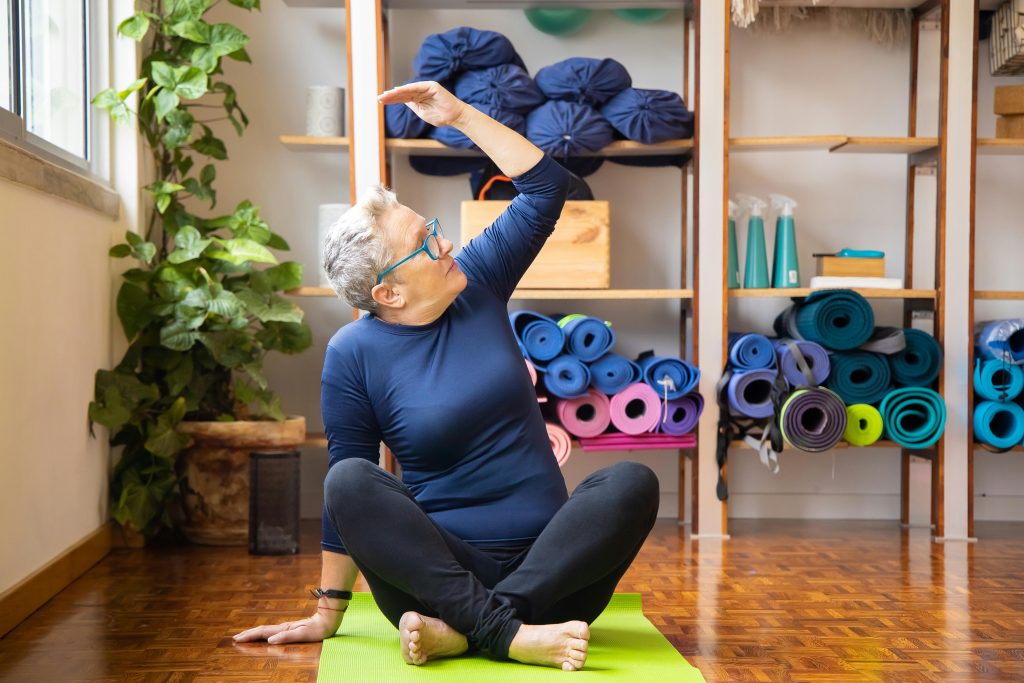
Before we address the clinical strategies for skeletal resilience, it is vital to understand that the human skeleton is not a permanent fixture but a living tissue in a state of constant flux. While we often view aging as a slow process of inevitable decay, the science of mechanobiology tells a different story, one of adaptation and hidden potential. By understanding the “why” behind bone remodeling, we can move from a place of fear and fragility to a position of informed action. This article outlines how targeted physical stress acts as a biological signal, instructing your body to reinforce its internal architecture and reclaim a foundation of strength.
1. The Living Lattice: Reclaiming Bone Density in Seniors
For many older adults, a diagnosis of low bone mass feels like an irreversible sentence of fragility. However, the skeletal system is not a static scaffolding; it is a dynamic, living tissue that responds to the environment until the very last breath. To maintain independence, we must shift our focus toward improving bone density in seniors through a deeper understanding of mechanobiology.
While aging naturally alters the skeletal landscape, the “Why” behind bone loss reveals that we possess biological levers to stimulate growth. By optimizing Bone Density in Seniors, we move from merely “managing” a diagnosis to actively hardening the frame against the risks of fractures and functional decline. This proactive approach relies on the principle that bone is a metabolic organ constantly sampling its environment and adjusting its strength based on the loads it encounters.
2. The Cellular Dance: Osteoblasts vs. Osteoclasts
Bone is constantly being “remodeled” through a sophisticated balance of demolition and construction. This process is governed by a specialized “remodeling unit” consisting of two primary cell types: osteoclasts and osteoblasts.
- The Demolition Crew (Osteoclasts): These cells are responsible for bone resorption. They secrete acids and enzymes to break down old, brittle, or micro-damaged bone tissue.
- The Construction Crew (Osteoblasts): These cells follow the demolition crew, laying down an unmineralized matrix (osteoid) that eventually hardens into new bone mineral, primarily calcium and phosphate.
In a younger body, these two crews work in perfect harmony. However, as we age particularly following hormonal shifts like menopause or andropause, the “demolition crew” begins to outpace the “construction crew.” This imbalance leads to a thinning of the trabecular (honeycomb-like) bone and a porousness in the cortical (outer shell) bone. This cellular mismatch is the primary driver of reduced bone density in seniors. To stop this “leak” in the skeletal bank account, we must provide the body with a reason to hire more construction workers.
3. Mechanotransduction: How Bone “Hears” Exercise
How do we signal the body to build more bone? The answer lies in a remarkable physiological process called mechanotransduction. This is the mechanism by which our bone cells, specifically osteocytes, which act as the “sensors” embedded within the bone, detect physical mechanical strain and convert it into biochemical signals for growth.
Imagine the bone as a fluid-filled sponge. When you lift a heavy weight or step firmly, the bone slightly deforms, causing fluid to flow through tiny channels (canaliculi). The osteocytes sense this “shear stress” and respond by suppressing the demolition crew and activating the construction crew.
This is the “why” behind bone-building exercise. Bone cells are indifferent to “gentle” movement because the fluid flow generated is too weak to reach the minimum effective strain threshold. To improve bone density in seniors, we must provide a “loud” enough mechanical signal. Without this “overload,” the bone assumes it is no longer needed to support a heavy load and continues its natural process of resorption.
Take-Home Tip for Caregivers: The “Stomp” Strategy.
Bone doesn’t react to slow, gliding movements. Encourage your loved one to incorporate “impact moments” throughout the day. If they are safe and steady, have them “stomp” their feet 10 times, twice a day, as if they are trying to break a small twig under their heel. This sudden, sharp force provides a much stronger signal to the bone cells than an hour of leisurely walking.
4. The ‘Why it Matters’ Section: PST and the Skeletal Threshold
To understand how to reverse bone loss, we must apply the Physical Stress Theory (PST). This theory suggests that tissues adapt specifically to the level of stress placed upon them. For bone, there is a very specific “threshold” of strain required to move from the atrophy or maintenance zones into the increased tolerance zone.
In many seniors, the “Slippery Slope of Aging” is accelerated because their daily activities fall below this threshold. If the skeleton is only subjected to “underload” (sedentary behavior), the body perceives the bone mineral as an unnecessary metabolic expense and leaches it into the bloodstream. Conversely, when we apply “overload” stress that exceeds what the bone is accustomed to we trigger the increased tolerance response. This is the physiological “Why” behind high-intensity rehab; we are intentionally pushing the senior’s tissues into a training zone to “fatten” their physiological reserve, ensuring their frame can handle a fall without shattering.
5. Professional Perspective: Vascular Links to Bone Density in Seniors
For the healthcare professional, bone health must be viewed through a systemic lens. As we age, we often see a decrease in arterial compliance the ability of the blood vessels to expand and contract. This arterial stiffening increases afterload, forcing the heart to work harder and often resulting in left ventricular hypertrophy.
There is a profound link between this vascular stiffening and bone density in seniors. High afterload and the chronic low-grade inflammation associated with cardiovascular “stiffness” actually stimulate osteoclast activity (the demolition crew). When we prescribe aerobic exercise, we are using it as a “biological softener.” By improving vessel elasticity and reducing systemic resistance, we create a more favorable environment for bone mineral deposition. Movement, therefore, serves a dual purpose: it lowers the workload on the heart while simultaneously signaling the skeleton to reinforce its lattice.
6. The Caregiver Corner: Building the “Living Armor”
Explaining bone health to family members requires moving away from the “fragile” mindset. Many caregivers fear that any intensity will cause a break, but the opposite is true: lack of intensity causes the brittleness that leads to fractures.
Think of your loved one’s blood vessels and bones like a garden hose. An aging, sedentary body is like a stiff garden hose left in the sun it becomes brittle and cracks under pressure. We want to turn that hose back into a flexible elastic band. By encouraging “meaningful stress,” we are helping the body build a “living armor.” We aren’t just protecting them from the environment; we are strengthening them to handle the environment.
Take-Home Tip for Caregivers: The “Chair Rise” Challenge.
One of the best ways to load the hips and spine the most common fracture sites is the sit-to-stand maneuver. Instead of helping your loved one out of their chair, have them do 5 “power rises” (standing up as quickly as they safely can) before they leave the table. This quick burst of power creates the mechanical “huff and puff” that bones need to stay strong.
7. The Five Tissue Responses: The PST Applied to Bone
To understand the resilience of the aging body, we must analyze how the five tissue response zones of the Physical Stress Theory dictate the fate of the senior skeleton. Bone does not simply exist; it dynamically reacts to the specific ‘dose’ of stress it receives, shifting between maintenance, growth, or decay based on physical demand.
- Death (Avascular Necrosis): This occurs when blood flow to the bone is cut off, often after a hip fracture or due to certain medications. Without the “biological softener” of blood flow, the bone tissue dies and collapses.
- Injury (Stress Fractures): If we apply a “training load” too quickly, the demolition crew (osteoclasts) removes bone faster than the construction crew (osteoblasts) can replace it. This creates micro-cracks.
- Increased Tolerance (The Goal): By applying a load that is 10% higher than what the senior is used to, we trigger bone density in seniors. The bone adapts by becoming thicker and more mineralized.
- Maintenance: This is where most seniors live. Walking the dog or doing light housework provides enough stress to keep the bone from disappearing, but not enough to make it stronger.
- Atrophy (The Slippery Slope): In a state of “bed rest” or extreme sedentary behavior, bone mineral is leached out at an alarming rate. Within just a few days of total inactivity, the body begins dumping calcium into the urine.
8. Wolff’s Law: The Science of “Overload” for Bone
Wolff’s Law is the clinical foundation of geriatric strength training. It states that bone in a healthy person or animal will adapt to the loads under which it is placed. If loading on a particular bone increases, the bone will remodel itself over time to become stronger to resist that sort of loading.
For bone density in seniors, we must distinguish between “weight-bearing” and “weight-loading.” Walking is weight-bearing, but for a senior who has walked their whole life, it is no longer an “overload.” To stimulate new growth in the femoral neck (the hip) and the lumbar spine, we must utilize High-Intensity Resistance Training (HIRT). Citing Geriatric Physical Therapy (2020), the most effective loads are those that are “dynamic, high-magnitude, and applied in varying directions.” This means that lifting a heavy weight 5–8 times is far more effective for bone health than lifting a light weight 30 times.
9. Nutrition and Complexity: The Bricks and the Blueprint
Even with the perfect rehab content strategy, bone cannot rebuild without the proper raw materials. We often think of bone as just “calcium,” but it is actually a protein matrix hardened by minerals.
- The Bricks (Calcium & Phosphorus): These minerals provide the compressive strength and hardness of the skeletal frame. Without them, bones become soft and pliable. However, bricks piled on a sidewalk do not make a wall; they must be transported and laid correctly.
- The Delivery Truck (Vitamin D & K2): Vitamin D is the essential vehicle that allows the gut to absorb calcium into the bloodstream. Without it, even a high-calcium diet is useless. Furthermore, Vitamin K2 acts as the “GPS,” ensuring the calcium is directed into the bones and teeth rather than accumulating in the arteries—a process vital for maintaining vascular compliance.
- The Blueprint (Protein): This is the most overlooked aspect of bone health. Bone is approximately 50% protein by volume. This collagen-based matrix provides “tensile strength,” allowing bone to give slightly under pressure rather than shattering. If a senior is malnourished or protein-deficient, the bone loses this elasticity and becomes brittle like dry, weathered wood.
We must also be aware of Adverse Drug Reactions (ADRs). Medications like glucocorticoids (for inflammation) or certain proton pump inhibitors (for acid reflux) can interfere with bone metabolism, effectively “handcuffing” the construction crew. Allied health professionals must perform a thorough medication review to ensure the senior isn’t fighting an uphill biological battle.
10. Conclusion: Strategically Improving Bone Density in Seniors
As we conclude this exploration, the message is clear: your bones are a reflection of the demands you place upon them. A diagnosis of osteoporosis or osteopenia is not a reason to stop moving; it is a clinical mandate to move with purpose and intensity. By understanding the “Why” behind mechanotransduction and the Physical Stress Theory, we can move the senior skeleton from a state of atrophy back into a state of increased tolerance.
Improving bone density in seniors is a 12-month commitment to consistency. By using exercise as a “biological softener” for the vascular system and a “mechanical hammer” for the skeletal system, we ensure that the final chapters of life are supported by a frame that is resilient, autonomous, and strong.
Ready to build your “Living Armor”? Consult a board-certified geriatric physical therapist at geriatricrehab.es to develop a personalized, high-intensity loading program that is safe, effective, and tailored to your specific bone health needs.













