
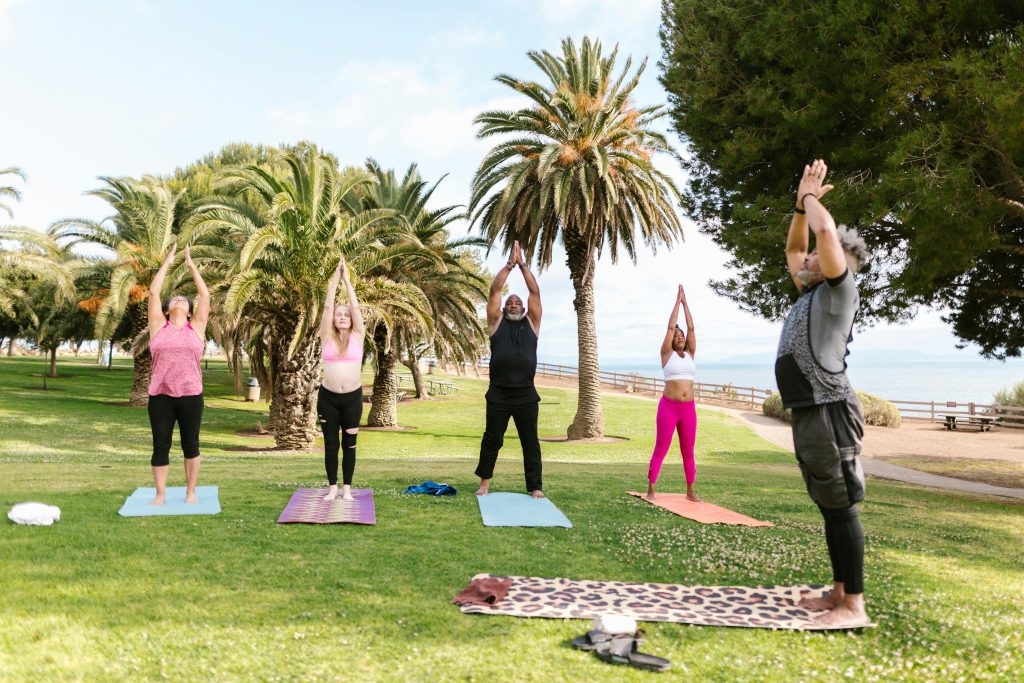
In the world of senior fitness, the “core” is often misunderstood as a quest for abdominal aesthetics. However, at geriatricrehab.es, we define the core as the central transmission system of the human body. For the aging adult, Core Exercises for Seniors are not about “six-pack abs”; they are about creating a stable, pressurized cylinder that protects the spinal cord, supports the internal organs, and allows the power generated by the legs to be safely transferred to the arms. Without a resilient trunk, even the strongest legs cannot prevent a fall, and the simplest reach for a grocery shelf can lead to a debilitating back strain. To protect the aging spine, we must shift our focus from “gentle stretching” to high-intensity stability training.
1. The Central Anchor of Independence
The “core” is a complex architectural system comprising the diaphragm at the top, the pelvic floor at the bottom, and a wrap-around network of muscles including the transversus abdominis, multifidus, and obliques. In the geriatric population, this system often suffers from “neuromuscular amnesia.” As activity levels decrease, the brain loses its ability to pre-emptively stiffen the trunk before a movement occurs.
When this happens, the spine is left vulnerable. Every time a senior lifts a laundry basket or steps off a curb, the vertebrae are subjected to “shear forces” that the muscles should be absorbing. Core Exercises for Seniors are designed to re-educate these muscles to act as a biological back brace. By restoring this central anchor, we don’t just protect the spine; we unlock the potential for the rest of the body to move with speed and confidence.
2. The ‘Why It Matters’ Section: Functional Carryover
We prioritize the trunk because of a fundamental law of physics: “Proximal Stability for Distal Mobility.” You cannot move your arms and legs effectively if your center is soft.
For Seniors: Why Your Core is Your “Safety Harness”
- The “High Shelf” Reach: When you reach for a heavy jar in the kitchen, your core muscles must fire before your hand even moves. This prevents your spine from overextending and keeps you balanced.
- Gardening and Housework: Activities that involve bending and twisting, like weeding or vacuuming, are the leading causes of back “tweaks.” A strong core acts as a shock absorber, taking the pressure off your discs and putting it onto your muscles.
- Steady Walking: A weak core leads to “trunk sway”—the side-to-side rocking motion that makes a person look and feel unstable. Strengthening the core narrows your gait and makes every step feel more secure.
3. The Role of Core Exercises for Seniors in Spinal Decompression
For the allied health professional, the core is the primary mechanism for managing Intra-Abdominal Pressure (IAP). When the core muscles contract effectively, they create a pressurized “balloon” inside the abdominal cavity that physically offloads the lumbar spine.
For Professionals: High-Intensity Loading and Myofibrillar Protein Synthesis. As outlined in Geriatric Physical Therapy (2020), the “maintenance zone” is insufficient for reversing age-related spinal instability. To protect against degenerative changes, we must apply the Physical Stress Theory (PST). This means utilizing Core Exercises for Seniors that reach the 60-80% 1RM threshold. At this intensity, we trigger myofibrillar protein synthesis rates in the deep postural stabilizers. Traditional “bird-dogs” or light pelvic tilts are often sub-threshold for the senior who needs to carry a 15lb grandchild. We must progress to high-tension isometrics and functional carries to ensure the trunk can withstand the high-intensity demands of real-life independence.
I will now move into Sections 4, 5, and 6. These sections will address the clinical need for high-tension loading, debunk the fear that “lifting is bad for the back,” and explain how a stable trunk is the secret to preventing a fall before it even starts.
4. Driving High-Intensity Stability through Core Exercises for Seniors
In many geriatric settings, core training is limited to floor-based exercises like “dead bugs” or “bridges.” While these are excellent starting points, they often fail to meet the Physical Stress Theory (PST) threshold required to reverse sarcopenia in the trunk. To truly protect the spine, we must introduce high-intensity tension.
For Professionals: The 60–80% 1RM Threshold. As cited in Geriatric Physical Therapy (2020), postural muscles are rich in Type I (slow-twitch) fibers, but the power required to stabilize the spine during a sudden trip or heavy lift depends on the recruitment of Type II fibers. To reach these, we must increase the load. Using Core Exercises for Seniors that involve “Antirelational” movements—where the senior must resist a heavy weight trying to pull them out of alignment—is the gold standard.
When we train at 60-80% 1RM, we trigger myofibrillar protein synthesis rates that specifically thicken the fascia and muscle tissue of the abdominal wall. This creates a “stiffer” (in a clinical, positive sense) trunk that is far more resilient to the unpredictable forces of the real world.
5. Common Myths of Fragility: “Lifting is Bad for My Aging Back”
Staff Tip for Length: The Fear-Avoidance Cycle. The “Fragility Myth” is particularly damaging when it comes to the spine. Many seniors live in fear that bending or lifting will cause a disc to “pop” or a vertebra to fracture.
- Myth: “My back is ‘bone-on-bone,’ so I should avoid all weights.”
- The Reality: Degenerative disc disease is often exacerbated by muscle weakness. When the core is weak, the discs take 100% of the load. When you perform high-intensity Core Exercises for Seniors, you are building a muscular “exoskeleton” that offloads those sensitive joints.
- Myth: “I shouldn’t bend over to pick things up anymore.”
- The Reality: Avoiding movement leads to “kinesiophobia” and further stiffening. The goal of HIRT (High-Intensity Resistance Training) is to make the “hip hinge” and the “deadlift” the safest movements in your repertoire.
- Myth: “Crunches are the best way to get a strong core.”
- The Reality: For seniors, repetitive spinal flexion (crunches) can actually put unnecessary pressure on the front of the vertebrae. Modern geriatric rehab prioritizes “Stability over Flexion”—keeping the spine still while the limbs move.
6. The Balance Connection: How the Core Prevents the Fall
Most people think of balance as a “leg” issue, but balance is actually a “coordination” issue between the brain and the trunk. This is where “Anticipatory Postural Adjustments” (APAs) come into play.
The “Wobble” Prevention System. Before you take a step, your brain sends a signal to your core to stiffen. If that signal is slow, or if the muscles are too weak to respond, your trunk sways. This sway moves your “Center of Mass” outside your “Base of Support”—the clinical definition of a fall.
By utilizing high-intensity Core Exercises for Seniors, we are sharpening these APAs. We are training the body to maintain a “quiet” trunk. When the trunk is stable, the legs are free to move quickly and accurately to catch a stumble. This is why core strength is often the “missing link” in fall prevention programs that focus only on leg strength.
7. Measuring the Anchor: Clinical Assessments of Core Stability
To effectively manage spinal health, we must move beyond subjective “posture” checks and utilize objective data points. According to Geriatric Physical Therapy (2020), core stability is best measured by the trunk’s ability to resist unwanted motion.
Key Clinical Benchmarks:
- The “Modified Dead Bug” Test: The patient lies on their back with a pressure biofeedback unit (or a caregiver’s hand) under the lumbar spine. We measure their ability to move their legs without letting the pressure on the hand change. This assesses the recruitment of the transversus abdominis.
- The Timed Plank (Age-Matched): While the “standard” plank is common, for seniors, we often use an elevated surface. A 30-second hold with a neutral spine is the baseline for functional independence.
- The “Four-Stage Balance Test”: We observe how much the upper body “sways” when the feet are in different positions (feet together, semi-tandem, tandem, and single-leg). Excessive shoulder movement during these tests is a direct indicator of core weakness.
8. The Caregiver Corner: Safety Spotting for Trunk Stability
As we transition into high-intensity Core Exercises for Seniors, the caregiver becomes the “external stabilizer.” Your goal is to ensure they are pushing their limits without risking a loss of balance or a spinal strain.
Safety Spotting Tips for Core Loading:
- The “Pelvic Guard” Position: When your loved one is performing standing core work, stand slightly behind and to the side. Keep your hands near their hips to provide a “safety net” if they feel a sudden wobble.
- The “Rib-to-Hip” Check: Watch their midsection. If you see their ribs “flaring” up or their lower back arching excessively, the exercise is currently too heavy. Help them reset their posture before continuing.
- Managing the “Breath-Hold”: This is critical. Many seniors instinctively hold their breath to create stability (the Valsalva maneuver), which can spike blood pressure. Remind them to “Talk to me” or “Exhale as you move.”
- The “Tactile Cue”: Sometimes, a senior needs to “feel” the muscle. A light tap on the side of the stomach can help their brain find the muscle they need to stiffen.
9. A 12-Week Roadmap for Integrating Core Exercises for Seniors
Building a biological “back brace” requires a periodized approach that prioritizes stability before moving into high-load functional power.
Phase 1: Static Stabilization & Breathing Mechanics (Weeks 1-4)
- Focus: Re-educating the deep stabilizers and the diaphragm.
- Intensity: 40-50% 1RM.
- Exercises: Pelvic tilts, deep diaphragmatic breathing with core bracing, and “Bird-Dogs.” We are establishing the “neuromuscular handshake” between the brain and the trunk.
Phase 2: Dynamic Loading & Eccentric Control (Weeks 5-8)
- Focus: Crossing the Physical Stress Theory threshold.
- Intensity: 60-70% 1RM.
- Exercises: Elevated planks, “Suitcase Carries” (holding a weight in one hand while walking), and Pallof Presses. This phase triggers the myofibrillar protein synthesis rates necessary for structural change.
Phase 3: High-Intensity Functional Integration (Weeks 9-12)
- Focus: Maximizing Functional Carryover.
- Intensity: 75-80% 1RM.
- Exercises: Weighted Sit-to-Stands, “Wood-Chops,” and Farmer’s Walks with heavy dumbbells. By this stage, the core is strong enough to act as a rigid transmission for the power generated by the legs, protecting the spine during the heaviest tasks of daily life.
10. Conclusion: Securing Your Foundation
The strength of your trunk is the invisible force that determines your physical freedom. As we have explored, a stable core is not a luxury—it is a physiological necessity that manages the pressures placed on your discs, stabilizes your gait, and allows you to move your limbs with confidence. To ignore the core is to leave the spine vulnerable to the “wear and tear” that we often mistake as an inevitable part of aging.
At geriatricrehab.es, we reject the idea that an aging back must be a fragile one. By moving away from the “Maintenance Zone” and embracing high-intensity Core Exercises for Seniors, we can resensitize the body to anabolic signals. Whether it is reaching for a grandchild, carrying groceries, or simply standing tall at a social gathering, your core is the anchor that makes it all possible. By committing to a 12-week roadmap based on the Physical Stress Theory, you are not just exercising; you are building a biological armor that will protect your independence for years to come.
Is your core an anchor or a liability? Don’t wait for a “tweak” to realize your trunk stability has faded. At geriatricrehab.es, we offer a specialized “Core & Spine Resilience Audit”—a clinical assessment that pairs objective stability data with a personalized, high-intensity roadmap designed to reclaim your power. Consult a specialist today at geriatricrehab.es to secure your foundation and protect your future.













