
In our pursuit of reversing age-related decline at geriatricrehab.es, we often emphasize the “Mechanical Shout”—that high-intensity signal that tells the body it needs to grow stronger. However, that signal is only half of the equation. For the aging adult, Muscle Recovery is not merely a break from the action; it is the active physiological phase where the body actually builds the muscle we’ve asked for during training. As we age, the biological machinery responsible for repairing micro-tears and synthesizing new proteins moves at a different pace. Understanding this “Recovery Gap” is the difference between a senior who thrives on a high-intensity program and one who succumbs to overuse injuries. To achieve long-term independence, we must learn to respect the rest as much as we respect the rep.
1. The Recovery Gap
In clinical geriatric practice, we often see a phenomenon known as “Anabolic Resistance.” This isn’t just a resistance to growing muscle; it’s a resistance to the repair signals that follow exercise. In a younger athlete, the inflammatory response to a workout is sharp and short-lived, quickly clearing the way for tissue growth. In the senior population, the biological “cleanup crew” is less efficient.
This is what we call the Recovery Gap. It refers to the extended period required for an older adult to return to their physiological baseline after a high-intensity session. If we ignore this gap and train too frequently, we risk “Cumulative Fatigue,” where the body is stuck in a state of breakdown without ever reaching the buildup. Proper Muscle Recovery ensures that every high-intensity effort leads to an actual improvement in functional capacity rather than just exhaustion.
2. The ‘Why It Matters’ Section: Functional Carryover of Rest
We educate our seniors on the fact that you don’t actually get stronger during your workout—you get stronger while you are resting, eating, and sleeping. Proper Muscle Recovery is the “bridge” that turns a difficult exercise session into a real-world benefit.
For Seniors: The Link Between Rest and Independence
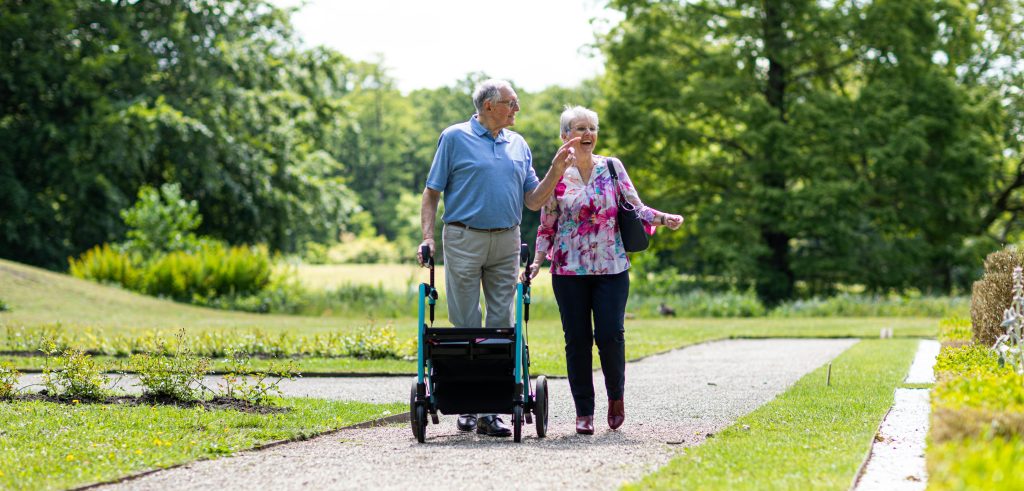
- Weekend Vitality: Have you ever finished a physical therapy session only to feel “wiped out” for the next three days? That is a recovery deficit. When we optimize your rest periods, you’ll find you have more energy for the things that matter, like grocery shopping on Saturday or walking through the park with your family on Sunday.
- Reducing “Mystery” Aches: Many seniors believe that chronic joint pain is just a part of aging. Often, it is actually the result of inadequate Muscle Recovery. Giving your tendons and muscles time to “quiet down” between sessions significantly reduces systemic inflammation and daily discomfort.
- The “Grandchild” Capacity: To have the energy and strength to lift a grandchild safely, your nervous system must be fully recovered. A rested body has a higher “Power Reserve,” making those spontaneous moments of joy safe and pain-free.
3. Understanding the Biology of Muscle Recovery in Older Adults
For the allied health professional, we must look at the cellular level to understand why our patients need more time between bouts of High-Intensity Resistance Training (HIRT). As cited in Geriatric Physical Therapy (2020), the aging muscle environment undergoes several key changes that delay repair.
For Professionals: Satellite Cells and Protein Synthesis. The primary drivers of Muscle Recovery are satellite cells—the “stem cells” of the muscle. With age, the activation and proliferation of these cells in response to mechanical load are diminished. This means the structural repair of the sarcolemma and the remodeling of the extracellular matrix take longer. Furthermore, while we aim for a high myofibrillar protein synthesis rate by loading at 60–80% 1RM, the duration of this “anabolic window” is often shorter in seniors, yet the initial “refractory period” (the time before the muscle can respond to a new signal) is longer.
This creates a paradox: the senior needs a higher intensity to trigger growth (as per the Physical Stress Theory ), but that same intensity creates a repair debt that requires 48 to 72 hours—and sometimes longer—to settle. If we provide a new stimulus (another workout) before the satellite cells have finished their work, we are essentially “shouting” at a muscle that hasn’t finished listening to the first command.
4. Balancing High-Intensity Loading with Muscle Recovery
The greatest challenge in geriatric strength training is the “Intensity-Recovery Paradox.” To reverse the effects of sarcopenia, we must provide a high-intensity stimulus—specifically loading the tissues at 60–80% 1RM. However, as we have established, this high load creates a significant metabolic and structural debt.
For Professionals: The Physical Stress Theory (PST) and the “Sweet Spot.” According to the PST, as detailed in Geriatric Physical Therapy (2020), tissue adaptation only occurs when the stress is higher than the “Maintenance Zone” but lower than the “Threshold of Injury.” For a senior, this window is narrower than in younger populations. If the intensity is high enough to trigger myofibrillar protein synthesis rates, the frequency must be adjusted downward.
While a young athlete might perform heavy squats three times a week, a senior reaching true high-intensity thresholds may only require—and tolerate—two sessions per week. This allows for the 72-hour window needed for the extracellular matrix to remodel. In the clinic, we must prioritize “Quality of Loading” over “Frequency of Effort.”
5. Common Myths of Fragility: “Rest Means Inactivity”
Staff Tip for Length: The Dangers of the Sedentary “Rest Day”. One of the most persistent myths of fragility is that “rest” is synonymous with “doing nothing.” In reality, total inactivity can actually hinder Muscle Recovery in the elderly.
- Myth: “I should stay in my recliner all day on my rest days to let my muscles heal.”
- The Reality: This is known as “Passive Recovery.” In seniors, passive recovery can lead to joint stiffness and a decrease in blood flow to the very tissues trying to repair themselves.
- Myth: “If I’m sore, I shouldn’t move at all.”
- The Reality: We advocate for Active Recovery. Light movement—such as a 10-minute leisurely walk or gentle chair yoga—increases local circulation. This helps “flush” metabolic byproducts and delivers fresh oxygen and nutrients to the muscle fibers without adding the mechanical stress of HIRT.
- Myth: “Rest days are just for my muscles.”
- The Reality: Rest is also for the Central Nervous System (CNS). High-intensity training is taxing on the brain’s ability to recruit muscle fibers. Rest days allow the “electrical system” to reset, ensuring that your next session is as powerful as the last.
6. Sleep: The Ultimate Anabolic Agent
Sleep is the most potent, yet under-utilized, tool for Muscle Recovery in the geriatric population. It is during the deep, slow-wave (Delta) sleep phases that the body secretes the majority of its Growth Hormone (GH)—the primary driver of tissue repair and fat metabolism.
The Delta-Wave Decline. As we age, the duration of deep sleep often decreases, leading to a “repair deficit.” For the senior engaging in high-intensity training, sleep hygiene is a clinical necessity, not a luxury.
To maximize the anabolic benefits of sleep, we recommend:
- Consistency: Going to bed and waking up at the same time to regulate the circadian rhythm.
- Temperature Control: Keeping the bedroom cool to facilitate the drop in core body temperature required for deep sleep.
- Light Management: Reducing blue light exposure (tablets/phones) 60 minutes before bed to allow for natural Melatonin production.
- The “Rest-to-Growth” Connection: Remind your loved one that the work they did in the gym only “counts” once they’ve slept on it.
7. Measuring Readiness: Clinical Tools for Recovery
How do we know when a senior has achieved sufficient Muscle Recovery to train again? Relying solely on “feeling ready” can be deceptive. In the clinic, we use objective “proxies” to determine if the nervous system and the muscles are prepared for a 60–80% 1RM load.
Key Readiness Metrics:
- Grip Strength Dynamometry: A sudden 10-15% drop in grip strength compared to the patient’s baseline is a hallmark sign of Central Nervous System (CNS) fatigue. If the grip is weak, the “wiring” isn’t ready for high intensity.
- The “Soreness Scale”: We distinguish between “Good” soreness (a dull ache in the muscle belly) and “Bad” pain (sharp, localized pain in a joint or tendon). High-intensity training should only proceed if the “Bad” pain is absent.
- Heart Rate Variability (HRV): While once reserved for elite athletes, many wearable devices now allow seniors to track HRV. A low HRV indicates that the body is still in a “stress” state (sympathetic dominance) and requires more Muscle Recovery.
8. The Caregiver Corner: Monitoring Fatigue “Red Flags”
Caregivers are the front line in preventing over-training. Because seniors may be highly motivated or reluctant to “complain,” caregivers must look for subtle behavioral shifts that indicate the body is struggling to keep up with the Intensity Mandate.
Signs of Inadequate Muscle Recovery:
- The “Shuffle” Gait: If a loved one who normally walks with a clear “heel-strike” begins to shuffle their feet, their lower-body stabilizers are likely fatigued.
- Increased Irritability: The brain is often the first thing to show signs of over-training. Sudden changes in mood or a “brain fog” can indicate that the metabolic cost of the previous workout was too high.
- Loss of Appetite: High-intensity stress without enough rest can suppress the digestive system. If they aren’t interested in their post-workout protein, they are likely over-taxed.
- Night Sweats or Restlessness: If their sleep quality drops after an increase in exercise intensity, the body is stuck in a “fight or flight” mode.
9. A 12-Week Roadmap for Optimizing Muscle Recovery
To ensure we are honoring the Physical Stress Theory, we utilize a periodized approach. This prevents the “plateau” and ensures that the myofibrillar protein synthesis rates have time to actually build new tissue.
Phase 1: Frequency Calibration (Weeks 1-4)
- Goal: Identifying the individual’s “Recovery Gap.”
- Protocol: Two full-body sessions per week with 72 hours of rest between.
- Focus: Mastering form and monitoring how the body feels 48 hours post-exercise.
Phase 2: High-Intensity & Strategic De-loading (Weeks 5-8)
- Goal: Reaching the 60–80% 1RM threshold.
- Protocol: Three weeks of high-intensity training followed by one “De-load Week.”
- The De-load: During Week 8, we reduce the weight by 50% but keep the movements the same. This allows the joints and tendons to “catch up” to the muscle growth.
Phase 3: Supercompensation & Peak Power (Weeks 9-12)
- Goal: Maximizing the Functional Carryover.
- Protocol: Moving to a “Split” routine (Upper Body Monday, Lower Body Thursday).
- Focus: By increasing the rest between specific muscle groups to a full week, we allow for “Supercompensation”—where the body bounces back stronger than its original baseline.
10. Conclusion: Respecting the Biological Clock
At geriatricrehab.es, we believe that the only way to truly “age backward” is to train with an intensity that the body cannot ignore. However, that intensity is only as effective as the rest that follows it. As we have explored, Muscle Recovery in the senior population is a complex, time-dependent biological process. It requires more than just “time off”; it requires high-quality sleep, strategic nutrition, and a clinical understanding of the “Recovery Gap.”
By moving away from the “Maintenance Zone” and embracing a high-intensity, low-frequency model, you are giving your body the space it needs to remodel its architecture. You aren’t just resting; you are allowing your satellite cells to finish their work, your tendons to thicken, and your nervous system to recharge. When you respect the science of rest, you ensure that every drop of sweat in the clinic translates into a stronger, more capable version of yourself in the real world.
Are you training hard but feeling stuck? You might not have a strength problem—you might have a recovery problem. At geriatricrehab.es, we offer a “Recovery & Readiness Audit”—a clinical evaluation that uses grip strength data and HRV analysis to determine your ideal training frequency. Consult a specialist today at geriatricrehab.es to find your “Sweet Spot” and turn your rest days into your strongest days.













