
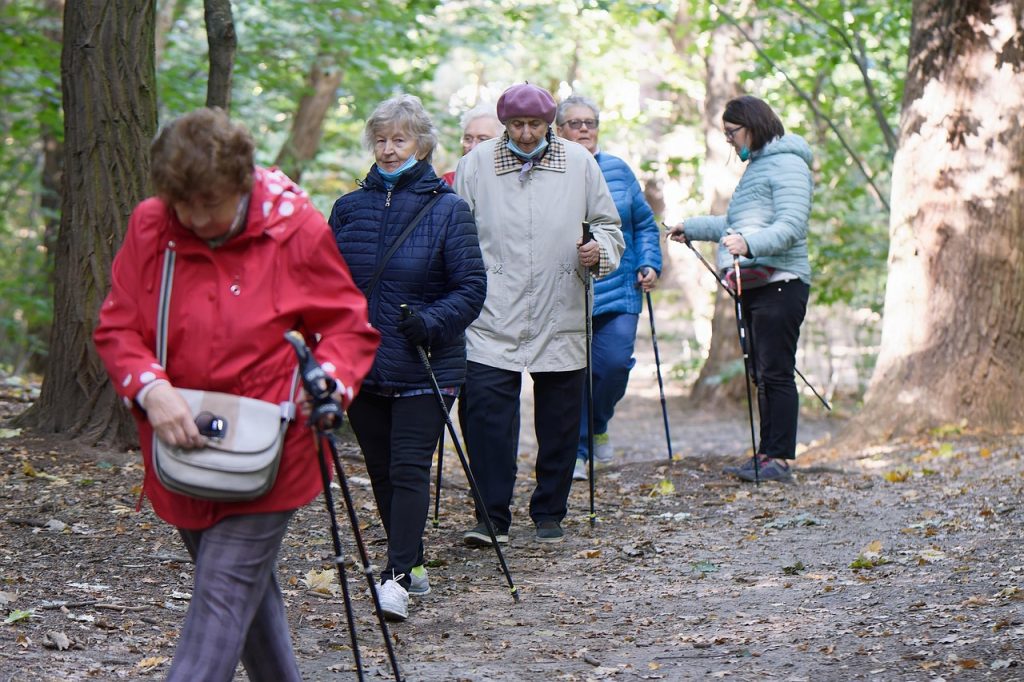
For decades, the standard advice for older adults was “walk more and take it easy.” While walking is beneficial, the latest evidence in geriatric rehabilitation suggests that “taking it easy” may actually be accelerating the aging process. At geriatricrehab.es, we are redefining what is possible through HIIT for Seniors. High-Intensity Interval Training (HIIT) is not just for elite athletes; it is a clinical intervention designed to reclaim the Vigor that often slides away on the “Slippery Slope of Frailty.” By applying the “Exercise is Medicine” philosophy, we use short, controlled bursts of effort to provide the “high-octane fuel” your body needs to add years to your life and, more importantly, life to your years.
1. Breaking the “Fragility” Myth
The word “intensity” often scares both seniors and their families. They picture someone gasping for air on a treadmill or lifting heavy weights. However, in the context of HIIT for Seniors, intensity is relative, not absolute. For a deconditioned 75-year-old, “high intensity” might simply mean walking up a slight incline or performing a series of rapid chair stands.
According to Geriatric Physical Therapy (2020), the body follows the SAID Principle (Specific Adaptation to Imposed Demands). If the demand is always low, the body adapts by becoming less efficient. HIIT disrupts this decline by challenging the heart, lungs, and muscles to work at their current peak for a short duration, followed by a recovery period. This “pulsing” of effort triggers biological changes that steady-state walking simply cannot match. It is the most efficient way to broaden your “functional reserve”—the gap between what you can do and what you must do to survive.
2. The ‘Feelings’ Section: From “Walking Through Sludge” to “Snappy Steps”
As we age, a condition called sarcopenia (muscle loss) can make every movement feel heavy. Many seniors describe this as “walking through wet cement” or “having legs made of lead.”
For Seniors: Reclaiming Your Vigor
- The “Slow-Motion” Trap: When you only move at one slow speed, your nervous system “forgets” how to move quickly. HIIT reminds your brain how to recruit your “power” muscles.
- The Return of Vigor: Imagine your body is an engine. Low-intensity exercise keeps the engine idling, but HIIT clears out the “carbon buildup.” After a few weeks of intervals, that “heavy” feeling begins to lift. You feel a sense of Vigor—a “snappiness” in your step and a surplus of energy that lasts throughout the day.
- Short Bursts vs. Long Drags: Many seniors find HIIT more tolerable than long walks. Knowing you only have to work hard for 30 seconds before a rest makes the exercise feel psychologically manageable and physically invigorating.
3. The Biological Case for HIIT for Seniors
For allied health professionals, the excitement surrounding HIIT lies in its impact on the Mitochondria—the powerhouses of our cells. As we age, these powerhouses become less efficient, leading to the metabolic decline seen in frailty.
For Professionals: Mitochondrial Biogenesis and Cellular Reversal
- The Mitochondrial Boost: HIIT is a potent stimulator of mitochondrial biogenesis. It essentially tells the body to build new powerhouses and repair old ones. Research cited in Geriatric Physical Therapy (2020) indicates that HIIT can reverse age-related changes in muscle protein synthesis.
- Insulin Sensitivity: High-intensity bursts are superior to moderate exercise for improving glucose disposal. This makes HIIT for Seniors a front-line defense against Type 2 Diabetes and metabolic syndrome.
- Myocardial Remodeling: While moderate exercise improves vascular health, HIIT can improve “stroke volume”—the amount of blood the heart pumps with each beat—by challenging the heart’s elastic properties.
- The SAID Principle in the Arteries: High-intensity intervals force the arteries to dilate and contract rapidly, improving vascular compliance and “cleaning out” the systemic stiffness that leads to hypertension.
Take-Home Tips for Caregivers:
- The “Breathless but Safe” Rule: During the “high” part of an interval, your loved one should be able to say only one or two words. If they can sing, the intensity is too low. If they can’t speak at all, it’s too high.
- Focus on Recovery: The “Interval” part is just as important as the “High” part. Ensure they sit or stand quietly for the full rest period to allow the heart rate to drop before the next burst.
- Start in a Chair: HIIT doesn’t have to be standing. Rapid “seated marching” or “shadow boxing” while sitting can provide a high-intensity stimulus with zero fall risk.
4. The 40% vs. 85% HRR Debate: Why Intensity is the Best Medicine
In the “Exercise is Medicine” framework, the “dose” is the most important variable. For professionals, we measure this using Heart Rate Reserve (HRR). The difference between 40% and 85% isn’t just a number; it is a shift in which biological systems are being “upgraded.”
For Professionals: The Physiological Thresholds
- The 40% HRR Dose (Maintenance): Working at 40% of HRR is common in traditional geriatric classes. While it improves basic circulation, it often falls below the “overload” threshold needed to trigger significant Specific Adaptation to Imposed Demands (SAID). It keeps the “Slippery Slope” from getting steeper, but it doesn’t help the patient climb back up.
- The 85% HRR Dose (Adaptation): This is the HIIT “Sweet Spot.” When a senior hits 85% of their HRR, the body enters a state of high metabolic demand. This is the primary driver for increasing VO2 max, recruiting Type II (fast-twitch) muscle fibers, and improving the heart’s “stroke volume.”
- Bridging the Gap: By alternating between these two zones, we allow the cardiovascular system to “stress and recover,” which is far more effective for building Vigor than staying in the middle ground of moderate intensity.
5. Ensuring Safety in HIIT for Seniors
Before prescribing a high-intensity “dose,” we must clear the runway. Safety in HIIT for Seniors is built on a foundation of clinical screening and constant monitoring.
For Professionals: Pre-Screening and Monitoring
- Orthopedic Clearance: High intensity must not mean high impact. We must ensure the patient has the joint integrity to handle rapid movements. If they have severe osteoarthritis, we move the HIIT to a seated cycle or a pool.
- The “Medication Cascade” Check: Many seniors are on Beta-Blockers, which “blunt” the heart rate. For these patients, using a heart rate monitor is useless. We must rely on the Rate of Perceived Exertion (RPE) scale—aiming for an 8 or 9 out of 10 during the “work” phase.
- The “Cool-Down” Mandatory: Rapidly stopping high-intensity work can cause “venous pooling” in the legs, leading to dizziness or fainting. A gradual 5-minute cool-down is a non-negotiable safety protocol.
6. The “Functional Audit”: Mapping HIIT to Real Life
This maps the “intervals” of a HIIT session directly to the moments in life where a senior needs a burst of power. If you can handle an 85% heart rate in the clinic, you can handle these real-world challenges with Vigor.
Task: Crossing the street before the light changes.
- The Functional Demand: Rapid acceleration and sustained speed for 20 seconds.
- The HIIT Drill: Power Walking Intervals. 30 seconds of “fast as you can safely go” followed by 1 minute of slow strolling.
Task: Answering the door or the phone in a different room.
- The Functional Demand: A sudden transition from sitting to moving quickly.
- The HIIT Drill: Rapid Sit-to-Stands. 20 seconds of standing up and sitting down as fast as possible (with good form), followed by 1 minute of rest.
Task: Climbing a steep driveway with groceries.
- The Functional Demand: High-intensity lower body strength and cardiovascular endurance.
- The HIIT Drill: Step-Up Intervals. Using the bottom step of a staircase, perform rapid step-ups for 30 seconds, then rest.
Task: Catching a bus or keeping up with a toddler.
- The Functional Demand: Agility and the ability to change direction under stress.
- The HIIT Drill: Seated “Shadow Boxing.” Throwing rapid punches in the air for 30 seconds to get the heart rate into the 85% zone without risking a trip or fall.
Take-Home Tips for Caregivers:
- The “Two-Minute Warning”: Never start HIIT “cold.” Ensure your loved one has done at least 5 minutes of gentle movement first.
- Hydration is Fuel: High-intensity work creates more heat. Ensure they drink a small amount of water before and after the session to keep their “engine” cool.
- Safety Spotter Mechanics: When assisting with rapid sit-to-stands, stand to the side, not in front. This gives them room to move while allowing you to guide their hips if they lose balance.
7. Strength-Based HIIT: Power vs. Speed
In the “Exercise is Medicine” framework, we must distinguish between Strength (the ability to lift a heavy load) and Power (the ability to lift that load quickly). For a senior, Power is the more critical commodity for fall prevention.
For Professionals: Type II Fiber Recruitment
- The “Fast-Twitch” Decay: As we age, we tend to lose Type II (fast-twitch) muscle fibers at a faster rate than Type I (slow-twitch) fibers. This is why a senior might be able to stand up slowly, but cannot “catch” themselves quickly if they trip.
- Recruitment through Velocity: HIIT for Seniors is one of the few ways to effectively recruit these dormant Type II fibers. By performing movements with high velocity—even with light weight—we stimulate the nervous system to fire faster motor units.
- SAID Principle and Reaction Time: By imposing the “demand” of speed during intervals, the “adaptation” is a faster reaction time. This is the biological “brakes” that allow a senior to stop a fall before it happens.
8. The Caregiver Corner: The “Safety Spotter’s Guide”
As a caregiver, your role during a HIIT session is to provide a “Stability Shield.” High-intensity exercises like rapid sit-to-stands or power-marching increase the risk of a stumble. You must be prepared to assist without injuring yourself.
The “Stability Shield” Protocols:
- Protect Your Spine: When assisting with a “Sit-to-Stand” interval, never lean over the senior. Keep your feet wide, your knees bent, and your chest up. Use your legs to provide a steadying hand on their waist or a gait belt.
- The “Nose Over Toes” Cue: If your loved one is struggling to get the “speed” needed for the interval, remind them to lean their chest forward. Once their “nose is over their toes,” their center of gravity is optimized for a powerful stand.
- The Fatigue Watch: HIIT is meant to be tiring, but it should not cause “form collapse.” If you see their knees buckling or their back rounding significantly, the interval must stop, even if the timer hasn’t run out.
- Red Flags: Watch for “The Pale Look.” If a senior becomes suddenly pale, dizzy, or complains of a “cold sweat” during a burst, stop immediately. This is a sign that the cardiovascular dose has exceeded their current “Vigor” capacity.
9. Long-Term Benefits of HIIT for Seniors
The beauty of HIIT for Seniors is that the adaptations are systemic. We aren’t just training the heart; we are training the entire human organism to resist the “Slippery Slope.”
For Professionals: Beyond the Heart
- Cognitive Resilience: High-intensity exercise triggers the release of BDNF (Brain-Derived Neurotrophic Factor), often called “Miracle-Gro for the brain.” This improves memory, focus, and the executive function needed to navigate complex environments.
- Osteogenic Loading: The “snap” and “pop” of high-velocity movements create a brief, high-force stimulus on the bones. This is more effective at stimulating bone density than slow, steady walking, making HIIT a key defense against osteoporosis.
- Metabolic Flexibility: By pushing the heart rate to 85%, we force the body to switch between different fuel sources (fats and carbohydrates). This “Metabolic Flexibility” is a hallmark of a youthful metabolism and helps prevent the weight gain often seen in sedentary aging.
10. Conclusion: Reclaiming the Vigor of Youth
The most dangerous myth in aging is that we must “slow down” to stay safe. At geriatricrehab.es, we have seen that the opposite is true: we must maintain our ability to move quickly to stay independent. HIIT for Seniors is not a reckless trend; it is a scientifically grounded method for “fueling” the body against the “Slippery Slope.”
By understanding that exercise is a precise clinical “medicine,” we can use high-intensity intervals to trigger the mitochondrial repairs, the bone-density gains, and the cognitive boosts that steady-state walking leaves behind. You are never “too old” for intensity—you are simply in a constant state of adaptation. When you embrace the “snap” and “power” of HIIT, you aren’t just adding years to your life; you are adding a vibrant, high-definition Vigor to every day you live.
Are you ready to trade “shuffling” for “snapping”? Don’t let your internal engine idle until it stalls. At geriatricrehab.es, we specialize in safely transitioning seniors into high-intensity vitality. Visit geriatricrehab.es today to download our “HIIT at Home” Starter Guide and book your HIIT Readiness and Vigor Assessment!













