
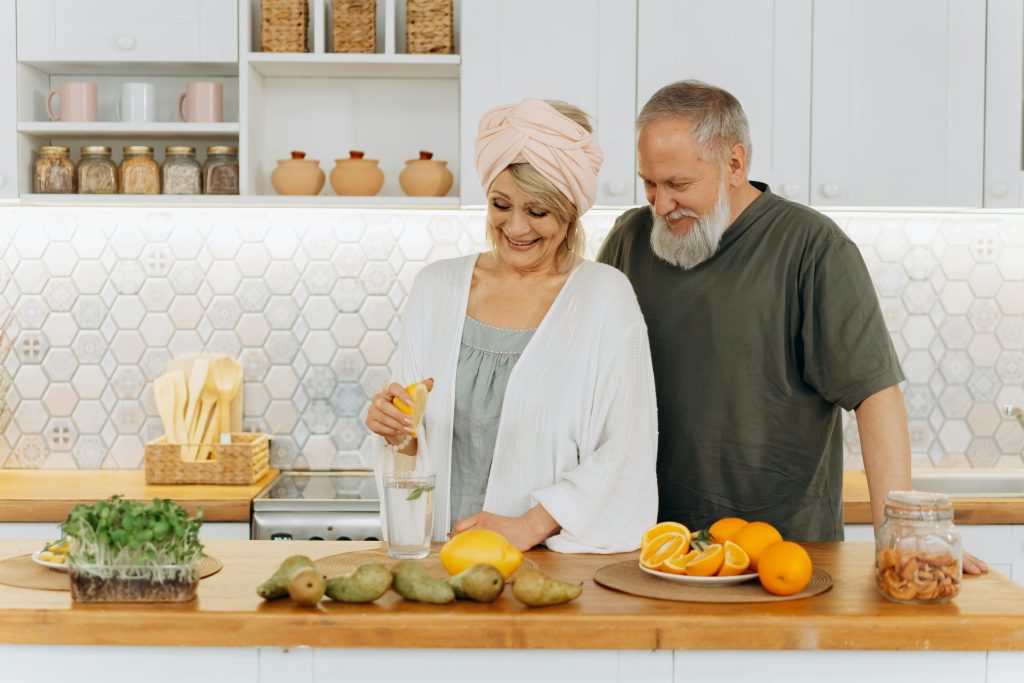
As we age, the biological systems that allow us to perceive the world undergo significant physiological shifts. This process, often referred to as sensory aging, is not merely a series of isolated declines in vision or hearing. Rather, it is a complex, multisensory integration challenge that can fundamentally alter how a senior interacts with their environment. Understanding the nuances of sensory aging is critical for maintaining safety, nutritional status, and quality of life in the geriatric population.
1. The Neurobiology of Sensory Aging
To understand the core mechanics of this transition, we must look at the aging nervous system as a complex communication network that is slowly developing “static” on the line. In the field of geriatric rehabilitation, we refer to this as a decline in sensory integration the brain’s ability to organize and interpret information from the environment.
The “Why it Matters” Section: Physiological Reserve
In geriatric medicine, we discuss the physiological reserve. This is the redundant capacity of our organ systems to handle stress. Sensory aging represents a steady erosion of this reserve. When a senior loses these capabilities, they move down the “Slippery Slope of Aging.” The brain faces a high cognitive load just to maintain balance, explaining why a senior may stop talking while walking; their brain cannot handle both the sensory processing and the conversation at once.
2. Olfaction and the Clinical Dangers of Sensory Aging
Olfaction, or the sense of smell, is often the first casualty of sensory aging, yet it is frequently the least discussed. Presbyosmia (the age-related loss of smell) is not just a matter of losing the aroma of morning coffee; it is a critical safety failure. According to Geriatric Physical Therapy (2020), the olfactory bulb the brain’s primary processing center for odors, undergoes significant atrophy, often preceding more visible cognitive declines.
The Safety Risk: The primary clinical concern here is the “Safety Sentinel” effect. A healthy olfactory system detects smoke, leaking natural gas, or the acidic “off” scent of spoiled milk instantly. A senior experiencing advanced sensory aging may lose this early warning system entirely.
Take-Home Tips for Caregivers:
- The Daily Sniff Test: Encourage seniors to actively smell strong, familiar scents daily (like lemon, cloves, or eucalyptus). This is “sensory training” for the brain and can help monitor for sudden declines.
- Redundant Alarms: Since smell can no longer be relied upon to detect fire or gas, ensure the home is equipped with “Smart” detectors that use flashing strobe lights and high-decibel sirens.
- The “Sharpie” Method: Don’t rely on a senior’s nose to tell if food is bad. Use a thick black marker to write the “Open Date” on milk, meats, and leftovers in large, clear numbers.
3. Gustation (Taste): Beyond the Palate
While we often think of taste as a luxury of life, in the geriatric population, it is a pillar of health. Gustatory decline (hypogeusia) typically stems from a reduction in taste bud density and a decrease in salivary flow, often exacerbated by common medications. This is a core component of sensory aging that leads directly to “Anorexia of Aging.”
Clinical Evidence: The Sodium Trap
When the world tastes like cardboard, seniors instinctively reach for the salt shaker. This is a physiological attempt to “wake up” the remaining receptors. For a clinician, this is a major concern for managing hypertension and heart failure. We see a direct link between taste loss and poor compliance with low-sodium diets.
The “Umami” Strategy for the Home: Instead of fighting a losing battle against the salt shaker, we recommend the “Umami” approach. Umami (the savory fifth taste) remains relatively robust even during sensory aging.
- Flavor Boosting: Use “power flavors” like mushrooms, soy sauce (low sodium), tomatoes, and aged cheeses to provide the punch that salt usually provides.
- Texture Contrast: If the taste is dull, use the sense of touch! Adding “crunch” (nuts, seeds) or “smoothness” (purees, avocado) provides tactile stimulation that makes eating more engaging for the brain.
- Oral Hygiene: Dry mouth (Xerostomia) kills taste. Ensure the senior is hydrated and consider saliva-replacing rinses before meals to “prime” the taste buds.
4. Somatosensation: The Lost Language of Touch
In the context of sensory aging, the loss of touch or somatosensation is often compared to wearing a pair of thick, leather work gloves while trying to navigate the world. This decline is rooted in the structural atrophy of specialized receptors in the skin: the Meissner corpuscles (responsible for light touch) and Pacinian corpuscles (which detect vibration and deep pressure).
As these receptors diminish in density, the “mechanical threshold” required to trigger a signal to the brain increases. For a senior, this means that a light brush against a doorframe might not be felt at all, or the subtle texture of a pill in the palm of the hand becomes undetectable.
Clinical Professional Note: Compliance and Precision. From a clinical perspective, we see a decline in “haptic perception.” This impacts medication compliance if a patient cannot feel the difference between a small aspirin and a blood pressure pill by touch, the risk of dosing errors skyrocket. Furthermore, decreased tactile feedback in the fingertips leads to “clumsiness,” which is often misdiagnosed as purely motor tremors when it is actually a sensory deficit.
Take-Home Tips for Caregivers:
- The “Temperature Guard”: Because thermal sensitivity declines alongside touch, seniors are at high risk for burns. Set the home’s water heater to a maximum of 120°F (48°C) and avoid using electric heating pads, which can cause “silent burns” on numb skin.
- Tactile Cues: Replace smooth, slippery knobs with textured levers. Adding a bit of “grip tape” to frequently used items like remote controls or canes provides the extra sensory input the brain needs to maintain a secure hold.
5. Proprioception: The Body’s GPS
Proprioception is the unconscious perception of movement and spatial orientation arising from stimuli within the body itself. In sensory aging, the muscle spindles and Golgi tendon organs (GTOs) the “sensors” located in our muscles and tendons become less sensitive. This is the body’s GPS system losing its satellite connection.
When proprioception fails, the brain is no longer certain where the feet are in relation to the floor. According to the Physical Stress Theory (PST) cited in Geriatric Physical Therapy (2020), this leads to a state of Decreased Tolerance. Because the senior doesn’t “trust” their balance, they move less, which leads to muscle atrophy, further degrading the sensory feedback loop.
The “Stiff Garden Hose” Analogy: We often explain this to families by comparing the senior’s joints to an old, stiff garden hose. When the hose is supple (young), you can feel exactly where it is as you coil it. When it becomes stiff and brittle (aged), it doesn’t relay that “bend” as clearly, making it harder to manage.
Take-Home Tips for Caregivers:
- Thin-Soled Shoes: Counter-intuitively, thick, “cushy” sneakers can be dangerous. They act like a silencer for the feet. Encourage firm, thin-soled shoes that allow what remains of the foot’s receptors to feel the ground.
- Weight Bearing: Gentle weight-bearing exercises (like standing on one leg while holding a counter) “re-calibrate” the GPS by putting healthy stress on the joint receptors.
6. The “Safety Trifecta”: Combined Sensory Aging and Fall Risk
The most dangerous stage of sensory aging occurs when multiple systems decline simultaneously, creating the “Safety Trifecta.” In a healthy adult, balance is maintained by a redundant system: Vision, Vestibular (inner ear), and Somatosensory (feet/joints). If one fails, the others compensate.
However, in the geriatric population, we often see multisensory integration failure. If a senior has poor vision (cataracts), reduced feeling in their feet (peripheral neuropathy), and a sluggish inner ear, they have no “anchor” to reality.
Professional Focus: Sensory Weighting. As clinicians, we use the Clinical Test of Sensory Interaction on Balance (CTSIB) to determine which system the patient is over-relying on. Often, seniors become “visually dependent.” If the lights go out or they walk into a dimly lit hallway, their primary “anchor” is gone, and a fall is almost guaranteed.
Take-Home Tips for Caregivers:
- Night-Light Pathways: Because of visual dependency, “midnight bathroom trips” are the highest risk time. Install motion-activated floor-level lighting from the bed to the bathroom.
- Remove “Sensory Noise”: Deep-pile carpets are a nightmare for proprioception they are the “static” of the floor. Swap thick rugs for firm, non-slip flooring to provide a “clearer” signal to the feet.
7. Environmental Modification: Mapping the “Safe Home”
To mitigate the effects of sensory aging, we must transform the home from a passive space into a “highly-legible” environment. In geriatric rehabilitation, environmental legibility refers to how easily a person can navigate a space based on the sensory cues available. When internal sensors (eyes, ears, and feet) fail, the external environment must “speak louder” to compensate.
The “Pathfinding” Strategy
For seniors with diminished somatosensation and proprioception, the floor is no longer a reliable source of information. We use visual and tactile “pathfinding” to fill the gap:
- Contrast Striping: Apply high-contrast (e.g., yellow on dark wood) non-slip tape to the edge of every step and transition. This compensates for reduced depth perception.
- Texture Mapping: Use different floor textures to signal transitions. A firm, low-pile rug at the entrance of the kitchen can act as a tactile “alert” that the senior is moving from a carpeted living area to a potentially slick tile surface.
Smart Technology as a Sensory Proxy
We now have access to “electronic noses” and sensory proxies that act as a backup for sensory aging.
- Acoustic/Visual Gas Detectors: For those with olfaction loss, smart detectors can send an alert directly to a caregiver’s phone or pulse the smart-home lighting system in red if a leak is detected.
- Automatic Thermostatic Valves: These are essential for preventing “silent burns.” By installing valves that physically stop water flow if it exceeds 120°F, we remove the need for the senior to “feel” the temperature.
8. The Psychological Toll: Sensory Deprivation and Social Isolation
The impact of sensory aging extends far beyond physical safety; it strikes at the heart of the human experience. When the world becomes muted when the smell of a garden, the flavor of a favorite meal, or the soft touch of a loved one’s hand is diminished the result is often profound sensory deprivation.
The Connection to Cognitive Decline
According to Geriatric Physical Therapy (2020), sensory deprivation is a significant risk factor for accelerated cognitive decline and depression. The brain thrives on input; when that input is restricted, the “plasticity” of the brain begins to wane. This is often the “Why” behind a senior becoming withdrawn or irritable. They are not simply “getting older”; they are losing their connection to the world.
Breaking the Cycle of Withdrawal
- Multisensory Socialization: Mealtimes should not be solitary. Social interaction provides auditory and cognitive stimulation that can “mask” the frustration of tasteless food.
- Meaningful “Sensory Snacks”: Encourage activities that provide high-intensity sensory input safely, such as listening to high-fidelity music or using textured “fidget” blankets for those with advanced tactile loss.
9. Clinical Interventions: Training the “Residual Senses”
As clinicians, our goal is to harness neuroplasticity to maximize the “residual” (remaining) sensory function. We do this through Multisensory Training Protocols (MSTP), which force the brain to re-weight its sensory dependencies.
Sensory Re-weighting and Neural Adaption
If a patient has lost significant proprioception in their feet, we don’t just accept the fall risk. We train the brain to rely more heavily on the vestibular system (inner ear) and vision.
- Dual-Task Training: We ask patients to perform a balance task (standing on a foam pad) while performing a cognitive task (naming types of fruit). This forces the brain to prioritize sensory integration under “stress,” increasing the afterload on its cognitive processing and building resilience.
Professional Focus: The Physical Stress Theory (PST)
In the PST framework, we aim for the “Increased Tolerance” zone. We must apply enough sensory “stress” to force the nervous system to adapt without reaching the “Injury” zone.
- Vibratory Stimulation: Using localized vibration on the tendons of the lower leg can sometimes “prime” the nervous system, making it more sensitive to the movements of the ankle joint during walking.
- Balance Perturbation: Gently and safely “nudging” a patient during standing exercises forces the somatosensory system to wake up and provide an immediate correction, strengthening the neural pathways.
10. Conclusion: Resilience through Sensory Compensation
Sensory aging is an inevitable physiological reality, but it does not have to result in a loss of independence. As we have explored, the decline of taste, smell, and touch creates a “bandwidth” issue for the aging brain, making the world appear less distinct and more hazardous. However, by understanding the “Why” behind these changes from the atrophy of Pacinian corpuscles to the shifting signal-to-noise ratio in the central nervous system we can move from a state of frustration to one of proactive management.
The Path Forward: A Sensory Audit
For family caregivers and health professionals alike, the most effective tool is the “Sensory Audit.” This involves a monthly walkthrough of the senior’s living space to ensure that the environment is compensating for what the body can no longer detect.
- Check the “Sentinel” Systems: Are the smoke and gas detectors functional and loud enough to bypass age-related hearing and olfactory loss?
- Evaluate the “Tactile Map”: Are transitions between rooms clearly marked with high-contrast tape or texture changes to assist failing proprioception?
- Audit the Kitchen: Are expiration dates clearly visible, and is the pantry stocked with “Umami” flavor boosters to prevent the “sodium trap”?
Final Clinical Thoughts
In the framework of the Physical Stress Theory, our goal is to keep the sensory systems in the “Maintenance” or “Increased Tolerance” zones. This requires consistent, multi-modal stimulation. We must treat the senses like muscles; if they are not used and challenged, they will enter a phase of “Decreased Tolerance” and eventual atrophy.
Whether it is through the use of thin-soled shoes to “sharpen” the feedback from the ground or using vibrant spices to “wake up” a dormant palate, the objective remains the same: to maintain a high-fidelity connection between the senior and their world. Sensory aging may dim the signals, but with the right environmental modifications and clinical interventions, we can ensure the message of safety and quality of life still gets through.If you or a loved one is experiencing a decline in balance or sensory awareness, consult a licensed Physical Therapist to develop a personalized sensory-integration plan, and continue exploring our evidence-based guides at geriatricrehab.es.













