
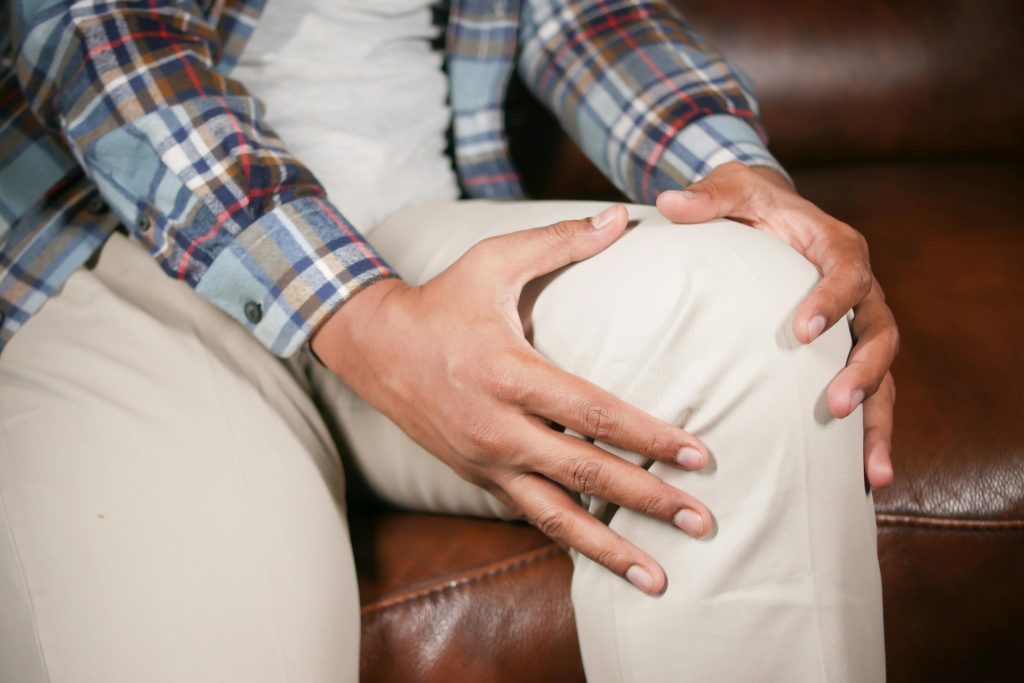
Have you ever woken up feeling like your joints were encased in cement, only for the sensation to gradually fade after your first cup of coffee and a short walk? In the world of geriatric rehabilitation, this morning “stiffness” is often dismissed as a normal part of getting older. However, at geriatricrehab.es, we recognize that this physical sensation is actually the clinical manifestation of Collagen and Aging. It is a structural shift in the very “glue” that holds our bodies together. By understanding the biological “Why” behind this tightening, we can move away from simply “living with it” and toward a strategy that restores mobility and maintains our independence.
1. The Biological Glue
To understand why our bodies become less flexible over time, we must first understand the role of collagen. Collagen is the most abundant protein in the human body, acting as the primary building block for our skin, tendons, ligaments, and bones. In a young body, collagen fibers are organized in a way that allows for significant stretch and recoil. This elasticity is what allows a younger person to move through wide ranges of motion without pain or resistance.
However, collagen and aging is a process defined by a shift from flexibility to rigidity. As we age, the body’s ability to produce high-quality, organized collagen decreases. This isn’t just a surface-level change; it is a fundamental alteration of the body’s architecture. According to principles in Geriatric Physical Therapy (2020), this structural change is a major contributor to the decreased mobility seen in older adults. At geriatricrehab.es, our mission is to help you understand that while you cannot stop the passage of time, you can influence the quality of your “biological glue” through targeted movement and clinical intervention.
2. The ‘Why It Matters’ Section: The Elasticity of Debt
Why should seniors and caregivers care about the molecular structure of collagen? It matters because the state of your connective tissue determines your physiological reserve. When your tissues are elastic, your body can handle sudden movements, such as reaching for a falling object or recovering from a stumble. When those tissues become stiff, your “stability window” narrows, pushing you further down the “Slippery Slope of Aging.”
This “elasticity debt” occurs when the rate of tissue stiffening outpaces the body’s ability to remodel itself. As collagen fibers become more rigid, they create more resistance during simple tasks like climbing stairs or reaching into a cupboard. This internal resistance burns more energy and increases the risk of injury. In geriatric care, we see this manifest as a loss of function that often leads to a sedentary lifestyle, which only accelerates the stiffening process. Understanding this “why” is essential because it shifts the focus from “treating pain” to “restoring tissue compliance.”
3. Understanding Collagen and Aging through Cross-Linking
The primary biological mechanism behind aging-related stiffness is a process called cross-linking. Imagine your collagen fibers are like long, individual strands of silk. In a young person, these strands can slide past each other easily. However, as we age, chemical bonds often fueled by glucose begin to “bridge” these strands together.
For Professionals: This process is largely driven by the accumulation of Advanced Glycation End-products (AGEs). These AGEs act as a chemical glue that binds collagen fibers together in a haphazard, disorganized fashion. This reduces the compliance of the tissue, making it resistant to deformation. Because the fibers can no longer slide, the entire connective tissue matrix becomes dense and brittle. This is why older tendons are more prone to rupture under sudden loads; they have lost the ability to distribute stress across individual fibers.
For Seniors and Caregivers: The “Dried-out Rubber Band” Analogy
Think of your collagen fibers like a brand-new rubber band. When it’s new, you can stretch it quite far, and it snaps right back into its original shape. It’s flexible and reliable. Now, imagine a rubber band that has been sitting in a junk drawer for ten years. It becomes a “dried-out rubber band.” If you try to stretch it, it feels stiff and resistant. If you pull too hard or too fast, it doesn’t stretch it snaps. Collagen and aging are essentially your body’s “rubber bands” drying out and losing their stretch. At geriatricrehab.es, we use specific techniques to “rehydrate” and “soften” these bands so you can move without the fear of snapping.
4. How Physical Stress Theory Reverses Tissue Stiffness
To effectively manage collagen and aging, we must understand how connective tissue responds to mechanical loading through the lens of the Physical Stress Theory (PST). This theory explains that our tissues are not static; they are constantly remodeling based on the amount of stress we apply.
In the context of collagen, the five PST responses are critical to understand:
- Death: If a joint is immobilized (eg, in a cast or during long-term bed rest), the lack of stress leads to the death of specialized cells called fibroblasts that maintain collagen health.
- Injury: Because collagen in older adults is often brittle and cross-linked, the “injury threshold” is lowered. A sudden, high-intensity load can cause micro-tears in tendons that no longer have the elasticity to absorb the shock.
- Increased Tolerance (Training): This is our “sweet spot” in rehab. By applying a controlled, progressive load, we trigger the body to break down old, disorganized collagen and replace it with new, flexible fibers. This “why” explains how loading actually repairs the system.
- Maintenance: Merely doing what you are already comfortable with is a “danger zone.” In older adults, the maintenance threshold naturally drops. Staying at the same level of activity often allows collagen to continue thickening and tightening over time.
- Decreased Tolerance (Atrophy): When we “take it easy” for too long, our fascia begins to “glue” together. The collagen fibers become so disorganized and dense that the tissue loses its ability to handle even normal daily activities.
5. The Biological Mechanism: Hyaluronic Acid and Lubrication
While collagen provides the structure, it requires a “ground substance,” primarily hyaluronic acid to allow fibers to slide past each other. The “why” behind your stiffness is often the loss of this internal lubricant.
For Professionals: We look at the concentration of glycosaminoglycans (GAGs). These molecules are highly hydrophilic, meaning they hold water to keep the collagen matrix hydrated and compliant. As we age, GAG production decreases, leading to a “dry” environment where collagen fibers snag on one another rather than gliding.
For Seniors and Caregivers: The “Rusty Hinge” Analogy
Imagine your joints are like the hinges on an old iron gate. When the gate is new, the hinge is well-oiled, and it swings open effortlessly. But if that gate is left closed for years in the rain, the oil dries up, and the metal starts to rust. It becomes a “rusty hinge” that squeaks and resists moving. Collagen and aging are like that oil drying out. At geriatricrehab.es, we use movement to act like “WD-40” for your joints pumping fresh lubrication back into the hinges so you can swing through life smoothly again.
6. Collagen and Aging in the Cardiovascular System
The impact of collagen is most dangerous when it occurs within our “internal plumbing.” The stiffening of the aorta is a physiological reality of aging, where flexible elastin is replaced by rigid collagen deposition.
For Professionals: This structural shift leads to a significant decrease in vascular compliance. When the aorta is stiff, it cannot expand to accommodate the blood ejected from the heart. This creates an increased afterload, forcing the heart to pump harder against a rigid wall. Over time, this chronic stress leads to left ventricular hypertrophy (the thickening of the heart muscle), which eventually reduces cardiac efficiency.
For Seniors and Caregivers: The “Stiff Garden Hose” Analogy
Think of your blood vessels like a brand-new garden hose. It’s a “flexible elastic band” soft, stretchy, and easy to coil. When you turn on the water, it expands slightly to handle the pressure. But aging turns those vessels into a “stiff garden hose” that has been left in the sun for twenty years. It’s hard and brittle. If the water pressure (blood pressure) gets too high, the hose can’t expand to help, putting a huge strain on the “pump” (your heart). At geriatricrehab.es, we teach you that aerobic exercise is the “biological softener” that helps keep those hoses flexible.
7. The Professional Perspective: The ICF Framework and Range of Motion
In the clinical setting, we address collagen and aging by utilizing the International Classification of Functioning, Disability and Health (ICF) Framework. This allows us to move beyond a simple “stiff joint” diagnosis and look at the global impact on a patient’s life.
- Body Structures and Functions: We identify the structural densification of collagen and the loss of vascular compliance.
- Activities: We measure how this structural rigidity limits essential movements, such as the ability to reach overhead or maintain a steady gait.
- Participation: We recognize that when collagen “sets” like concrete, it often leads to social withdrawal because the physical effort required to engage in community activities becomes too high.
By using this framework, our therapists at geriatricrehab.es can design interventions that specifically target collagen remodeling to improve overall life participation.
8. The Caregiver Corner: Monitoring the “Morning Stiffness” Factor
For caregivers, understanding the “Why” behind a senior’s slow start in the morning is essential for effective support. This isn’t just a lack of motivation; it is the time required for the “ground substance” in the joints to transition from a thick gel to a fluid lubricant.
Actionable Advice for Caregivers:
- The “Bounce Back” Audit: Keep a log of the “Bounce Back” Factor —how long it takes for the senior to move comfortably after waking up. If this time is increasing, it suggests that collagen cross-linking is outpacing the body’s natural lubrication.
- The Warm-Up Ritual: Because heat helps “soften” collagen bonds, starting the day with gentle, rhythmic movements in a warm environment can significantly reduce the internal resistance felt by the senior.
- Hydration Checks: Since the “lubricant” (hyaluronic acid) in joints is water-dependent, ensuring the senior is hydrated is a direct way to support collagen health.
9. Therapeutic Intervention: Movement as a “Biological Softener”
The most powerful tool we have against Collagen and Aging is the application of controlled mechanical stress. We must explain the “Why” to our patients: movement is not just about burning calories; it is a “biological softener” for a system that is naturally trying to become rigid.
For Professionals: Sustained, low-load stretching and aerobic exercise trigger the release of enzymes that break down Advanced Glycation End-products (AGEs). This process improves compliance in both the skeletal and cardiovascular systems, reducing afterload and protecting the heart from left ventricular hypertrophy.
For Seniors and Caregivers: The “Flexible Elastic Band” Goal
Think of your rehab exercises as a way to turn your “stiff garden hose” back into a “flexible elastic band.” When you move, you are generating internal heat and pressure that “melts” the chemical glue holding your fibers together. At geriatricrehab.es, we don’t just want you to move; we want you to “soften” your body so it can handle the stretches and turns of a busy life.
10. Conclusion: Reclaiming Your Flexibility
While the structural shift of collagen and aging is a physiological reality, it is not a process that we must passively accept. Throughout this guide, we have explored the “Why” behind that morning stiffness, from the chemical “gluing” of cross-links to the drying out of our internal lubricants. Understanding that your body naturally moves toward the state of a “stiff garden hose” allows you to prioritize the clinical interventions needed to maintain your “flexible elastic bands.”
By applying the Physical Stress Theory, we recognize that “taking it easy” is often the catalyst for further rigidity. Instead, we must use controlled, therapeutic loading to trigger the production of healthy, organized collagen. Reclaiming your flexibility isn’t about chasing the range of motion you had at twenty; it’s about ensuring your physiological reserve is high enough to keep you in the “fun” and “function” zones of life. At geriatricrehab.es, we believe that movement is the ultimate “biological softener,” keeping your tissues compliant and your heart healthy for the long haul.Don’t let your joints “set” like concrete. If you feel like your morning stiffness is lasting longer or your range of motion is narrowing, it’s time for a professional intervention. Schedule a Comprehensive Mobility and Collagen Audit at geriatricrehab.es today. Our expert team will help you create a personalized, evidence-based plan to “soften” your system, reduce your afterload, and keep you moving with ease. Consult a specialist today at geriatricrehab.es and let’s turn those stiff garden hoses back into flexible elastic bands together.













