
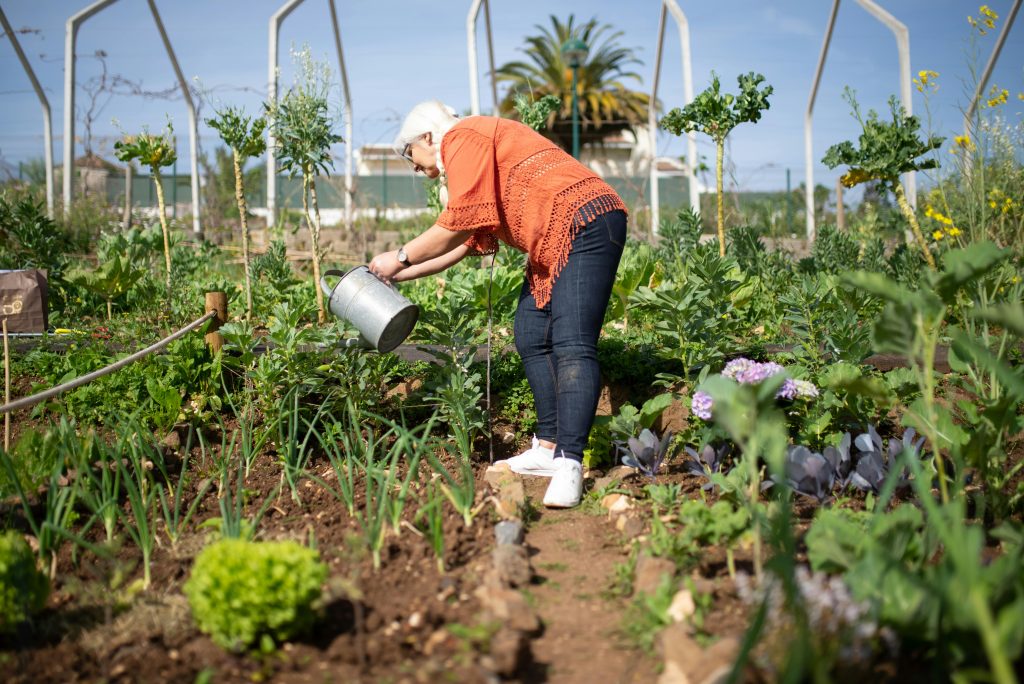
In the clinical framework of Geriatric Physical Therapy (2020), exercise is not something that only happens within the four walls of a clinic. True rehabilitation occurs when movement becomes a seamless part of your daily existence. Embracing a philosophy of Active Living allows seniors to reclaim their Vigor by transforming mundane chores into therapeutic “doses” of movement. By identifying the hidden gym in your living room or garden, you can effectively push back against the Slippery Slope of Aging, widen your Safety Buffer, and ensure that your Physiological Reserve remains full enough to handle whatever life throws your way.
1. The Myth of the “Gym Workout”
In the clinical framework of Geriatric Physical Therapy (2020), exercise is not a 30-minute block of time confined to a clinic or gym; it is the “fuel” that powers your life. Many seniors view rehabilitation as a temporary task to be completed, but the most successful outcomes happen when we embrace Active Living. This philosophy suggests that every movement—from reaching for a coffee mug to walking the dog—is a clinical intervention that adds years to your life and life to your years.
By reframing daily activities as opportunities for “micro-doses” of movement, you effectively push back against the Slippery Slope of Aging. This isn’t just about “staying busy”; it is about maintaining your Vigor. When you engage with your environment, you are widening your Safety Buffer, ensuring that your body has the Physiological Reserve to handle unexpected trips or fatigue.
2. The Science of Active Living: Refilling the Reserve
From a Professional Perspective, we must look at the SAID Principle (Specific Adaptation to Imposed Demands). If a senior stops reaching for the top shelf because it’s difficult, the body adapts by further shortening the muscles and weakening the bone density in that range. This is the hallmark of the “Slippery Slope.” Conversely, Active Living ensures that the “imposed demands” of daily life remain high enough to maintain function.
The “Exercise is Medicine” philosophy highlights that even low-MET (Metabolic Equivalent) activities like folding laundry or light sweeping are enough to prevent “disuse atrophy.” These movements keep the neuromuscular pathways firing. Take-Home Tip for Caregivers: “Doing for” can often be “doing to.” While it’s tempting to do all the chores for a loved one, you may be accidentally draining their reserve. Encourage them to participate in “meaningful movement”—tasks they enjoy that keep them on their feet and engaged with their surroundings.
3. Kitchen Kinesiology: Counter-Top Strength
The kitchen is arguably the most effective “gym” in the home. It naturally requires multi-planar movement, weight shifting, and standing endurance. By applying Active Living principles, we can turn a 20-minute meal prep session into a therapeutic session for balance and bone health.
- The Sink Squat: While waiting for the kettle to boil, use the sink as a safety anchor for 5–10 controlled squats. This targets the “anti-gravity” muscles (glutes and quads) essential for independent sit-to-stands.
- Weight Shifting while Prepping: While chopping vegetables or washing dishes, practice shifting weight from left to right. This retrains the Somatosensory system (the feet) to feel and respond to changes in the center of mass.
- The “High-Low” Organization: Strategically place lightweight, frequently used items (like spices or tea) on a slightly higher shelf. This encourages a functional reach that maintains shoulder mobility and calf stability several times a day.
Take-Home Tip for Caregivers: Be a “Safety Spotter,” not a replacement. Instead of grabbing the spice for them, stand nearby to provide a steadying hand if needed, allowing them to complete the reach and gain the biological benefit of the movement.
4. Functional Training: The Chores-as-Medicine Audit
In the “Exercise is Medicine” framework, we don’t just “do chores”; we perform a Functional Audit to identify how household tasks map to clinical goals. By viewing every room as a training ground, we use the SAID Principle to ensure daily activities contribute to your Physiological Reserve.
The Household Mobility Map
- Vacuuming and Sweeping (Core & Coordination): This movement is essentially a “weighted lunge.” It requires stabilizing the trunk while moving the arms and legs in opposition.
- The Dose: Focus on maintaining an upright posture and switching hands to ensure symmetrical core activation. This trains the body to handle the dynamic shifting required for Active Living.
- Laundry Management (The “Deep Squat”): Reaching into a low dryer or basket is a functional squat.
- The Dose: Instead of bending at the waist (which strains the back), use a “wide-base squat.” This builds the power in your quads and glutes needed to stand up from a low toilet or car seat, widening your Safety Buffer.
- Putting Away Groceries (Multi-Planar Reach): Moving items from a bag on the floor to a high cupboard requires a diagonal reach and a “pivot.”
- The Dose: Practice the pivot on the balls of your feet rather than twisting your knees. This maps directly to the “stepping strategy” used to catch yourself during a trip.
- Making the Bed (Shoulder & Grip Strength): Tucking in sheets and fluffing pillows requires overhead reaching and fine motor grip.
- The Dose: Use exaggerated movements to reach across the mattress. This maintains the shoulder range of motion necessary to dress yourself independently.
- Cleaning Windows (Endurance & Gaze Stabilization): Following the movement of your hand while cleaning a glass surface challenges your Visual system.
- The Dose: Keep your head still while your eyes follow your hand. This “re-weights” your sensory inputs, helping you stay steady in “visually noisy” environments like a busy street.
5. Professional Deep-Dive: Sensory Organization Testing (SOT) in the Real World
For the Allied Health Professional, the home environment is a living Sensory Organization Test (SOT). While the clinic uses a computerized platform to isolate the three balance systems (Visual, Vestibular, and Somatosensory), Active Living provides these challenges naturally.
- Condition 4 (Ankle Challenge): Walking across a thick rug or a manicured lawn mimics a “sway-referenced” floor. It forces the brain to ignore the “squishy” data from the feet and rely more on the inner ear.
- Conditions 5 & 6 (Vestibular Isolation): Tasks like hanging laundry on a line (looking up) or gardening at dusk (reduced vision) while on uneven soil force the Vestibular system to take over.
- The Professional Pearl: If a senior avoids the backyard, they may be failing “Real-World Condition 5.” By gradually reintroducing these environments, we use the SAID Principle to habituate the vestibular system, allowing them to reclaim their outdoor Vigor.
6. Gardening and Active Living: The Ultimate Full-Body Workout
Gardening is perhaps the purest expression of Active Living. It is a high-MET activity that combines strength, flexibility, and high-level balance. In the clinical context of Geriatric Physical Therapy (2020), the garden serves as a “perturbation lab.”
- Eccentric Loading: Weeding or planting involves “lowering” the body under control. This eccentric quad work is the best way to prevent the “plopping” effect when sitting down.
- The “Emergency Brake” Strategy: Working on soft soil or mulch requires the brain to switch rapidly between the Ankle, Hip, and Stepping strategies. This keeps the nervous system “sharp” and ready to respond to a real-world trip.
- Weight Shifting on Slopes: Even a slight incline in a flower bed challenges the Somatosensory system to adjust the center of mass. This is “medicine” for the ankles and hips.
Take-Home Tip for Caregivers: Encourage the use of a “kneeling stool” with handles. This doesn’t take away the workout; it provides a Safety Buffer that allows the senior to spend more time in the garden (increasing the “dose”) without the fear of being unable to get back up.
7. Assistive Devices: Tools for Integration
In the pursuit of Active Living, assistive devices should be viewed as “utility gear” rather than “disability aids.” According to Geriatric Physical Therapy (2020), the right tool can actually increase a senior’s activity level by providing the necessary Safety Buffer to tackle more complex tasks.
- The Long-Handled Advantage: Tools like reachers, long-handled sponges, and extended garden hoes are essential for Active Living. They allow a senior with limited Physiological Reserve to engage in chores that would otherwise be too risky or exhausting.
- The “Psychology of the Cane” in the Garden: Many seniors who resist a cane in the supermarket will happily use a sturdy hiking pole or a weighted garden staff in the backyard. We reframe these as “stability anchors” that allow for a wider range of movement on uneven soil.
- Bridges, Not Crutches: If using a rollator with a seat allows a senior to spend 45 minutes walking through a botanical garden instead of 10 minutes sitting on a bench, the device is a performance enhancer. It facilitates a higher “dose” of movement, which is the ultimate goal of the SAID Principle.
8. Case Study: From Sedentary to Sprightly
“Arthur,” a 72-year-old retired engineer, had begun to limit his world to his recliner and the kitchen table. He felt his Vigor slipping away and viewed “exercise” as a repetitive chore he did twice a week in a clinic. His Safety Buffer was so thin that he stopped going into his backyard to birdwatch because he feared the single step down from his porch.
The Intervention: We transitioned Arthur to a philosophy of Active Living. Instead of “balance drills,” we tasked him with “Birdwatching Integration.” We placed his birdfeeder at a height that required a safe, functional reach and added high-contrast tape to his porch step to mitigate the “visual whiteout” he experienced in the sun.
The Result: By turning his hobby into his “gym,” Arthur was performing 30–40 functional reaches and step-ups a day without realizing he was “working out.” His Physiological Reserve refilled naturally. Within three months, he was carrying his heavy camera gear into the park—proving that when movement has meaning, the body finds the strength to follow.
9. Caregiver’s Tool: The Active Home Environmental Audit
For a senior to embrace Active Living, the home must be a “low-friction” environment. As a caregiver, your goal is to organize the space so it invites movement rather than creating barriers. An Active Home Audit ensures the extrinsic environment supports the senior’s intrinsic growth.
The “Inviting Movement” Checklist
- Strategic Challenge: Move the “daily essentials” (like the favorite coffee mug) to a shelf that requires a slight reach or a small step, rather than keeping everything on the counter. This maintains the SAID Principle adaptations.
- Pathway Clearance: Remove all “sliders” (throw rugs) and “trippers” (loose cords). A senior cannot focus on the Vigor of their movement if they are constantly staring at their feet to avoid a fall.
- The “Seating Station” Strategy: In long hallways or large rooms, place a sturdy “waypoint” chair. This provides a mental Safety Buffer, knowing they have a place to rest, which encourages them to take longer walks through the house.
- Visual Anchors: Ensure the kitchen and bathroom have “high-contrast” cues. Use dark mats (secured down) on light floors to help the brain navigate depth and distance during household chores.
10. Conclusion: Sustaining Vigor through Daily Active Living
As we have explored, the transition from a sedentary lifestyle to one of Active Living is the most potent “medicine” available to the aging adult. By integrating movement into the fabric of your day—turning the laundry, the garden, and the kitchen into your personal clinic—you are doing more than just staying busy. You are utilizing the SAID Principle to rebuild your Physiological Reserve and widen your Safety Buffer. Every reach, bend, and step is a victory against the Slippery Slope of Aging. Remember, exercise is the fuel that adds years to your life and life to your years; don’t leave that fuel in the gym—bring it home.
Professional Perspective: The Dose-Response (40% vs. 85% HRR)
For the Allied Health Professional, it is vital to educate patients on the “intensity” of their Active Living. While any movement is better than none, the physiological adaptations differ based on the Heart Rate Reserve (HRR).
- The 40% HRR Zone (Baseline Mobility): Activities like light dusting or slow walking fall here. This “dose” is excellent for joint lubrication and basic circulation, preventing the rapid descent down the “Slippery Slope.”
- The 85% HRR Zone (The Vigor Zone): Tasks like vigorous raking, vacuuming a large rug, or carrying a laundry basket up stairs can push a senior into this higher intensity. At 85% HRR, the body triggers significant cardiovascular and neuromuscular adaptations, refilling the Physiological Reserve and building true Vigor.
Caregiver Focus: The Safety Spotter’s Guide
When a loved one engages in more intense Active Living chores, your role is to be a “silent partner” in their safety. Use these techniques to assist without causing strain to your own back:
- The Sit-to-Stand Assist: If they need help rising from a low garden bench, do not pull their arms. Instead, stand close with a wide base of support (the “Power Stance”), place your hands on their hips or a gait belt, and encourage them to lean “nose over toes.”
- The “Shadow” Reach: When they are reaching for a high shelf, stand slightly behind and to the side. Keep your feet staggered to maintain your own balance. Your goal is to be the “Safety Buffer” that catches a minor sway before it becomes a fall.
- Protecting Your Back: Always bend at your hips and knees, never your waist. By maintaining a “neutral spine” while spotting, you ensure that you remain a healthy, capable partner in their journey toward independence.
Ready to turn your home into a powerhouse of health? Don’t let your environment limit your potential. Consult with our expert team at geriatricrehab.es today to create a customized “Active Life Plan” that maps your favorite hobbies to your functional goals. Let’s make every move count!













